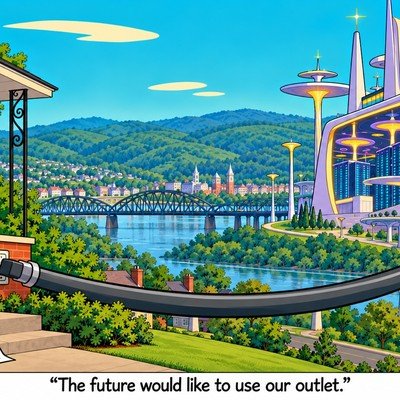
There Goes the Electric Bill
Beaver County faces a dilemma with new data centers, balancing economic potential against local concerns about infrastructure and environmental impact.

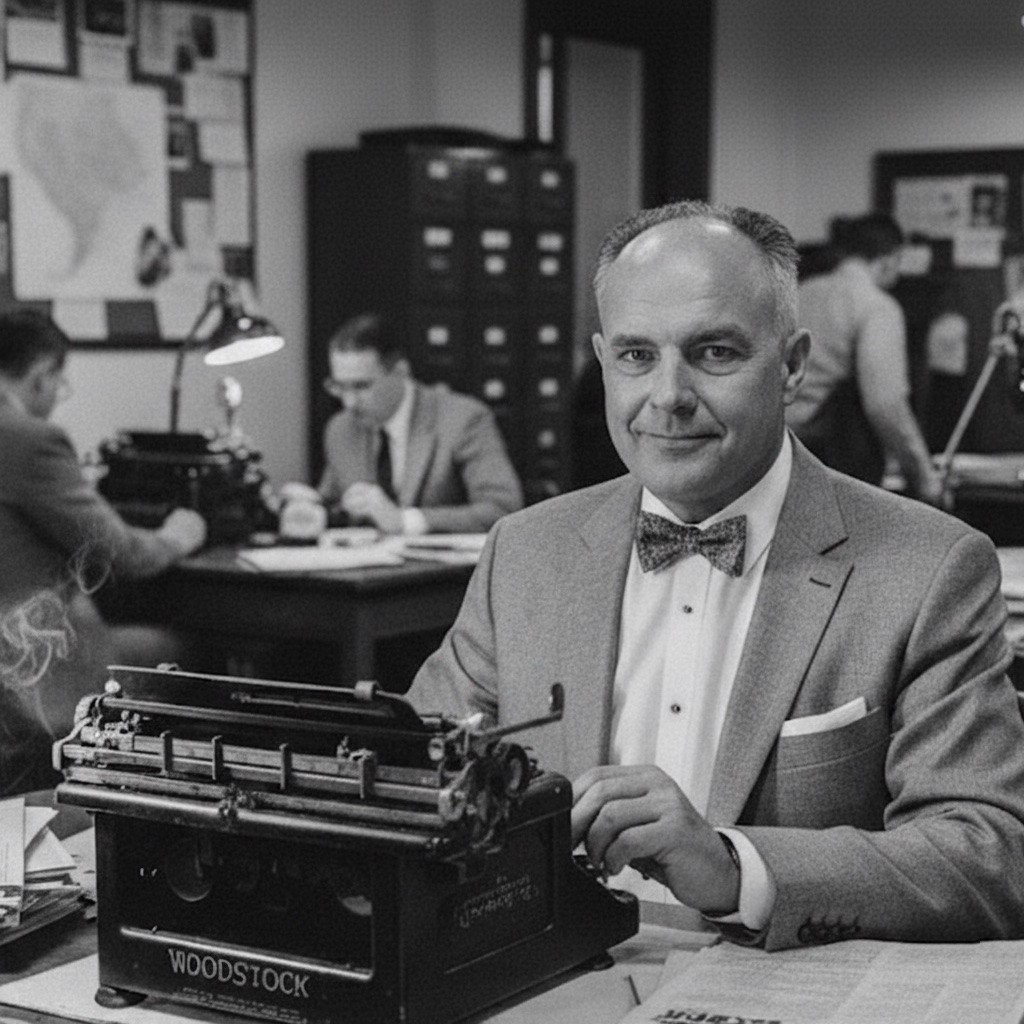

Rodger Morrow
Editor & Publisher, Beaver County Almanac
There was a time, not so long ago, when owning a big office building downtown was considered about as risky as owning the sunrise. People would always need somewhere to go between nine and five to complain about their jobs. You bought the building, installed the elevators, hired a man to polish the brass, and waited for the rent. It came on the first of the month, as dependable as the tides.
Every weekday morning, thousands of Americans put on clothes nobody would choose for comfort, sat in traffic nobody would choose for pleasure, and rode those elevators upstairs to tell one another how much more they could get done if everybody would just leave them alone.
Eventually somebody took them at their word.
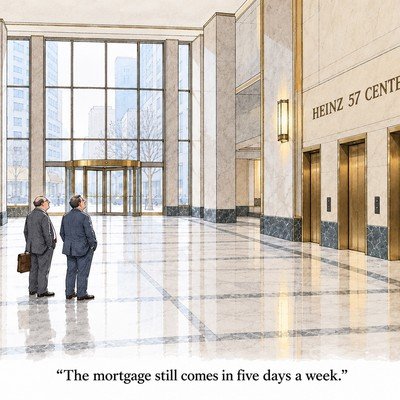
Which brings us to the Heinz 57 Center. On October 23, the Pittsburgh Business Times reported that the building’s lender has gone to court seeking to foreclose, while talks between the lender and the owner, McKnight Realty Partners, go on. Seeking foreclosure is not the same as foreclosing. Nobody has sold the building, emptied it, or sent for the wrecking ball. Financial trouble keeps its own schedule, and the schedule is kept by lawyers, who are in no particular hurry.
Older readers will remember the place as Gimbels, from the days when going downtown meant buying something other than parking. McKnight bought it in 1999 and turned the department store into offices. In 2001, Heinz leased 310,000 square feet, which brought a famous name to the front door and, more to the point, a great many people who needed desks.
It was a sensible idea. The trouble with sensible ideas is that buildings outlive them.
By December 2025, the property faced a deadline on a $62.6 million loan. That is a lot of money to owe on a building whose chief difficulty is getting people to come inside. A mortgage, unlike an office worker, has never once asked to work from home. It shows up every month whether anybody else does or not.
Before we pronounce Pittsburgh dead, though, somebody ought to take its pulse. Cushman & Wakefield’s third-quarter report finds the regional office market somewhat improved, with overall vacancy at 17.1 percent. Downtown, the leasing is going overwhelmingly to Class A space. The good offices are finding tenants. The older ones are having a hard time explaining why they should go on being offices at all.
So civilization still needs conference rooms. It has merely become fussy about which ones.
What does any of this mean for Beaver County?
First, the county line is a good deal thinner than it looks on a map. Beaver County households make their living from employers, customers, and clients all over the Pittsburgh region. A downtown company can shrink its office without shrinking its payroll; that is just rearranging the furniture. But when the trouble is real contraction, it has a way of finding its way to a kitchen table in Center Township.
Then there is credit. A lender nursing losses on office buildings may cool toward financing anybody else’s ambitions, including a building purchase, a renovation, or an expansion right here at home. This does not mean every bank in the county has a Heinz 57 Center in its basement. It means trouble somewhere else can prompt the fellow across the desk to ask for one more document. And then another.
And then, inevitably, taxes. Pittsburgh’s controller has documented how falling downtown assessments have cut into the city’s property-tax collections. Beaver County does not inherit Pittsburgh’s tax bill. But a weakened regional center tends to produce appeals for help, a scramble for public money, and rescue plans with reassuring names.
The reassuring name is usually the first thing the money buys.
There may be an opening in all this for our own towns. Somebody working from home in Beaver County might buy lunch nearby, keep an appointment close by, and discover that an afternoon errand no longer requires a parking garage. A small business might prefer modest space near its people. Those are chances worth chasing, though an empty office in Pittsburgh does not, by any law of physics, fill a storefront in Rochester.
People still need a reason to come.
That means useful businesses, dependable services, pleasant streets, and buildings somebody can afford to keep up. It also means remembering that people go on living in towns after five o’clock. A downtown built entirely around the arrival and departure of office workers has placed an enormous wager on the eternal popularity of the commute.
Beaver County knows a little something about enormous wagers on a single way of making a living. We spent a good part of the last century learning what happens when the payroll holding up everything else becomes somebody’s restructuring opportunity.
The sensible course is to encourage all sorts of uses and to read every redevelopment promise with a pencil in hand. Some office buildings will make fine apartments. Others will need expensive surgery first. Calling an office a residence does not install a bathtub.
We should welcome investment without mistaking an announcement for a tenant, or a subsidy for a business plan. The questions never change: Who will use the building? What can they pay? Will it be enough to keep the roof on?
Once, the Heinz name helped sell confidence in a Pittsburgh address. Today the address is a reminder that not even the most famous label in town can bottle demand.
Beaver County should pay attention. We once owned the economic equivalent of a magnificent building that everybody assumed somebody would always need.
Beaver County faces a dilemma with new data centers, balancing economic potential against local concerns about infrastructure and environmental impact.
Dining out should be about connection, not chaos. As noise levels rise, so does the challenge of enjoying meaningful conversations over dinner.