No Particular Place to Go
Embrace early fall in Beaver County with aimless drives, fresh cider, and unexpected discoveries. Adventure awaits just beyond your familiar routes.

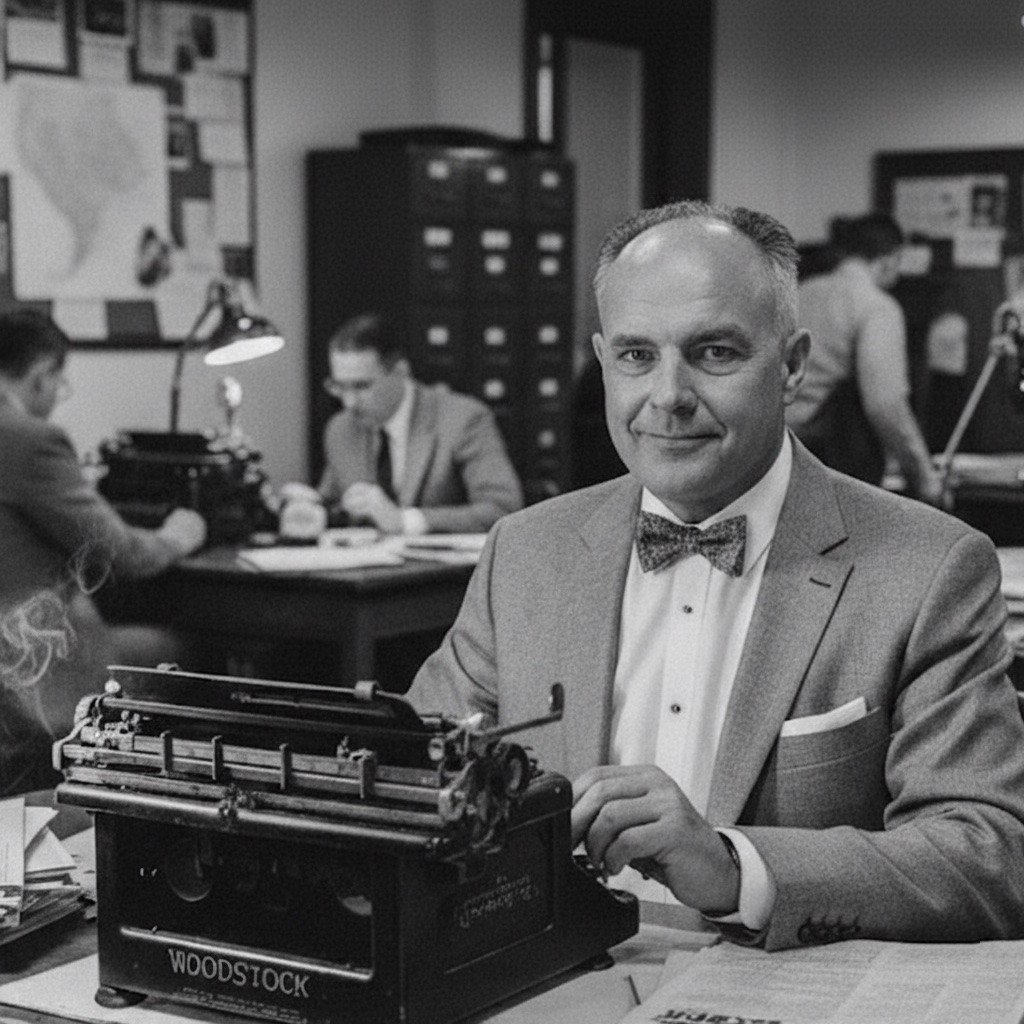

Rodger Morrow
Editor & Publisher, Beaver County Business
When I was a boy, Beaver Falls was civilization.
This may surprise anyone who has recently driven down Seventh Avenue and concluded that civilization had packed a suitcase, left no forwarding address, and taken several buildings with it. But in the 1950s and early 1960s, Beaver Falls seemed like as much town as any boy could ever need.
It had grocery stores, department stores, clothing stores, drugstores, restaurants, a hotel, four movie theaters—even a toy store and a bookstore. A child could conclude that everything necessary to human happiness had been assembled along one broad brick avenue, with parking meters added to prevent happiness from getting out of hand.
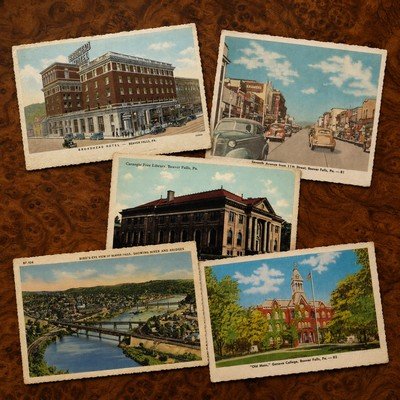
It was also home to my father’s automobile business, Morrow Motors, and to the school that educated me from kindergarten through third grade. “Educated” may be too generous. I was instructed there. Whether any of it took is a question still being investigated.
Beaver Falls had been preparing for my arrival for nearly two centuries. The “Falls of the Beaver” appeared in Moravian missionary David Zeisberger’s journal in 1770, although the Lenape had known the valley long before Zeisberger got around to writing it down. White settlers arrived in the 1790s, and around 1800 the Constable brothers laid out a village called Brighton, after their hometown in England.
The Beaver River dropped some 40 feet through a series of falls, making it useful for water power and inconvenient for fish. Mills followed. So did a canal, railroads, factories, immigrants, boardinghouses, churches, saloons, and the other machinery by which Americans once manufactured both steel and communities.
The turning point came in 1859, when the Harmony Society bought much of the struggling settlement at a sheriff’s sale. The Harmonists were German communal Christians from nearby Economy who believed in piety, hard work, and careful bookkeeping—not necessarily in that order.
They renamed the town Beaver Falls, expanded it, paved its main streets in brick, and recruited industry with the enthusiasm later generations would reserve for shopping plazas. Beaver Falls incorporated as a borough in 1868 and soon began behaving as though Pittsburgh were a larger suburb to the southeast.
Factories made knives, saws, bridges, steel, glass, files, and china. The Beaver Falls Cutlery Company brought as many as 225 Chinese workers to town in 1872, creating the
first sizable Asian community in Beaver County. Penn Bridge shipped its spans across the country. Mayer China supplied restaurants, hotels, and railroads with dishes sturdy enough to survive both commerce and cafeteria food.
Geneva College moved here from Ohio in 1880, bringing students, professors, and the permanent suspicion that somebody on College Hill knew more than the rest of us.
By 1910, the population had passed 12,000. It reached 17,375 in 1950. Seventh Avenue became the commercial spine of northern Beaver County, lined with banks, hotels, stores, and four theaters—the Regent, Rialto, Granada, and State. On Saturdays, the sidewalks filled with people who came not to shop so much as to see who else had come to shop.
This was the Beaver Falls I remember.
My father sold Fords, Mercurys, and Lincolns there, back when buying a car involved a salesman, a necktie, and several hours of grave discussion. The automobile was not yet an electronic appliance with heated cup holders. It was a declaration of character. A Ford said you were sensible. A Lincoln said you were sensible but had recently prospered.
I went off to school each morning assuming the town had always been there and always would be. Children believe this about nearly everything—their parents, their houses, their schools, and their toys. Permanence is one of childhood’s lovelier misunderstandings.
Beaver Falls had earned that confidence. Babcock & Wilcox employed thousands. Moltrup and other mills added thousands more. Trains arrived, whistles blew, shifts changed, cash registers rang, and the whole machine seemed as durable as the bridges Beaver Falls shipped to Alaska.
Then came suburban shopping centers, population loss, and the steel collapse of the 1970s and 1980s. The mills closed or shrank. The crowds thinned. Reporters began visiting Beaver Falls not to describe what America was building but to determine what had happened to America.
They called it the pulse of the nation.
Joe Namath, Beaver Falls’ most famous son, escaped to Alabama and New York, acquired a fur coat, and became a TIME cover boy. The rest of the town stayed home and discovered that history rarely sends flowers after closing the mill.
Still, Beaver Falls remains. When I drive through, I see the town that taught me what a town was: a place where people worked, shopped, worshiped, learned, ate, argued, watched movies, bought cars, and occasionally wandered into a bookstore.
It seemed like civilization because, for us, it was.
Embrace early fall in Beaver County with aimless drives, fresh cider, and unexpected discoveries. Adventure awaits just beyond your familiar routes.
Art’s evolution from craftsmanship to the realm of theory raises questions about value and authenticity, blurring the line between creator and critic.