
It’s Taylor Sheridan’s World. We Just Live in It.
Taylor Sheridan’s storytelling resonates with an ignored America, showcasing the grit and complexity of life beyond Hollywood’s polished narratives.

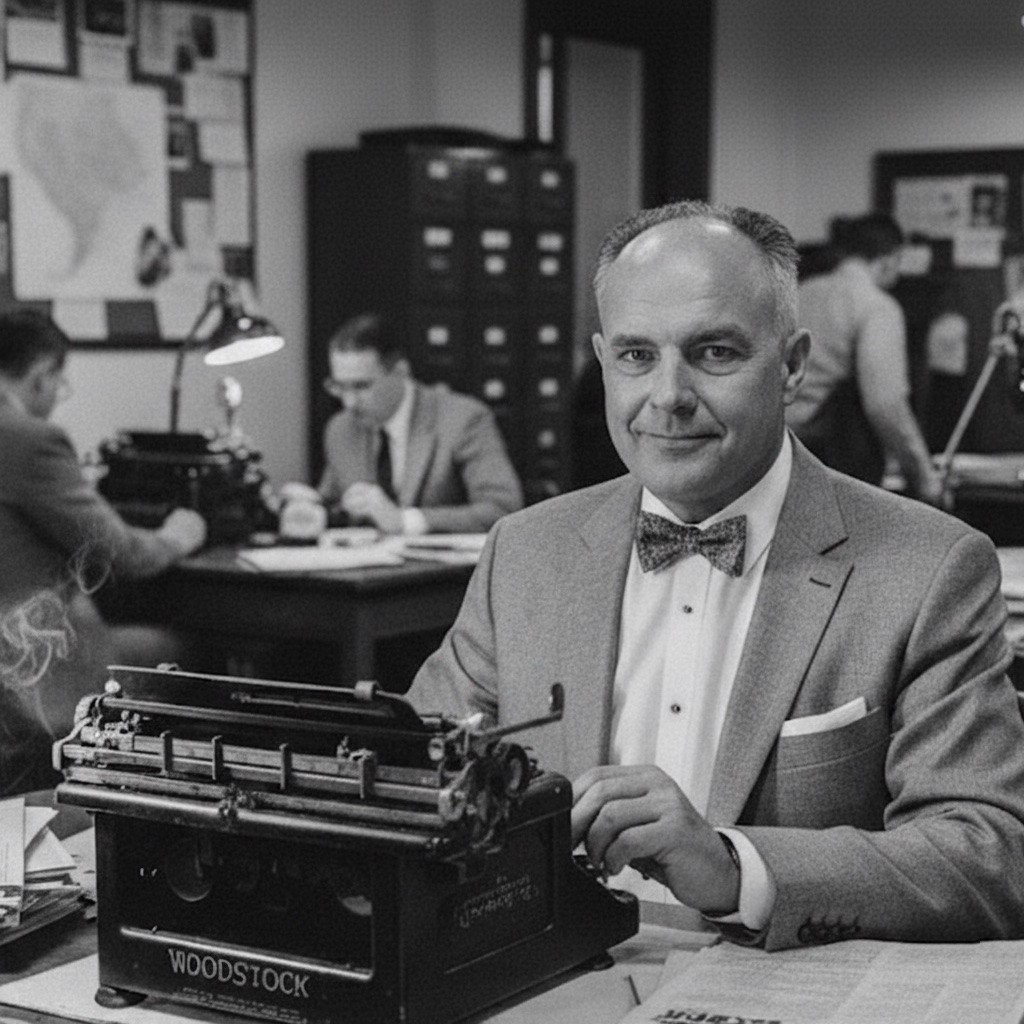

Rodger Morrow
Editor & Publisher, Beaver County Almanac
Joe Namath left Beaver Falls with five dollars and considerable confidence. The confidence lasted longer.
By Rodger Morrow, Editor & Publisher Beaver County Almanac
New York likes to say it discovered Joe Namath, the way Columbus discovered America: by arriving late and announcing it loudly to people who already lived there.
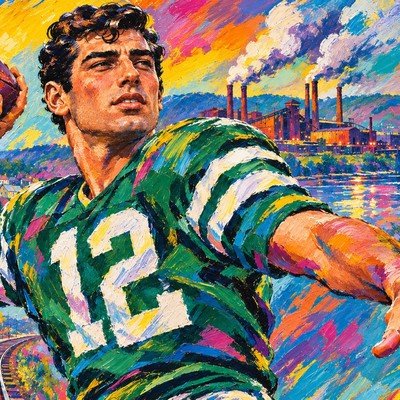
Beaver Falls had done most of the work. It supplied the arm, the nerve, the neighborhood, and Larry Bruno. His mother supplied five dollars. New York supplied the fur coat and kept the credit.
Broadway Joe was the quarterback in white shoes, the bachelor about town, the man who guaranteed a Super Bowl victory when respectable opinion suggested he concentrate on surviving it. Before that, he was Joe Willie from the Lower End, where nobody needed a magazine cover to tell them who he was. They could see him from the porch.
Born in 1943 to parents of Hungarian descent, he grew up near the river and railroad tracks. His father, John, worked in steel. His mother, Rose, cleaned houses in Patterson Heights and altered his older brothers’ uniforms to fit him.
There was sound economics in this. The family already owned the uniforms. The youngest boy had to deserve them.
He obliged in three sports. He could throw a football, dunk a basketball, and hit a baseball well enough to interest the major leagues. He admired Roberto Clemente and wanted to play for the Pirates. Professional baseball offered money. Rose wanted college.
Anyone raised in a western Pennsylvania household, where the mother held the purse, the calendar, and final appellate jurisdiction, will not need to be told how that came out.
Across the street lived Linwood Alford. They played ball together and kept the friendship into old age. Alford said later that Namath had never been taught prejudice. In their mixed neighborhood, two boys had been allowed to be friends without a committee of adults explaining why it ought to be difficult.
He carried that south. First came Bruno.
The Beaver Falls coach held the old-fashioned view that confidence is worth something only if somebody has practiced. His teams drilled timing, deception, and the small assignments spectators never notice until somebody botches one.
In 1960, Namath’s senior year, the Tigers went unbeaten and were awarded the WPIAL Class AA championship without a playoff game. There was no state championship then. Beaver Falls had won everything the available authorities were prepared to hand out.
Bruno’s favorite explanation for his quarterback was confidence. When Namath called a play, the other boys believed him. It helped that he so plainly believed himself.
One story has Bruno asking whether an ankle injury would keep Namath from punting. Namath assured him they would not need to punt that day.
A coach might have preferred a medical opinion. What he got was a weather forecast.
Bruno guided him through the age when a gifted boy mistakes applause for judgment. Namath later credited him with keeping him out of trouble. Bruno was all for dreaming, but he expected the dreamer to get out of bed afterward and do something about it.
Namath had leaned toward Maryland, but an admissions problem nudged him toward Alabama. Bear Bryant sent his assistant Howard Schnellenberger north, and Schnellenberger made a good impression on the one person in the house whose impression counted.
As Namath tells it, Rose packed his suitcase, handed him five dollars, and told the coach to take him.
Modern recruiting involves televised announcements, rival caps on a table, and weeks of public agonizing. Rose seems to have closed the deal before lunch.
At Alabama he helped win the 1964 national championship and encountered Bryant’s sterner authority. He broke team rules and was suspended late in his junior season. Confidence did not exempt him from consequences, though he tested the theory.
His knees started complaining there, too. The arm was ready for professional football. The equipment holding it up had reservations.
In January 1965 the New York Jets signed him for a reported $427,000. Jets owner Sonny Werblin offered money, opportunity, and New York, then still considered a selling point.
The figure alarmed the established owners, who worried that paying a young man so much might ruin the sport. It certainly threatened the pleasant old custom of paying him less.
Werblin came out of show business and understood that a quarterback could sell more than completed passes. Namath had the face, the personality, and the air of a man who never asked permission to enjoy himself.
The nickname came after his 1965 Sports Illustrated cover, shot against the lights of Broadway. A teammate, Sherman Plunkett, supplied “Broadway Joe.” White cleats and fur coats handled distribution.
There was football under the publicity. In 1967 he threw for 4,007 yards in fourteen games, the first professional quarterback to pass 4,000 in a season. This required more than looking pleased beside a swimming pool.
Then came Baltimore.
Before Super Bowl III the Colts were favored by about eighteen points. At a dinner in Miami, a heckler offered the prevailing view of the Jets’ chances. Namath replied that the Jets would win. He guaranteed it.
Coach Weeb Ewbank had hoped for a quieter approach: say nice things about Baltimore and let the Colts stay comfortable. His quarterback had just made them uncomfortable in every newspaper in America.
On January 12, 1969, the Jets won, 16–7. Namath passed for 206 yards, threw no interceptions, and took home the MVP award. The most extravagant promise in football had been kept by the least extravagant means: making sensible decisions for sixty minutes.
The game did not cause the merger. The leagues had agreed to that in 1966, with full integration due in 1970. What it demolished was the comfortable notion that the AFL belonged at the children’s table.
It was also a team victory, which the celebrity sometimes obscures. Matt Snell ran for the Jets’ only touchdown. The defense intercepted four passes. Namath called the plays, took what Baltimore gave him, and did not throw a pass in the fourth quarter. The man accused of turning football into show business had the sense to know when the show needed someone else carrying the ball.
The knees sent their bills. The operations piled up. He played his last Jets season in 1976 and retired after a final year with the Rams. The celebrity stayed on the job.
He acted, made commercials, and eventually appeared on Broadway in The Caine Mutiny Court-Martial. The nickname had beaten him there by nearly twenty years, but New York is used to advance publicity.
There was also the pantyhose commercial. No guidance counselor in Beaver Falls would have foreseen that assignment. None, I suspect, would have advised turning down the check.
Away from the cameras the story turned harder. Marriage brought two daughters and a long stretch without drinking. When the marriage ended, the drinking resumed. The habits that had served Broadway Joe so agreeably had become something charm could no longer manage.
In December 2003, visibly drunk during an ESPN interview, he told Suzy Kolber he wanted to kiss her. She was doing her job. He made it harder in front of a national audience.
He apologized and sought treatment. He later said the humiliation forced him to face his alcoholism. In his memoir he reported no drinking since that night.
Here the famous confidence needed revising. The man who had guaranteed a victory had run into something he could not beat by announcing the score in advance.
He has talked about recovery with a candor that deserves a place beside the old photographs. Staying alive to be a father and a grandfather turned out to matter more than keeping the bachelor legend in good repair.
The later chapters give us a man who owned his mistakes and learned a new way to live. There was no crowd to applaud most of that work.
Football left other business unfinished. Worried about the effects of repeated concussions, Namath underwent hyperbaric oxygen treatments and reported improvements in memory and clarity. He helped establish a neurological research center at Jupiter Medical Center.
His experience is one man’s account, not proof of a cure. The evidence for treating brain injury this way remains inconclusive, and an encouraging scan for one patient is not a guarantee for everybody else.
He also finished college. Alabama gave him his degree in 2007, at sixty-four. Rose’s plan had taken a little longer than she intended, but she had never said anything about a deadline.
Back home the connection has held, through reunions, old friendships, and the Larry Bruno Foundation. Beaver Falls has a marker and a mural. Namath has gone on remembering the people who knew him before he required either.
When he entered the Pro Football Hall of Fame in 1985, he asked Bruno to present him.
After Alabama, after New York, after the championship and all those cameras, the man he wanted standing beside him was his high-school coach.
Broadway had supplied the lights. Joe Willie still remembered who had shown him where to stand.
1,486 words, excluding headline, subhead, and byline.
Joe_Namath_Before_Broadway.md
Taylor Sheridan’s storytelling resonates with an ignored America, showcasing the grit and complexity of life beyond Hollywood’s polished narratives.
Aging brings unexpected challenges, as our bodies require more planning for simple tasks. Embrace strength training and nutrition to reclaim vitality.