
The Last Grocer on Third Street
Beaver Supermarket, the last independent store in the county, faces challenges but remains a vital community hub. Support local and shop small this season.

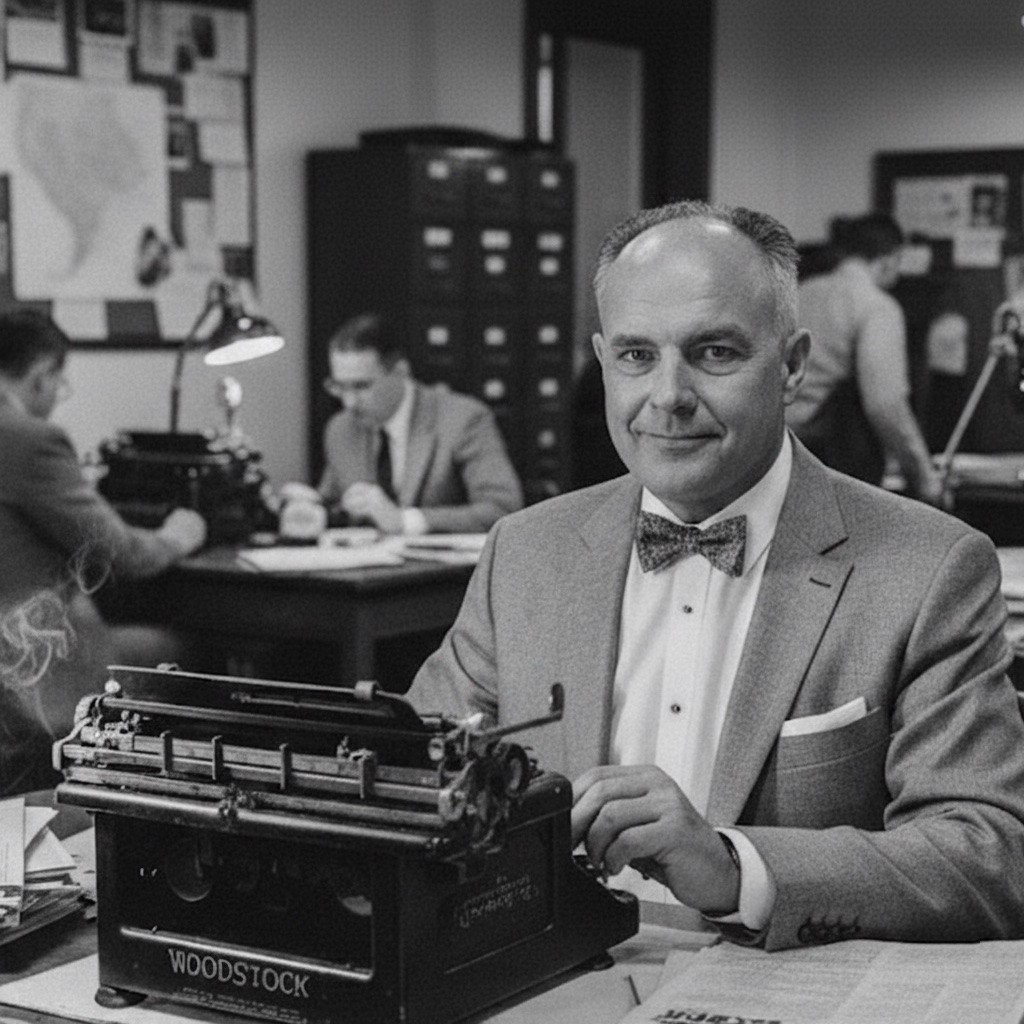

Rodger Morrow
Editor & Publisher, Beaver County Almanac
The next technological revolution may begin with the unanswered email.
For years the computer industry has promised to save us time, most of which we have since spent trying to remember our passwords.

Now it proposes to give us somebody to run the computer.
I call this progress. Having spent much of my adult life being told my session has expired, I would gladly delegate the experience.
It is called “agentic AI,” a phrase unlikely to pack a Rotary luncheon. The idea is simple enough.
The first AI chatbots answered questions and wrote things. Ask for an explanation of your insurance policy, and you got something far more readable than your insurance policy.
An AI agent goes further. Given instructions and the right access, it can use computer tools, work through several steps and try to finish the job.
It is the difference between somebody who tells you where the filing cabinet is and somebody who puts the papers away.
Civilization has always been short of the second person.
Software need not be wiser than mankind to straighten out a calendar. It need only be more organized than I am, a standard several kitchen appliances have nearly met.
One current example is Grok Bot. Its makers describe software teammates that use a computer in the cloud, work across applications, prepare documents and handle recurring chores. This month’s update promises more teamwork and initiative. That is the company’s description, not a guarantee.
“Cloud,” incidentally, means computers somewhere else. There is still a building, an electric bill and somebody to blame when it stops working.
Nor does “Bot” mean a metal gentleman will arrive in Bridgewater carrying your groceries. The robot is software.
The groceries remain your problem.
Why should anyone here care?
Consider a hypothetical Beaver County plumber. He knows pipes. Unfortunately, a plumbing business also requires estimates, reminders, invoices and correspondence with people who have found water where water was not supposed to be.
He finishes the plumbing and starts his second job: clerk.
An agent, properly connected and supervised, could help him lay out tomorrow’s schedule, prepare estimates from figures he supplies and draft reminders about unpaid bills.
He would still decide what the work costs. He would still fix the pipe. But he might get home before supper becomes an archaeological exhibit.
Multiply that example across a machine shop, a restaurant, a church office, and a volunteer historical society.
Large organizations have departments. Small organizations have Linda.
Linda knows where everything is, which form the county wants and why the spreadsheet is wrong. When Linda goes on vacation, the organization learns how much of its operating system wears reading glasses.
Software could give Linda a hand. In a county full of enterprises that cannot afford another employee but badly need another pair of hands, that is worth thinking about.
There is a household version, too: planning a family trip for your approval, sorting scattered receipts, finding sign-up dates for the activities you keep meaning to look into. Results will depend on the software and how clearly you explain yourself.
There are catches.
The first is that smooth language can hide a mistake. A machine can deliver a wrong answer with the composure of a man explaining the Steelers’ offense at a bar.
Let it act, and checking matters more. A mistaken draft can be fixed. A mistaken purchase introduces you to the returns department.
Grok’s own instructions advise users to set limits on sending messages, spending money, deleting information and other consequential acts. The principle applies well beyond Grok.
Start with a small job. Inspect the result. Keep approval over anything touching your money, your private information or your good name.
“Prepare it for me” is a useful instruction. “Do whatever you think best” has caused trouble even in marriages involving no artificial intelligence whatsoever.
Then there are jobs.
Some employers will use easier office work to grow. Others will get by with fewer people. Nobody should promise that every lost hour turns painlessly into a better occupation.
Beaver County has heard cheerful talk about economic transitions before. We are entitled to ask what happens to the people caught in the middle of one.
We should also ask who keeps the savings. A tool that helps a local business compete is one prospect. A system that makes every customer argue with a machine nobody can reach is another.
Our interest should go beyond whether a data center gets built here, to whether the businesses and people already here can put the technology to work.
The sensible response is neither panic nor genuflection. Learn enough to give the thing a modest assignment. Judge what comes back. Remember who is supposed to be in charge.
I am ready to welcome a machine that handles the paperwork.
I will start worrying when it schedules a meeting to discuss how much time it has saved me.
Beaver Supermarket, the last independent store in the county, faces challenges but remains a vital community hub. Support local and shop small this season.

The kolache’s journey from Central Europe to Texas and finally to Beaver has transformed breakfast into a cherished communal experience.