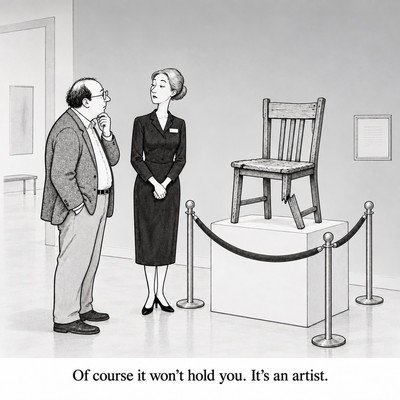
The Art of Looking Important
Art’s evolution from craftsmanship to the realm of theory raises questions about value and authenticity, blurring the line between creator and critic.

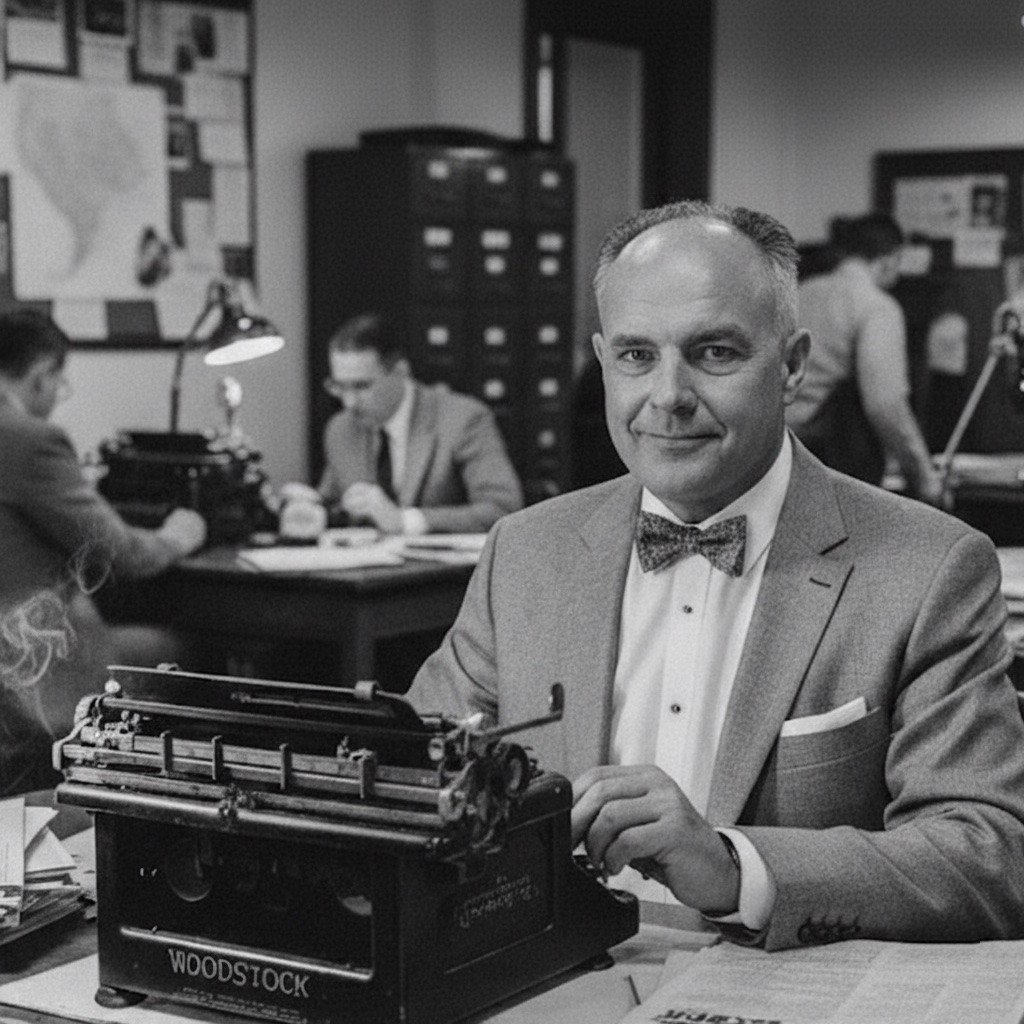

Rodger Morrow
Editor & Publisher, Beaver County Business
Early fall is the season for getting into the car, setting out in no particular direction, and trusting Beaver County to provide a reason eventually.
By Rodger Morrow Editor & Publisher, Beaver County Almanac
There comes a moment in early fall when Beaver Countians feel an inexplicable need to get into the car and go somewhere, provided nobody asks where.
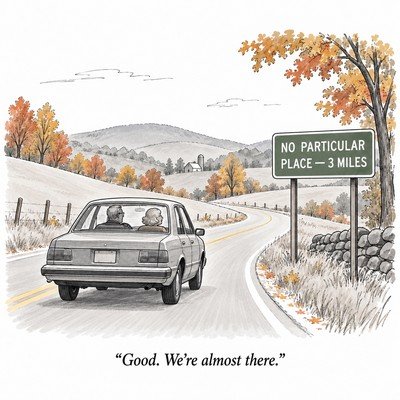
This is not travel. Travel involves reservations, luggage, boarding groups, and the possibility of spending $19 on a sandwich wrapped in plastic. What we have in mind is a drive.
A drive requires only a reasonably dependable automobile, half a tank of gasoline, and a vague confidence that something interesting may be found on the other side of Darlington.
The destination is not merely unknown. It is beside the point.
Chuck Berry understood this when he recorded “No Particular Place to Go,” although his difficulty involved a safety belt and a young woman rather than fall foliage and a roadside pumpkin stand. Still, the principle holds. Some of the best journeys begin when no one in the car can give a satisfactory answer to the question, “Where are we going?”
“Just out,” we say.
This is considered an adequate itinerary in Beaver County.
Early fall encourages such behavior. The air has lost its August heaviness, but winter has not yet begun issuing subpoenas. The trees are changing color. The sky has regained that deep blue it misplaced sometime around Memorial Day. Even Route 68, driven often enough to have become part of the furniture, suddenly looks like a road leading somewhere.
So we follow it.
Perhaps there will be a roadside stand with apples, cider, pumpkins, corn shocks, and a handwritten sign whose spelling suggests the produce was grown without unnecessary government supervision. We stop because fresh apples seem like a sensible purchase. We leave with two gallons of cider, a jar of local honey, three decorative gourds, and a pumpkin too large to fit comfortably in the passenger seat.
This is the agricultural economy at work.
The roadside stand is one of civilization’s more successful institutions. It rests on the belief that a folding table, a coffee can for money, and the honor system can accomplish what corporations require six vice presidents and a barcode scanner to manage. You
choose the tomatoes, put four dollars in the box, and drive away feeling that the republic may survive after all.
There are other discoveries.
You pass a building you have driven by for 20 years and notice, for the first time, that it is a restaurant. It may have been a restaurant all 20 years. It may have opened Thursday. In either case, you make a note to return, which you will promptly forget until the next aimless drive.
You find an old cemetery tucked behind a church, a weathered barn collapsing with great dignity, a creek you had never noticed, or a village whose principal landmark appears to be a vending machine. You come upon a road with an intriguing name and turn onto it because adulthood has provided distressingly few other opportunities for adventure.
Occasionally, the road becomes narrower.
Then it becomes gravel.
Then the person beside you asks whether you know where you are.
“Of course,” you say, although what you mean is that you remain within the Commonwealth of Pennsylvania and probably Beaver County.
This is when the drive becomes memorable.
There will be those who object that driving around without purpose wastes fossil fuel. They are correct. It also wastes time, which is precisely the point. We have become far too efficient with both. Every trip now requires a destination, every minute a task, every mile an explanation.
A Sunday drive offers none.
It does not improve productivity, enlarge the gross domestic product by any measurable amount, or bring us closer to inbox zero. It simply permits us to look at the place where we live before the leaves fall and darkness begins arriving shortly after lunch.
This is not extravagance. It is seasonal wisdom.
Beaver County was made for such modest expeditions. Its hills conceal the view until the last moment. Its roads curve for reasons known chiefly to surveyors, farmers, and God. A familiar landscape can still surprise you if approached from the wrong direction.
That may be the great pleasure of wandering close to home. We are not discovering a new world. We are discovering that the old one contains more than we noticed while hurrying through it.
Soon enough, winter will come. The trees will be bare, the windshield will require scraping, and every unnecessary trip will be reconsidered in the presence of freezing rain. We will drive only when there is a particular place to go, and complain most of the way.
But not yet.
For now, there are leaves to admire, cider to sample, roads to get mildly lost on, and perhaps a new restaurant waiting in a building we have failed to see since the Clinton administration.
So fill the tank, lower the windows, and go nowhere in particular.
Vita brevis, hiems longa.
Life is short. Winter is long.
Art’s evolution from craftsmanship to the realm of theory raises questions about value and authenticity, blurring the line between creator and critic.
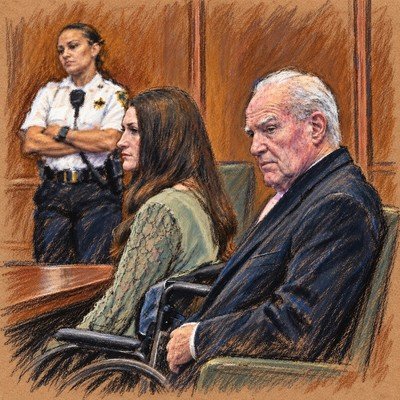
The tragic case of Lindsay Clancy raises urgent questions about mental health, motherhood, and the complexities of psychiatric treatment in our society.