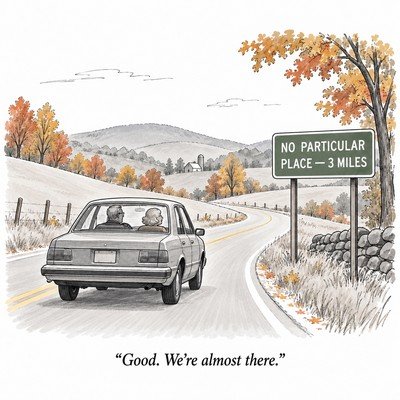
No Particular Place to Go
Embrace early fall in Beaver County with aimless drives, fresh cider, and unexpected discoveries. Adventure awaits just beyond your familiar routes.

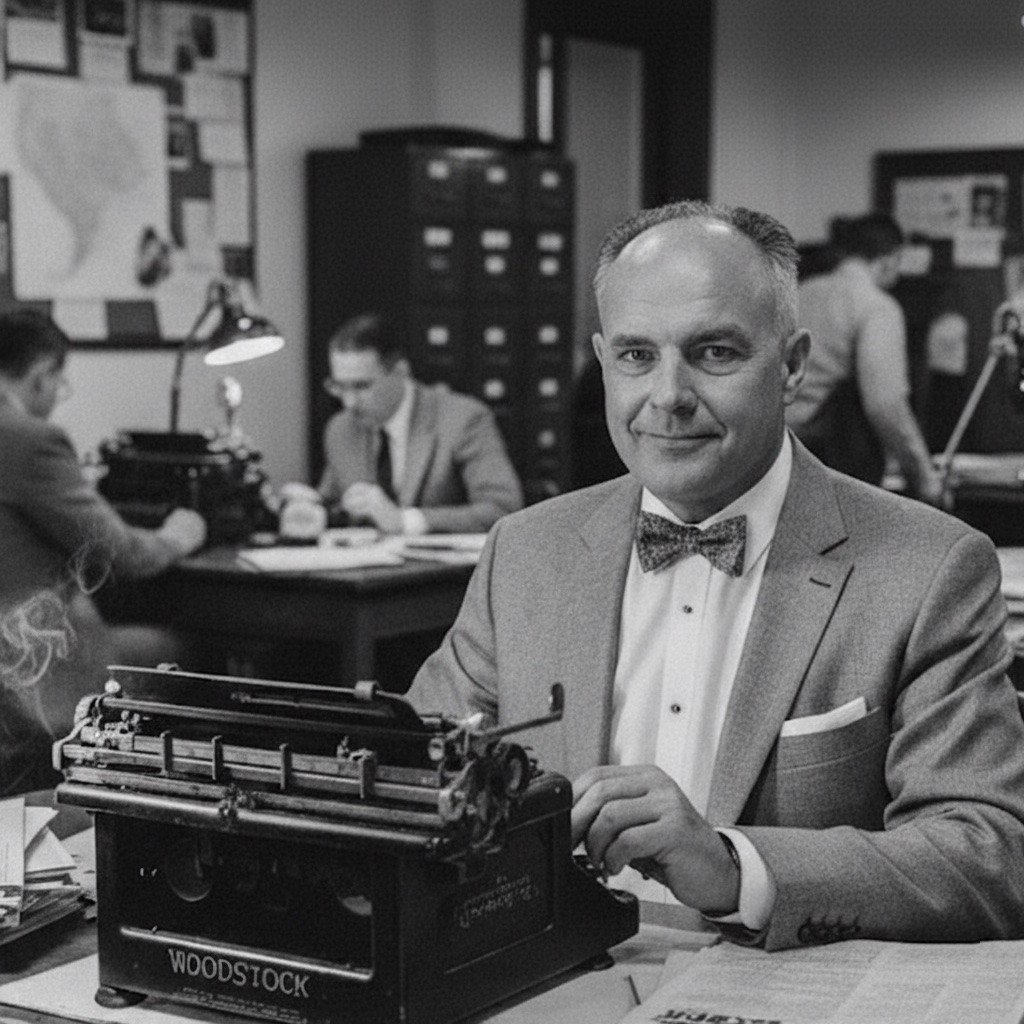

Rodger Morrow
Editor & Publisher, Beaver County Business
The Rolling Stones recorded “Mother’s Little Helper” in 1965, when the nation was shocked to discover that suburban mothers were taking tranquilizers to get through the day.
This was considered satire.
Sixty years later, the little yellow pill has been joined in the medicine cabinet by antidepressants, antipsychotics, sedatives, stimulants, mood stabilizers, and several pharmaceutical inventions whose television commercials devote ten seconds to happiness and the next 45 to death, seizures, suicidal thoughts, and an unexplained urge to gamble.
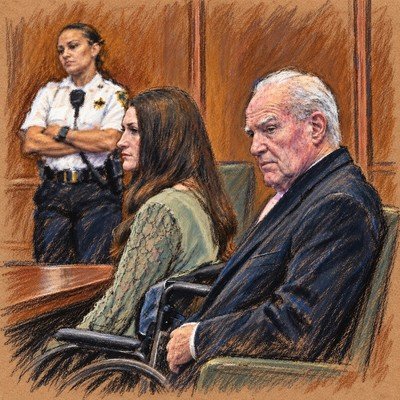
Which brings us to Lindsay Clancy.
Few legal dramas since the O. J. Simpson trial have so thoroughly divided public opinion. In the Simpson case, Americans argued about race, celebrity, police misconduct, domestic violence, and whether a glove that seemed not to fit had merely been persuaded not to. In the Clancy case, the dividing line runs through even more treacherous territory: motherhood, mental illness, psychiatric medicine, personal responsibility, and the limits of human mercy.
Clancy, a labor-and-delivery nurse from Duxbury, Massachusetts, admitted killing her three children—Cora, 5; Dawson, 3; and Callan, 8 months—on January 24, 2023. She strangled them in the basement after sending her husband, Patrick, out to pick up dinner and medication. She then cut herself and jumped from a second-story window, suffering spinal injuries that left her paralyzed from the waist down.
There was never much question about what happened. The question was whether Lindsay Clancy was legally responsible when it happened.
The prosecution said she was. It portrayed the killings as deliberate and methodical, pointing to the errand that removed Patrick from the house and to her conduct before and after the crimes. The defense said she was suffering from postpartum psychosis, aggravated by a bewildering parade of psychiatric medications, and had lost the capacity either to appreciate the wrongfulness of her actions or to control them.
Once the defense raised the issue of Clancy’s mental state, Massachusetts required the prosecution to prove beyond a reasonable doubt that she was criminally responsible. This sent the jury into the foggy borderland where medicine and law meet, exchange business cards, and discover they don’t speak the same language.
Psychiatrists do not diagnose “insanity.” Courts do. Doctors diagnose depression, psychosis, bipolar disorder, and other conditions defined in large manuals whose principal virtue is that they are considerably easier to lift than to understand. A person may be profoundly mentally ill and still legally responsible. Another may know, in some abstract sense, that an act is wrong while being incapable of resisting a psychotic command.
Naturally, the expert witnesses disagreed.
A defense psychiatrist concluded that Clancy was psychotic and not criminally responsible. A prosecution expert said she suffered from major depression but retained the ability to distinguish right from wrong and control her conduct. Both possessed impressive credentials. Both examined much the same evidence. Both reached opposite conclusions, which is why expert testimony has become one of the few remaining American industries in which every product comes with an equal and opposite product.
After seven days of deliberations, the jury disclosed that 11 members agreed and one did not. The 11 favored finding Clancy not guilty by reason of lack of criminal responsibility. The lone holdout remained unmoved. Because a criminal verdict must be unanimous, Judge William Sullivan declared a mistrial on September 4.
Thus, after years of investigation, weeks of testimony, armies of lawyers, and enough psychiatric vocabulary to incapacitate a medical school, the justice system arrived at 11– 1 and called it no decision.
The public has been no more unanimous. To some, Clancy is a calculating murderer hiding behind a fashionable diagnosis. To others, she is another victim—a desperately ill woman failed by a fragmented mental-health system that responded to every warning sign by changing the prescription.
She had sought help repeatedly. She saw numerous clinicians, visited emergency rooms, called crisis lines, and was admitted to a psychiatric hospital three weeks before the killings. Over roughly four months, she received 30 prescriptions involving 13 psychiatric medications from five clinicians and two hospitals. The prosecution noted that she did not take all 13 medications simultaneously or always as directed and that several were prescribed in low doses.
Thirteen is nevertheless an impressive number. It suggests less a treatment plan than a pharmaceutical tasting menu.
None of this proves that medication caused the killings. It does not prove Clancy was legally blameless or incapable of planning. Nor does it prove that the doctors treating her were negligent. Psychiatry is asked to predict human behavior without the benefit of a blood test, brain scan, or dashboard warning light. A patient may honestly deny suicidal or homicidal thoughts on Monday and become dangerously ill on Tuesday. The doctor must then explain on Wednesday why Tuesday was not foreseen.
But one need not decide Lindsay Clancy’s guilt to recognize that something is badly wrong.
Psychiatric medications can save lives. They can also produce serious side effects, withdrawal symptoms, emotional blunting, and agitation—particularly when prescriptions are repeatedly added, stopped, or exchanged. Yet medication has become our default answer to nearly every form of human distress because it is quick, billable, and fits neatly into a 15-minute appointment.
Loneliness does not. Neither does sleep deprivation, a new baby who will not sleep, or a marriage running on fumes. These require time and human attention, and neither can be swallowed with water once daily.
By 2020, more than one in six American adults reported taking prescription medication for mental health. Antidepressant use continued rising afterward. Yet depression, anxiety, suicide, and despair have not politely declined in response.
We are prescribing more medicine. We are not producing more health.
Postpartum depression and postpartum psychosis require special vigilance. They are not the same condition, although both can be serious. New mothers are often isolated, sleep-deprived, ashamed of their intrusive thoughts, and terrified that admitting them will cause others to regard them as monsters or take away their children. We tell mothers to seek help. Lindsay Clancy sought it. The system gave her appointments, diagnoses, hospitalization, and 30 prescriptions—and still failed to prevent a catastrophe.
That fact should trouble both sides.
Here in Beaver County, we may consider ourselves somehow exempt from all this because we live at a 500-mile remove from the Harvard Medical School and the fashionable disorders of Greater Boston.
We are not.
Depression, postpartum illness, overmedication, and despair do not require an Ivy League referral or a Massachusetts ZIP code. They live here, too—often quietly, behind respectable doors, waiting for someone to notice.
The state may retry Clancy. There may be a plea agreement. She may spend the rest of her life in a psychiatric institution rather than a prison. Whatever happens, there will be no satisfactory ending. Three children are dead. A father has lost his family. A mother is paralyzed and confined to a hospital. Eleven jurors saw one reality; the twelfth saw another.
The case offers no villain conveniently separate from the rest of us. It offers a society that hands out pills faster than it builds the families, neighborhoods, and churches where somebody might have noticed.
Mother still needs a little helper.
The question is whether the helper should always come in a bottle.
Embrace early fall in Beaver County with aimless drives, fresh cider, and unexpected discoveries. Adventure awaits just beyond your familiar routes.
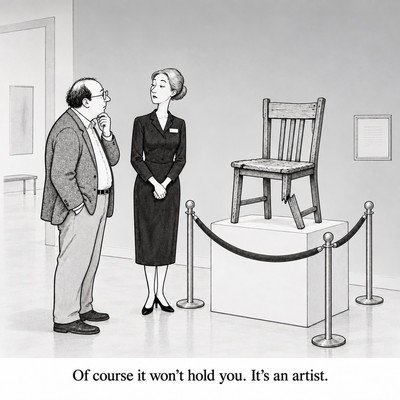
Art’s evolution from craftsmanship to the realm of theory raises questions about value and authenticity, blurring the line between creator and critic.