The Village You Just Drove Through
Rowetown’s history is a tapestry of community life, where ordinary intersections held significance, now faded yet vital to understanding our past.

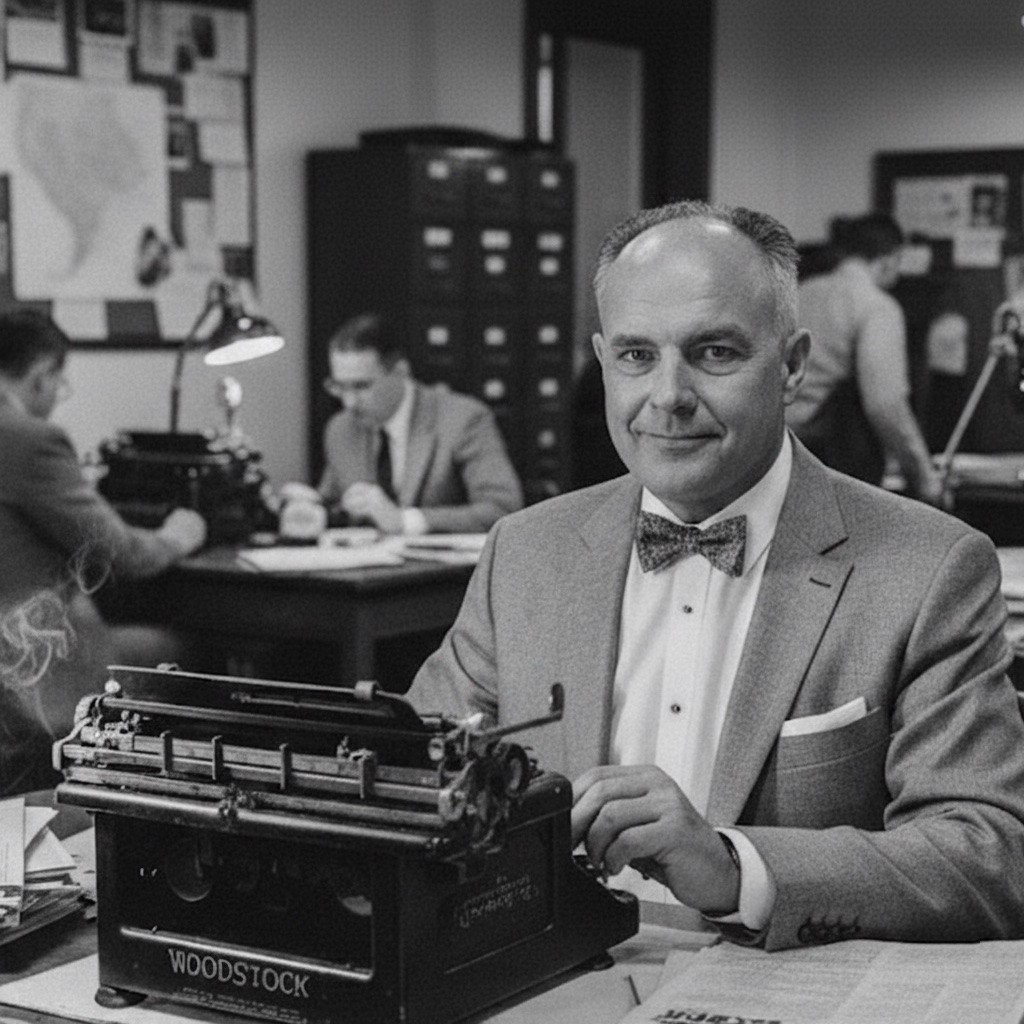

Rodger Morrow
Editor & Publisher, Beaver County Business
Chicago claimed Mike Ditka so completely that you could be forgiven for thinking the city had built him, somewhere between a meatpacking plant and an argument. The mustache, the cigar, the look of a man whose parking space had just been taken—all became municipal property. But Chicago got the finished goods. The rough work was done in Aliquippa.
Ditka died Friday. He was 86. The obituaries will count the championships, explain what a tight end is, and replay the Bears. Beaver County may start earlier, with a boy whose father came home in work clothes that showed what a living cost.
He was born in Carnegie on October 18, 1939, and raised in Aliquippa, the oldest of four. The family name had been Dyczko. His father made it Ditka, a courtesy to a country that welcomed immigrant labor more warmly than immigrant spelling. His grandfather had come from Ukraine. After that, the family’s American story was the usual one: work, children, and getting to Friday.
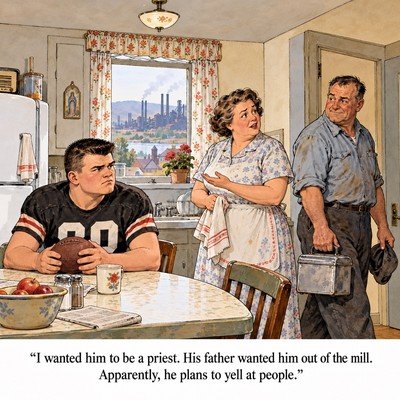
Mike Sr. was an ex-Marine, a welder on the railroad that served J&L, and a union man. His son remembered the clothes, burned and blackened, every day. Nobody had to explain them. A boy could see what his father did for him. He could also see why his father wanted something else for him.
“The mill is not for you,” his father said. “You don’t want it.”
This was no slight against honest work. It was an honest worker’s opinion of the job. Sports were the way out, provided the grades held up for a scholarship. The father supplied the discipline. The son, in time, supplied enough football to satisfy an admissions office.
At nine, he had a paper route. Having no bicycle, he walked it, up Aliquippa’s hills and down again. The money went to his parents, who handed some back as an allowance. It was an early lesson in finance, chiefly in who handles it.
His mother, Charlotte, taught the other subjects. Ditka credited her with teaching him love and caring, and with raising him Catholic. He was an altar boy and still filled in during college. She hoped he would become a priest. Considering his later approach to disagreement, the bishop would have had to think hard about where to put him.
He had his own plan. He went to Pitt to become a dentist. This is worth remembering whenever the television Ditka threatens to swallow the real one. Before he was America’s idea of toughness, he meant to spend his life doing work requiring patience, a steady hand, and people willing to open their mouths in his presence. Football got in the way.
At Aliquippa High, he played football, basketball, and baseball. The seasons changed. He didn’t. His boyhood hero was Stan Musial, another western Pennsylvania boy, from Donora, and decades later, with a hit needed, Ditka still wanted Musial. Fame widened his acquaintance without doing much to his loyalties.
Success didn’t tame the temper, either. The shouting was real, and so were the mistakes. Years later, talking about the day he lit into quarterback Jim Harbaugh on the sideline, Ditka admitted
he had gotten caught up in winning and in his tough-guy image. It was a revealing thing to say. The famous man could tell when he had started playing himself.
The quieter record deserves room. He gave to charities and visited Misericordia, a Chicago home for people with developmental disabilities, often enough to know the residents by name. Television paid less attention to this than to a sideline explosion. Television has never figured out what’s dramatic about showing up.
Back home, people remember him visiting his mother and stopping at the old places. For Aliquippa’s children, he made something visible: a boy from their streets could get to the big world.
He carried Aliquippa with him, sometimes generously, sometimes loudly, and sometimes farther than good sense recommended.
Chicago called him Da Coach.
Here he was Mike, a boy whose father wanted him to have a better job and whose mother wanted him to be a good man.
Rowetown’s history is a tapestry of community life, where ordinary intersections held significance, now faded yet vital to understanding our past.
This October, embrace the journey. Discover the hidden stories in the landscape as you make your way to the pumpkin patch. There’s more than meets the eye.