
Sig Keppen: A Fighter by His Trade
Sig Keppen was a fighter in the 1920s, embodying the spirit of resilience and courage as he faced opponents in the ring, one bout at a time.



Rodger Morrow
Editor & Publisher, Beaver County Business
The trouble in Eden began when somebody who had everything was persuaded she was missing something.
This turned out to be a promising business model. Much of the modern economy rests on it. You may have a comfortable home, a tolerable spouse, and enough groceries to survive a siege, but somewhere a person you have never met is photographing a better breakfast. By lunch, your life requires renovation.
Eve had no Instagram account. The serpent had to call in person.
I have been thinking about this since coming across Kait Willett’s discussion of the seven deadly sins and modern relationships. Her title, “The 7 Deadly Sins of Modern Women,” guarantees that nobody will approach the subject in a spirit of scholarly detachment. Some men will hear vindication. Some women will hear an indictment. Everybody will bring exhibits.
The seven deadly sins have lasted because they describe behavior people recognize, usually in somebody else. I can spot greed across a crowded room.
My own greed looks like planning for retirement. Sloth is unmistakable in the fellow on the sofa. When I am the fellow on the sofa, it is a necessary period of recovery from the demands of being me.
Willett’s most useful point is that we have developed an elaborate vocabulary for making old faults sound like achievements.
Pride, for example, has hired a publicist.
Nobody likes to admit to being too proud to apologize. We are protecting our peace. Envy is now inspiration. Chronic dissatisfaction is knowing your worth.
Contempt puts on reading glasses and calls itself accountability. Sometimes these phrases mean something sensible. Sometimes they mean you have found a respectable way to be impossible.
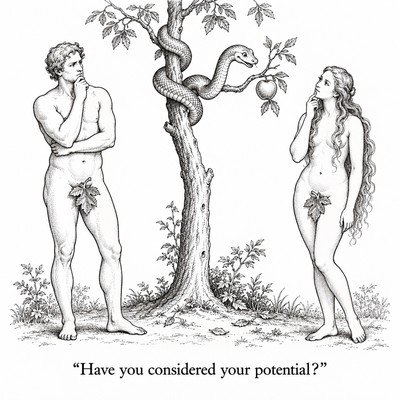
The serpent understood this. He did not tell Eve that disobedience would be a fine opportunity to disappoint her Creator. He offered an upgrade. Eat this, and you will become more than you are. The Garden was lovely, certainly, but had she considered her potential?
It was the first recorded sales pitch for personal growth. The cancellation policy was severe.
Willett cites the modern checklist for a prospective husband: height, income, emotional intelligence, and a past conveniently free of other people. Somewhere there ought to be a second column headed “What I Bring.” This column often seems to have suffered a printing accident.
Men keep their own specifications, of course. A fellow with the conversational range of a lawn sprinkler may be looking for beauty, youth, devotion, and somebody who understands him. He has never understood himself, but feels the job ought to be outsourced.
The trouble is not having standards. It is arranging them so that nobody can qualify, then treating the vacancy as proof of your excellence.
Sloth, in Willett’s account, is not merely sleeping late. It is neglecting what you have while explaining that maintenance shouldn’t be necessary. Love ought to flow naturally, like municipal water. If it takes effort, perhaps you picked the wrong person. By this reasoning, a garden that needs weeding proves you deserve a better garden.
Dating apps help. They have turned the search for companionship into shopping for a hotel room, except that the hotel room may reject you for being five feet nine. Every attractive face carries the hint that a better one is waiting just below it. Eventually you are less interested in meeting somebody than in making sure you haven’t missed somebody else.
This is an exhausting way to stay single.
Gluttony can involve faces as easily as doughnuts. After the first dozen, you are eating without much hope of nourishment. The appetite keeps going long after anyone remembers what it was for. You started out wanting a dinner companion. Now you are inspecting strangers at midnight with the grim attention once reserved for a suspicious charge on the phone bill.
Lust adds its own confusion. Wanting an attractive partner is nothing new. What’s new is carrying an endless catalog of them in your pocket. A real person has inconvenient dimensions: habits, fears, relatives, and opinions about the thermostat. A photograph never asks what you meant by that.
Greed is a standard that moves whenever somebody reaches it. Six feet sounded fine until six feet showed up. Now six feet four seems more in keeping with your destiny. A good income becomes an unambitious income. Contentment would ruin everything. Accepting somebody would mean disbanding the committee that has been reviewing applications, and the committee enjoys its work.
Envy once required a visit to the neighbors. Now the neighbors come to you, bringing strangers from Tuscany. Your husband is unloading the dishwasher while another woman’s husband is apparently buying a vineyard. Naturally, yours suffers by comparison. He has put the spatula in the wrong drawer.
The vineyard husband may be a sore trial himself. The photograph doesn’t say. Nobody posts the forty-minute argument about whose suitcase has the phone charger.
Wrath can make a person feel wonderfully energetic. There you were, vaguely let down by Tuesday, and suddenly you have a case to prosecute. Friends testify. Strangers recommend a sentence. Your husband is the defendant in proceedings he didn’t know had begun. This can feel like solidarity, though solidarity works better when somebody has heard the defense.
Contempt isn’t on the official list of seven, an oversight the theologians should look into. It is more dangerous than wrath. Anger at least concedes that the other person matters enough to upset you. Contempt declares him beneath notice. Make it public, collect the approving comments, and a private disappointment becomes a spectator sport. The audience has a fine time. The marriage gets the bill.
None of this proves that women are responsible for failed marriages. Men have been perfecting selfishness for centuries without professional help. Nor is leaving cruelty or abuse a failure of diligence. Some doors ought to close.
Ordinary disappointment is another matter. A spouse is a person, which means the product arrives with defects and develops more in service. So do you. So, I am reliably informed, do I. The old virtues made allowances for this: patience, kindness, humility, and doing your share when nobody is filming.
They are hard to monetize. “Be patient with the man who forgot the milk” is unlikely to sell many subscriptions.
The uncomfortable question is what happens after the excitement wears off. There is still a kitchen, still a Tuesday, and still the possibility that your own contribution to the trouble deserves a look. This is where pride usually remembers an appointment elsewhere. Self- examination has terrible customer retention.
Eve wanted more. Adam, who was also present and apparently available for decisions, joined in. When the questions began, he blamed the woman. This established another durable custom.
The fruit was never identified as an apple. We supplied that detail. We like our temptations attractively packaged.
We still do. Only now the serpent has a ring light, and the fruit comes with a link.
Sig Keppen was a fighter in the 1920s, embodying the spirit of resilience and courage as he faced opponents in the ring, one bout at a time.
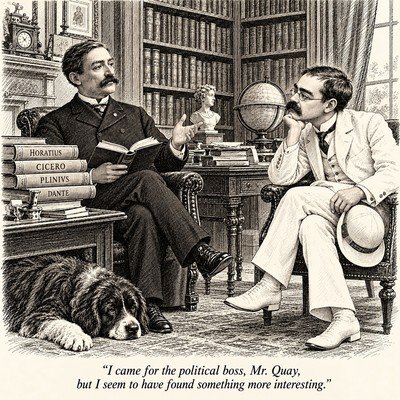
Matthew Stanley Quay was a powerful political boss, but his true passion lay in literature and knowledge, revealing a complex legacy beyond politics.