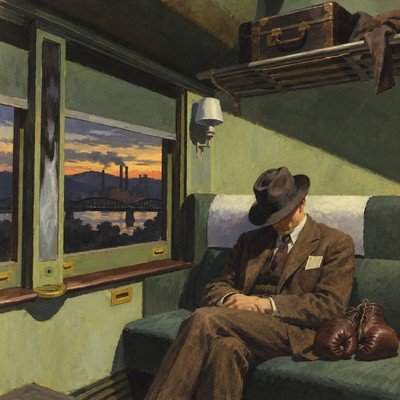
Sig Keppen: A Fighter by His Trade
Sig Keppen was a fighter in the 1920s, embodying the spirit of resilience and courage as he faced opponents in the ring, one bout at a time.

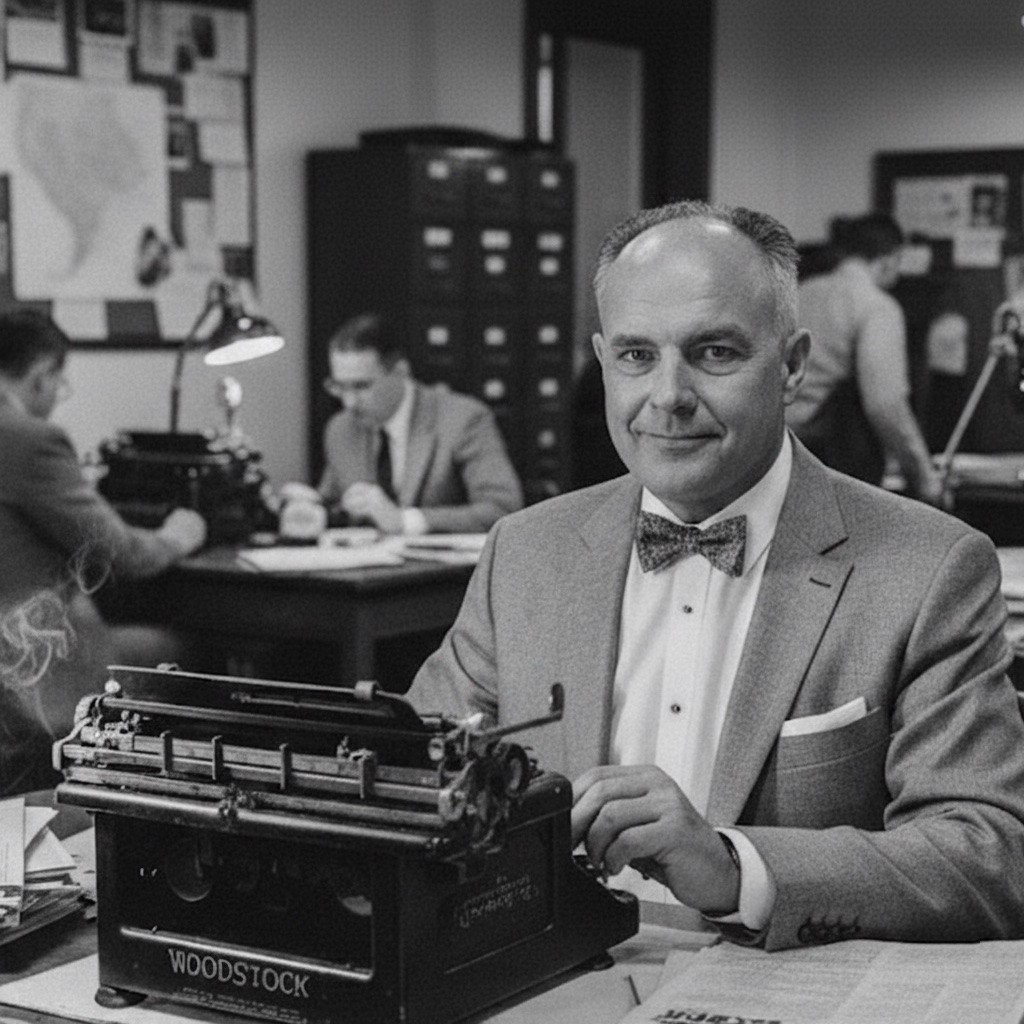

Rodger Morrow
Editor & Publisher, Beaver County Business
This comic page from 1965 wants you to like the world. That is its entire assignment, and it goes about the job with the confidence of an elementary-school teacher armed with construction paper, a jar of paste, and the United Nations.
Children sit in wholesome classrooms passing around pictures from distant lands. A Dutch girl has drawn a snowman. An Indian boy has drawn an elephant. One American correspondent reports a hike and hot dogs, which may be the last moment in our foreign policy that could be summed up so pleasantly.
Another boy writes that he helped tame a water buffalo so the family could hitch it to a cart. The children are delighted. Nobody asks why one country has station wagons and the other is still negotiating with a buffalo.
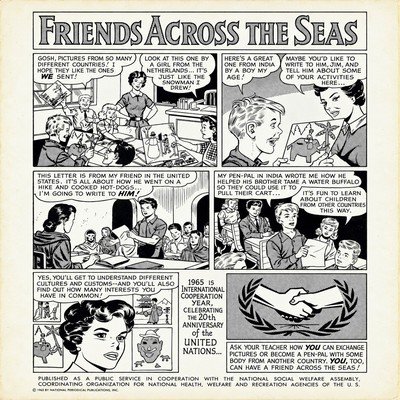
The lesson is called "Friends Across the Seas." Exchanging pictures, the teacher explains, helps children understand other cultures and discover how much they have in common. At the bottom, a handshake sits inside a laurel wreath, over the news that 1965 is International Cooperation Year and the UN's twentieth birthday. Ask your teacher how you, too, can acquire a foreign friend.
It is a charming page. It is also a whole theory of international relations, wearing a schoolroom smile.
The theory holds that nations are large collections of pen pals. They eat different foods, wear different costumes, and keep different livestock, but once the pictures have been exchanged, everyone will discover a shared love of snowmen, hiking, and peace.
Alexander Hamilton and Henry Clay took a dimmer view.
Their American System began with the awkward idea that political independence isn't worth much if a country depends on foreign workshops for the things needed to clothe, house, employ, and defend its own people. A nation, Hamilton thought, ought to produce the essentials of its own existence.
Clay wanted the regions of the country trading mainly with one another. Northern factories would buy Western grain and Southern raw materials, and the money would stay home long enough to build roads, canals, banks, and mills.
Tariffs were part of the plan — not because Americans disliked foreigners, or hadn't traded enough drawings with them, but because young industries needed protecting while they learned to stand up.
The British preached a different gospel: free trade. This was a fine doctrine for Britain, which had already protected its own industries, built the world's greatest manufacturing base, and
acquired a navy able to deliver British goods to anyone who'd forgotten to order them. Once Britain became the workshop of the world, it developed a touching concern for keeping everyone else's doors open. Other countries would send cheap food and raw materials; Britain would send back expensive finished goods. The British called this cooperation. Clay noticed that the cooperation required Britain to own most of the machinery.
For most of the past half-century, American leaders preferred the comic-book theory. Trade was good in itself. It hardly mattered who made the cart, so long as Walmart could sell it for $29.95, assembly instructions not included.
The present administration has revived something close to the American System, though Hamilton and Clay have not yet been given titles.
Treasury Secretary Scott Bessent wants tariffs to bring the factories home, along with the jobs. Tariff revenue, in his telling, is not the prize; the factory is the prize, and the payroll, and whatever productive capacity is left standing once the tariff has done its work. He has put it plainly: "Hire your workers here. Build your factories here. Make your products here."
U.S. Trade Representative Jamieson Greer puts it just as plainly. Trade is neither good nor bad; the question is whether a given pattern of it serves the national interest. The administration's answer runs to tariffs, reciprocity, more room abroad for American exports, and reindustrialization at home. Greer says as much outright.
Hamilton and Clay would know the argument on sight. So should Beaver Countians.
This county once made steel, glass, pottery, railroad equipment, and landing craft for D-Day. Men went to work in mills whose products traveled the world. The Beaver Valley wasn't merely part of the American economy. It helped build it.
Then came the sophisticated people, explaining that it didn't matter where things were made. Goods would be produced wherever production was cheapest; Americans would get lower prices, developing nations would prosper, and everyone would be friends across the seas.
The mills closed. The jobs crossed the seas. The friendship didn't always leave a forwarding address. We got cheap television sets, at least, on which to watch documentaries about the collapse of American manufacturing.
The comic still charms, because its optimism was real. Its creators had lived through a depression and a world war, and had good reason to hope that children who knew one another might be less inclined to shoot one another later. That hope deserves respect.
But goodwill is not an industrial policy. A handshake inside a laurel wreath will not make steel, produce medicine, build a ship, or keep a town employed. Friendship between nations is desirable. Dependence on them is a different matter.
So let the children trade their pictures. Let the Dutch girl send her snowman, the Indian boy his elephant, the American child his report on roasting hot dogs.
But before we congratulate ourselves on how much we have in common, we might ask Henry Clay's impolite question: after all the understanding, who is still making the cart?
Sig Keppen was a fighter in the 1920s, embodying the spirit of resilience and courage as he faced opponents in the ring, one bout at a time.
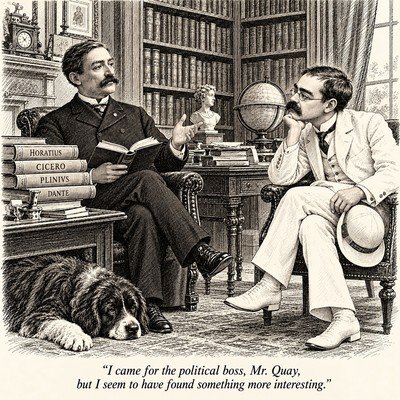
Matthew Stanley Quay was a powerful political boss, but his true passion lay in literature and knowledge, revealing a complex legacy beyond politics.