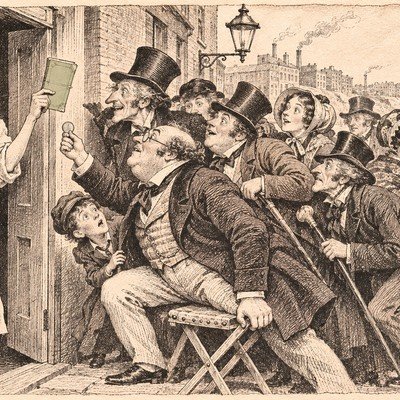
The Waiting Game
From Dickens to Stowe, the art of serial storytelling captivated America, turning readers into a community eager for every installment and discussion.



Rodger Morrow
Editor & Publisher, Beaver County Almanac
Dinner for two now comes with a third party: the household budget. By Rodger Morrow Editor & Publisher Beaver County Almanac
There was a time when “Let’s go out to dinner” meant neither of us felt like cooking.
Now it means neither of us feels like cooking badly enough to accept the consequences.
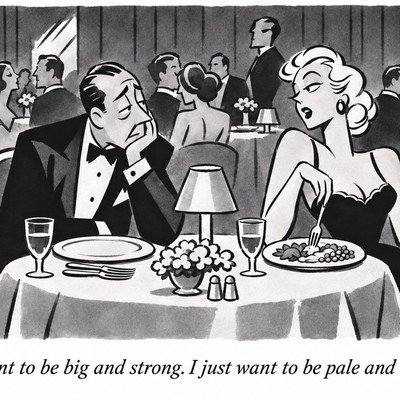
An ordinary evening out has taken on the gravity once reserved for replacing the furnace. You study the menu online. You ask whether an appetizer is necessary. You settle on a position about wine before opening negotiations with the waiter.
Romance is not dead. It is reading the right-hand side of the menu.
Gallup has put numbers to this. In its July survey, 39 percent of American adults said they ate at a restaurant at least weekly, down from 47 percent in 2022 and 53 percent in 2019. That is the lowest rate since Gallup began asking, in 2018.
The country has not stopped going out. It has started needing a reason.
A birthday will do. An anniversary still carries weight. Thursday, which used to be reason enough to let somebody else cook the chicken, no longer gets by on its own.
Only 4 percent say they never eat out. But the share going a few times a year or less has doubled since 2019, to 20 percent. The restaurant has joined the dentist on the calendar, although people still look forward to the restaurant.
The obvious suspect is the bill.
According to the Bureau of Labor Statistics, restaurant prices rose 3.5 percent in the year ending in September, while grocery prices rose 1.8 percent. That is on top of everything that went up before.
When inflation slows, the old prices do not come back. They have retired to Florida.
The hamburger that got expensive last year is still expensive. Economists may now congratulate it on getting expensive more slowly.
At home, a person can make several hamburgers for the price of one restaurant hamburger, provided he does the cooking, washes the skillet, and does not charge himself rent.
The restaurant does not have that option.
When the check arrives, it is tempting to suspect that someone has discovered a profitable racket in potatoes.
But the owner pays for the potatoes, the person who peels them, the stove, the electricity, and insurance against whatever potatoes might conceivably do.
Then there is rent. Landlords rarely accept a free dessert.
The customer sees an expensive dinner. The owner sees an empty table. They are looking at the same problem from opposite sides of the breadbasket.
Nor is this simply people with modest incomes being priced out.
Gallup found the latest decline came mostly among middle- and upper-income adults. Weekly dining among lower-income adults held at 32 percent. Among middle-income adults it fell to 38 percent, and among upper-income adults to 48 percent.
People with money are reconsidering dinner, too.
The question has grown larger than “Can we afford it?” Increasingly, it is “Was it worth it?”
A Friday regular expects a pleasant dinner. A customer who has chosen your place for the month’s big night out expects an evening.
The food should be good. The welcome should be warm. Conversation should be possible without one spouse signaling the other like a man parking airplanes.
Nobody should feel ambushed by the check.
Beaver County has no Gallup dining survey of its own. A national percentage set down on a table in Bridgewater is not local reporting.
But the decision is familiar here. A household juggling groceries, utilities, insurance, and prescriptions finds the one expense that can wait until next Friday.
Then next Friday comes.
Those postponed Fridays add up. An anniversary reservation cannot replace the couple who came twice a month and knew which waitress had a daughter graduating.
Regulars give a restaurant continuity. They give us a place to belong without making arrangements.
Takeout has not rescued the habit. Weekly ordering slipped to 31 percent, from 39 percent in 2021. Americans are reconsidering what it costs to eat restaurant food in their own chairs.
There is nothing wrong with staying home. Some excellent marriages have been sustained by soup.
Still, dinner out offers an escape from domestic machinery. Someone else cooks and clears the plates. The person across the table becomes company instead of a co-administrator of the household.
For an hour, there is no dishwasher to unload and no refrigerator to inspect for something that ought to have been thrown away Tuesday. You can finish a sentence. With luck, you can remember what first made you want to hear the other person’s.
Maybe date night survives by getting simpler: a modest meal, a familiar room, two people glad to be there.
The important thing is to keep looking at each other. There will be plenty of time later to study the check.
From Dickens to Stowe, the art of serial storytelling captivated America, turning readers into a community eager for every installment and discussion.
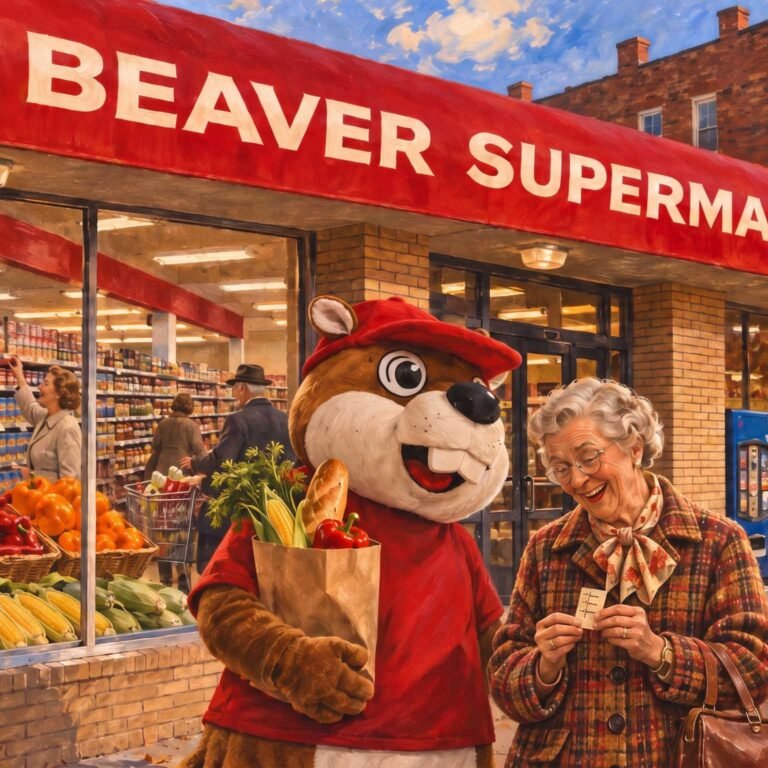
Beaver Supermarket, the last independent store in the county, faces challenges but remains a vital community hub. Support local and shop small this season.