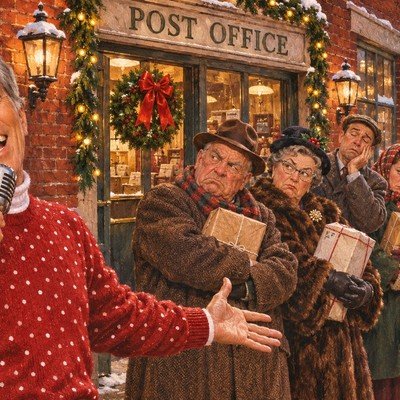
The Most Wonderful Time of the Year
As the holiday rush begins, we grapple with the chaos of shopping, cards, and celebrations, seeking moments of warmth amid the frenzy.

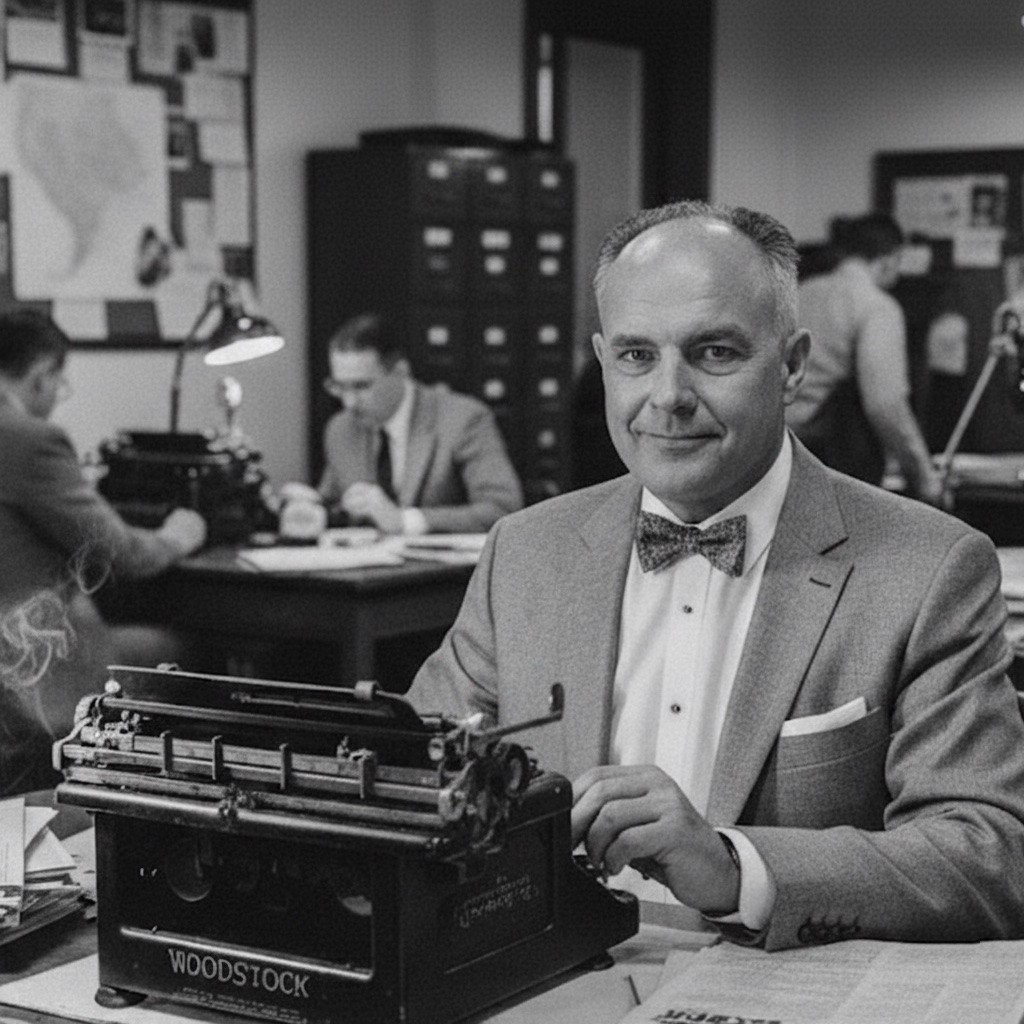

Rodger Morrow
Editor & Publisher, Beaver County Almanac
How we learned to love the next installment—and then demanded all ten at once.
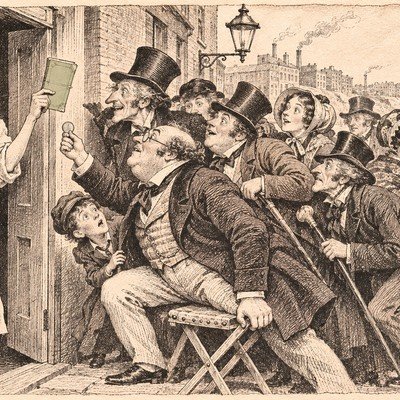
Charles Dickens did not invent the serial novel. Publishers had been selling books in pieces long before he arrived. What Dickens demonstrated was that a writer could turn an entire nation into a waiting room and have the occupants thank him for it.
The habit traveled by canal boat, steamboat, radio, and television until it reached its present condition: a person watches an entire season over a weekend and announces on Monday that there is nothing to watch.
Western Pennsylvania had a part in this development. It generally does, although the histories tend to get interested only after somebody in New York notices.
Dickens’s contribution began with an assignment that did not sound especially promising. In 1836, Chapman & Hall hired the 24-year-old writer to supply words for a series of comic sporting illustrations. The pictures were supposed to be the attraction. Dickens was there to fill the space around them.
The Posthumous Papers of the Pickwick Club appeared in monthly numbers, generally offering about 32 pages, illustrations, advertisements, and a green paper wrapper, for one shilling. A new novel in the usual three-volume format could cost about 31 shillings.
At first, Pickwick did poorly. Then Dickens introduced Sam Weller, a servant whose observations suggested that his employers had been receiving rather too much credit for their intelligence.
Sales rose. By the final number, circulation had reached about 40,000. Earlier installments went back to press. Weller’s sayings circulated, and merchandise followed.
The public had discovered a fictional character it wanted to take home. Publishers had discovered that they could charge admission every month.
Dickens settled into a system he used for many of his major novels: twenty monthly parts issued over about nineteen months, with a double number at the end. The reader paid while reading. The writer was paid while writing.
This last provision deserves a moment of respectful silence.
Each installment had to provide enough satisfaction to justify the shilling and enough unfinished business to justify another one. A character might find happiness, but it was unwise to let everybody find it in the same number.
The working principle is often summarized as “make ’em laugh, make ’em cry, make ’em wait.”
Dickens became exceptionally good at all three.
He later worked in weekly installments, too, publishing Great Expectations in All the Year Round. The interval changed. The essential arrangement held: here is something you want to know, and here is when we propose to tell you.
Readers discussed the characters between issues. They wrote letters offering advice. They worried about people who did not exist with an energy their actual relatives might have appreciated.
The waiting became part of the pleasure.
A story belonged to the household, the neighborhood, and the people who had read far enough to argue about it. The bound book came later, after the characters had already spent months visiting.
For western Pennsylvania, however, the idea of a continuing story was hardly an import requiring instructions from London.
Hugh Henry Brackenridge had been at it before Dickens was born.
Brackenridge was a lawyer, newspaperman, and eventual judge who settled in Pittsburgh when the place still had considerable room for improvement and no shortage of citizens qualified to explain how it should be done.
Beginning in the early 1790s, he published Modern Chivalry, a sprawling satire that appeared in stages over more than twenty years. Early volumes were printed in Philadelphia; a later volume was printed in Pittsburgh by John Scull.
Its central travelers, Captain John Farrago and his Irish servant, Teague O’Regan, encountered elections, courts, newspapers, and the young republic’s growing supply of important men.
America was still a new country, but it had already produced enough pretension to keep a novelist occupied for decades.
Brackenridge’s irregular volumes were a different proposition from Dickens’s carefully managed monthly numbers. Still, the continuing form gave him room to add, revise, and take another look at the democracy developing around him.
Western Pennsylvania was building its institutions and furnishing them with human beings. Anyone who has attended a public meeting will recognize the literary possibilities.
Brackenridge belonged to an early American tradition of fiction published in stages. The most consequential American serial of the Victorian age would use the continuing story to address something considerably more serious than frontier pretension.
In early 1851, Gamaliel Bailey, editor of the Washington antislavery weekly The National Era, invited the abolitionist Harriet Beecher Stowe to contribute a story. He gave her the sort of editorial freedom writers dream about and editors generally learn to regret.
She expected to need three or four installments.
Uncle Tom’s Cabin ran for forty-one.
From June 5, 1851, to April 1, 1852, readers followed it week by week. Scholars at the University of Virginia’s Uncle Tom’s Cabin archive estimate that at least 50,000 people read the serial. Families gathered when the newspaper arrived to hear the latest chapter read aloud.
The newspaper had brought slavery into the parlor, where it became harder to dismiss as somebody else’s business.
When the book appeared in March 1852, it became a phenomenon. The Library of Congress puts first-year sales at 300,000 copies.
A novel that helped change the nation’s understanding of slavery had begun as a newspaper contribution and grown to ten times its intended length.
Nearly a decade before Stowe’s serial began, Dickens himself had reached Pittsburgh and found an American audience thoroughly familiar with his work.
Some of it had even paid somebody for it.
Dickens and his wife, Catherine, crossed Pennsylvania in late March 1842 by canal and the inclined planes of the Allegheny Portage Railroad. They entered Pittsburgh over the Allegheny by wooden aqueduct and stayed at the Exchange Hotel, near present-day Penn Avenue and Sixth Street.
He found smoke, ironworks, and the local assurance that Pittsburgh resembled Birmingham. Industrial towns were then proud of comparisons that a chamber of commerce might now prefer to explain.
He visited the penitentiary and the arsenal, dined with a portrait painter he knew from London, and eventually boarded the steamboat Messenger for Cincinnati.
He had been advised to select a vessel with dependable safety valves.
The American journey furnished material for American Notes and, with considerably less affection, Martin Chuzzlewit. It also gave Dickens an extended opportunity to consider a business arrangement under which American publishers sold his books and kept the money.
The United States offered no effective copyright protection for a British author’s work. Printers could reproduce his installments, satisfy the waiting public, and leave Dickens to enjoy the spiritual rewards of authorship.
Americans admired him enormously until he raised the subject. Then many discovered that their admiration had limits.
The principal publishing pirates operated in eastern cities, but western readers belonged to the market they served. Dickens’s stories traveled into the river towns. Readers waited for the next installment here, too.
The royalties had more difficulty making the journey.
The serial bargain survived Dickens, Stowe, and the green wrapper. Newspapers carried continuing fiction. Dime novels and adventure stories supplied fresh danger at affordable prices.
Radio brought the arrangement into the living room. Movie serials left a hero in circumstances that required another Saturday’s attendance. Television established the weekly appointment so firmly that families arranged their evenings around the difficulties of other families.
For generations, a continuing story came with a calendar.
Then technology offered to remove the inconvenience.
Streaming services made whole seasons available at once. Viewers could proceed directly from the discovery of the body to the arrest of the murderer, pausing only when the television asked whether they were still there.
It is an oddly personal question from an appliance.
The freedom has its attractions. Nobody needs to be home at nine. Nobody has to spend a week wondering whether a supporting character survived an explosion when the answer is available by pressing a button.
But the conversation has become complicated.
One friend has finished the season. Another has reached episode four. A third intends to begin after Christmas. Discussing the program requires the preliminary negotiations of a minor trade agreement.
“Have you got to the part where—”
“No.”
And there goes lunch.
We have also developed an impressive new method of waiting. Having consumed ten episodes in two days, we wait a year or two for the next season.
Dickens, who generally asked for a month, might have admired the nerve.
The appetite itself would have been familiar to him. It would have been familiar to Brackenridge, too, working away in a western town whose ambitions kept supplying another volume. Stowe showed how powerfully that appetite could serve a moral purpose.
We still want characters worth following, trouble worth investigating, and some reason to believe the next chapter will reward our attention.
What has changed is our confidence that pleasure improves when delivered immediately and in bulk.
Dickens sold a shilling’s worth of anticipation and persuaded readers to enjoy the interval.
We have eliminated most of the interval, watched everything available, and begun wondering what is taking the writers so long.
As the holiday rush begins, we grapple with the chaos of shopping, cards, and celebrations, seeking moments of warmth amid the frenzy.
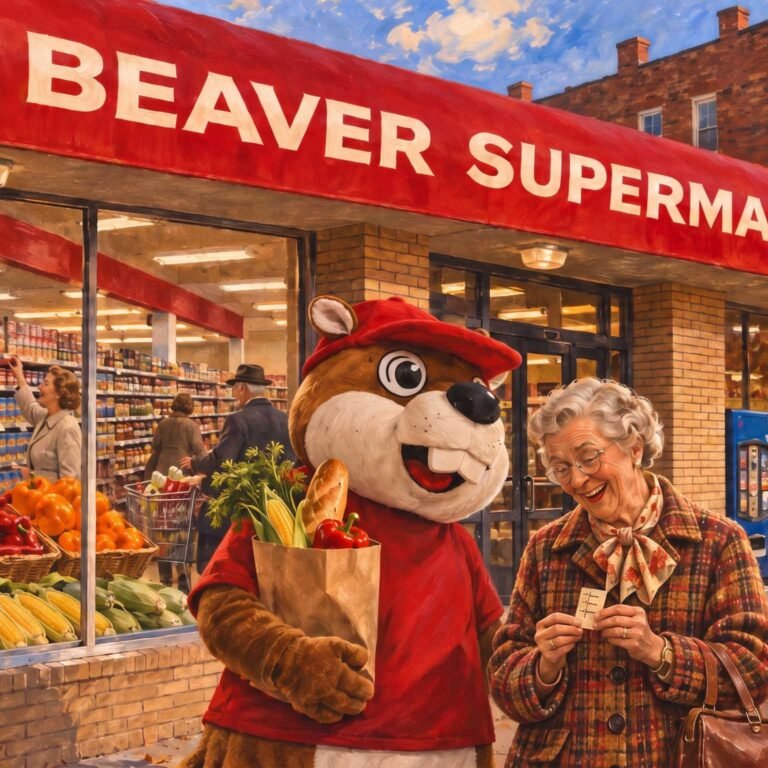
Beaver Supermarket, the last independent store in the county, faces challenges but remains a vital community hub. Support local and shop small this season.