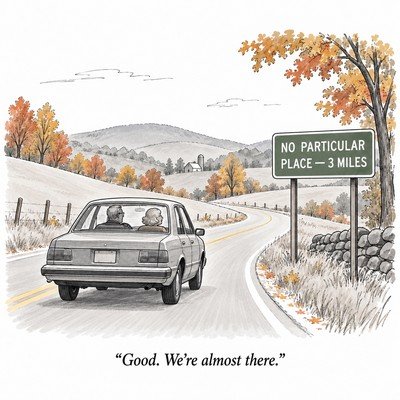
No Particular Place to Go
Embrace early fall in Beaver County with aimless drives, fresh cider, and unexpected discoveries. Adventure awaits just beyond your familiar routes.

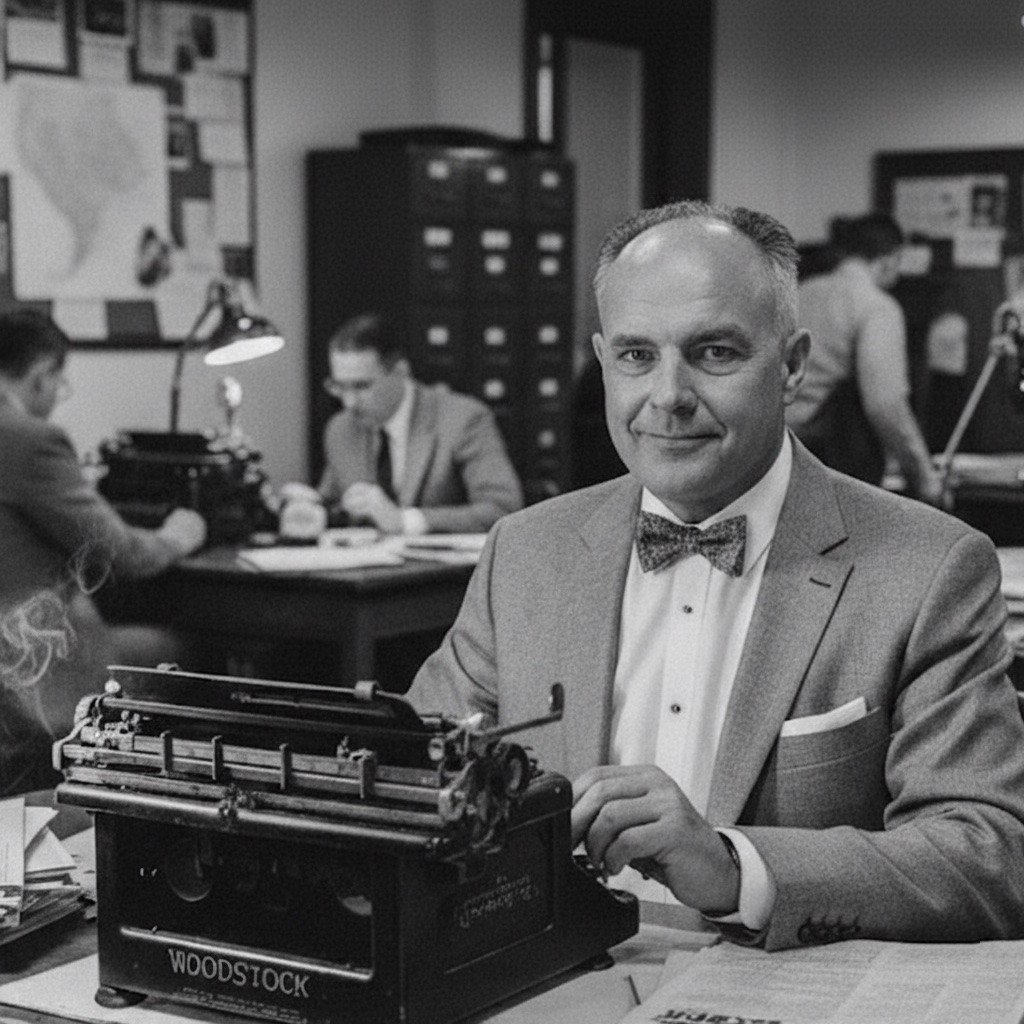

Rodger Morrow
Editor & Publisher, Beaver County Business
With Apologies to Sir Winston Churchill By Rodger Morrow Editor & Publisher Beaver County Almanac
Sir Winston Churchill opens My Early Life by asking when a child first begins to remember. He answers with Ireland, scarlet soldiers, the Duke of Marlborough, political upheaval, and a donkey that threw him hard enough to introduce him to Irish politics.
I begin with Corn Flakes.
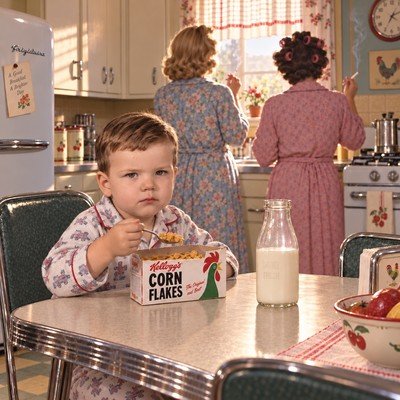
They came in miniature boxes converted into bowls by opening a perforated panel, cutting the waxed-paper liner, and adding milk—a marvel promising a future without dishes. I was eating from one of these boxes at a kitchen table in the Gravenhurst subdivision of Chippewa Township. My mother sat across from a neighbor whose name, I think, was Audrey. They drank coffee, smoked cigarettes, and discussed matters beyond my jurisdiction.
Nearly every adult smoked then. My father did not. Raised as a Covenanter, he neither smoked nor drank, although my mother did both. They may have discussed Eisenhower, the Russians, or somebody in Gravenhurst who had bought curtains beyond her station. At four, these carried equal geopolitical weight. I remember cigarette smoke in the morning light and milk collecting in a cardboard box.
That is how memory works. It discards the news and keeps the Corn Flakes.
My first memory may be earlier. I remember a circus in Beaver Falls, though not which one. The Cristiani Brothers came in May 1956, when I was approaching three. That seems young to remember a circus trick, but I have forgotten entire years of adult life that cost considerably more.
A bald clown placed his head inside a hair-growing machine. After noises, lights, and smoke, he emerged with magnificent rainbow-colored hair. The other children applauded.
I demanded an investigation.
I pestered my mother until she explained the trick. Presumably it involved a concealed wig and the suspension of regulations governing truth in advertising. I could not accept the miracle until somebody showed me the machinery.
We did not remain in Gravenhurst long.
My father, as he told me years later, despised being told by his fellow citizens what to do. He was something of a libertarian before anyone had thought to coin the term, although his political philosophy was less likely to be expressed in a learned essay than in a refusal to take advice.
One day, a neighbor informed him that he was mowing his grass incorrectly—crossing the rows diagonally instead of horizontally and vertically. Or perhaps it was horizontally and vertically instead of diagonally. I no longer remember the geometry of the offense.
My father solved the problem by removing neighbors from the equation.
He moved us to Friendly Manor Farm, 156 acres on McGaffick Road in Chippewa Township, where the closest neighbor lived about a mile away and could mow his own grass however he pleased.
Having established adequate Lebensraum, my father petitioned Chippewa Township—probably during a somnolent meeting of the board of supervisors—to change the name of McGaffick Road to Morrow Road.
And why not?
There were no McGafficks living there. There were, however, three Morrows.
Our house stood above a valley so cold in winter that my mother called it “Little Siberia.” The modern house occupied the original farmhouse’s foundation, giving it roots older than its architecture and plumbing that sometimes seemed older than either.
It was a wonderful place to grow up.
I was known as Roddy then and was permitted to roam the farm with remarkably little supervision. It was simply childhood. Adults had work to do, children had territory to explore, and everyone assumed we would return by supper unless something genuinely interesting happened.
Smoky, our Weimaraner, was usually my accomplice.
Some of my happiest memories are of riding around the farm in a Jeep. They bounced, rattled, smelled of gasoline, and conveyed the agreeable sense that the Second World War might resume beyond the next hill.
In a neglected corner of the farm stood several apple trees. I do not know what variety they were or who had planted them. They may have been remnants of an old orchard or merely trees forgotten by everyone except the birds and us. We would stop the Jeep and pick the apples directly from the branches.
They were the best apples I have ever tasted.
Memory is an unreliable produce manager. It improves the color, removes the bruises, and adjusts the sweetness.
The woods offered blueberries, blackberries, wild strawberries, cherries, chestnuts, persimmons, teaberry leaves, and sassafras. We chewed teaberry leaves and dug sassafras roots for tea. A wild strawberry is about the size of a shirt button and contains more flavor than the swollen red objects now sold under the same name.
My mother had discovered wild strawberries not in Chippewa Township but during a stay at the Royal Monceau Hotel in Paris. The dessert cart, she said, carried them by the thousands. One imagines a silver bowl heaped with tiny berries, presented beneath chandeliers by a waiter who had never pumped gasoline or been bitten by a Shetland pony.
I found the berries closer to home and grazed across the property with the confidence of someone who had never read a warning label. Something was always flowering, fruiting, nesting, running, or hiding. The farm was not yet “habitat,” a word suggesting that a committee has been formed. It was simply where everything lived.
One day, while we were riding in the Jeep, Smoky discovered a fawn hidden in the brush.
A doe will leave her newborn fawn concealed while she feeds, relying on its stillness and lack of scent to keep it safe. The fawn was doing exactly what nature required. Smoky was also doing what nature required, which is one of nature’s less attractive administrative arrangements.
By the time my father got the fawn out of Smoky’s mouth, it was badly injured. We tried to save it. I held it in my lap, trusting that whatever adults did next would make it well again.
It died there.
That was the worst day of my young life.
Until then, death was something adults mentioned in lowered voices. That day it became warm, frightened, and terribly light in my lap. I loved Smoky before and afterward, but something had changed.
The farm also contained machinery, which offered hazards of a less philosophical sort. Near the barn stood a gasoline tank used to refuel the tractor, hay baler, mower, and other equipment. The tank had a hand pump operated by turning a crank.
One day, unbeknownst to my parents, I climbed on top of it and began pumping gasoline. I had no particular objective. I had reached the pump and discovered that I could make gasoline come out. These achievements seemed sufficient.
I kept cranking.
The ground soon became saturated. The environmental report, had there been one, would have reflected poorly on management. Fortunately, nobody struck a match or discovered my crime.
For years my parents believed they had entrusted the farm to a reasonably responsible child. In fact, they had left a small petroleum vandal in charge of the fuel supply.
I escaped justice on that occasion.
I was less fortunate after an expedition into the woods below our house. Smoky and I wandered down the hill, farther than I had apparently been authorized to go, although the borders of my freedom had never been surveyed with precision. Trees gradually concealed the house until the farm became a wilderness.
In the side of the hill I found what looked like the entrance to an abandoned mine. It may have been a mine, a cave, or merely a dark cut in the earth that memory has enlarged. To Roddy and Smoky, it was the entrance to the underworld.
We investigated.
Eventually, I heard my mother’s voice, faint but unmistakable, coming from the direction of the house. There are sounds that travel astonishing distances when they contain your full name and the promise of consequences. Smoky and I headed home.
Unlike the gasoline affair, this offense had been detected. My mother pulled down my corduroys and spanked my bottom firmly. The safety system consisted of my mother calling from a distant hill. I survived and learned that a Weimaraner provides companionship but no legal defense.
Smoky occupied a powerful position in the government of Friendly Manor Farm. He had been an only dog and did not respond gracefully when my parents enlarged the cabinet. In time there was a St. Bernard named Hercules, a Mexican burro named Tamale, a Shetland pony named Weeds, two Kentucky show horses, a herd of Black Angus cattle, and enough barn cats to prevent mice from organizing politically.
Weeds took great delight in biting me.
People who have not dealt with Shetland ponies imagine them as horses reduced for the convenience of children. This is incorrect. A Shetland pony is a full-sized grievance compressed into a smaller body.
Tamale was female and more philosophical. She wore the expression of a creature that had reviewed the evidence and reached an unfavorable conclusion about mankind.
Hercules was enormous, good-natured, and politically naïve. Smoky recognized him as a rival and began leading him on long expeditions away from the house, apparently hoping to get him lost. Smoky returned alone looking satisfied. Hercules eventually reappeared, delighted to see everyone and unaware that an attempt had been made on his position.
Hercules finally went to live on my Uncle Dick’s farm in Hookstown. Officially, he had been transferred. Smoky regarded it as regime change.
The farm’s highest-ranking residents were two show horses that, as I remember it, had come from Dodge Stables in Lexington, Kentucky. Kentucky Beau was a massive five-gaited American Saddlebred. Teeter-Totter was a fine-harness horse, an occupation that sounded less like a show classification than a character reference.
They were magnificent and aware of their position. In Kentucky, horses had pedigrees, professional staffs, and better housing than many newspaper editors.
Tamale supplied the corresponding peasantry.
There was also a herd of Black Angus cattle. I regarded them as large, peaceable companions. My parents regarded them as a long-term plan for keeping the basement freezer full. Childhood permitted these interpretations to coexist.
I spent hours among the horses and cattle, an activity now requiring a helmet, waivers, insurance, and supervision. One afternoon I climbed onto a suitable object and preached a fire- and-brimstone sermon to the herd.
I do not remember the text. It may have concerned the wages of sin, the fires of perdition, or a generalized warning about conduct in the pasture. I had absorbed the central lesson of preaching, which is that the speaker should possess more urgency than the congregation.
The Black Angus listened with the solemn expressions cattle bring to theology. Kentucky Beau and Teeter-Totter continued grazing, having heard better speakers in Lexington. Tamale seemed genuinely confused. Her ears moved back and forth as she tried to determine whether salvation would require anything strenuous.
I do not recall making any converts.
Friendly Manor contained Kentucky aristocrats, Scottish cattle, a Mexican burro, and one undersized American evangelist—an early experiment in international government.
The larger world came to me through my mother.
My parents belonged to something I remember as the Beaver Valley Travel Club, though it may have been the Beaver County Travel Club or something else altogether. Memory preserves destinations more faithfully than stationery.
My parents reached a practical division of labor. My mother would travel, while my father remained in Beaver Falls to operate the automobile dealerships and, as he liked to put it, “water the money tree.”
It appears to have worked.
My mother made two trips to Europe with Gert Trobe, one of WBVP’s original on-air personalities. I remember England, France, Spain, Italy, Switzerland and the Kodacolor movies she brought home.
Home movies required ceremony. The projector was set up, the screen erected, and the film threaded through a route only slightly less complicated than the Northwest Passage. The lights went out, the Bell & Howell projector clattered, and Europe appeared in flickering rectangles.
My mother had seen mountains, cities, cathedrals, hotels, cafés, and thousands of wild strawberries at the Royal Monceau. Then she returned and projected them on a wall in Chippewa Township.
More exciting than the movies, however, were the souvenirs. She brought lederhosen from Switzerland, a black beret from France, and a bullfighter’s hat and cape from Spain. I was equipped to climb a mountain, write an existential novel, or kill a bull, depending upon the day’s accessories.
Photographs may yet surface to eliminate the remaining dignity of my old age.
The world extended beyond Morrow Road and Seventh Avenue. My mother had gone to important places and returned. The planet seemed enormous but negotiable.
My father remained home, watering the money tree.
Baseball enlarged the world in another direction. I discovered the Pittsburgh Pirates through Bob Prince on a red transistor radio. I am fairly certain it was red, although seventy years of memory may have improved the color.
Prince did not merely announce a game. He conducted it, embroidered it, argued with it, and occasionally seemed prepared to climb out of the radio and manage it himself. His voice, the crack of the bat, and the rising crowd created Forbes Field in the mind. Radio supplied exactly as much picture as a boy required. Imagination furnished the rest.
One summer my father took me to a Pirates game and, through some connection I never understood, led me to the broadcast booth to meet Prince.
I was terrified.
“The Gunner” was on the air, and I knew I had to remain absolutely silent. One cough, one dropped program, or one ill-timed question might be transmitted across Western Pennsylvania and spoil the afternoon for several hundred thousand people.
We could speak during commercials. I remember that Ford was a sponsor, which was reassuring. Ford paid the bills, my father sold Fords, and Bob Prince announced the Pirates. The principal institutions of my life had reached a satisfactory commercial arrangement.
When the commercial ended, silence again became a matter of regional importance. I left elated but relieved, having met the voice inside my radio without causing KDKA to lose its license.
On another visit, my father took me into the Pirates’ dugout. There stood the players themselves, including Elroy “Roy” Face, the legendary relief pitcher. They were no longer names summoned by Prince or pictures on baseball cards. They were full-sized men in Pirates uniforms, close enough to touch.
This proved too much.
The ballpark, the players, the popcorn, and the soda pop combined in my stomach with unfortunate results. I threw up in front of the Pittsburgh Pirates.
As my father hurried me away, I turned back and said, “I’m sorry, boys.”
Roy Face later appeared at our dealership to sign autographs during new-car introductions. I once had my picture taken sitting on his lap, and he signed a baseball for me. I still have it, though his signature has faded. Enough remains to prove that one of Bob Prince’s Pirates stepped out of the radio and into my father’s showroom.
New-car introductions were major civic occasions then. Automobiles changed visibly from year to year, and Detroit treated each arrival as news requiring suspense, secrecy, and refreshments.
The dealership’s enormous showroom windows were covered with paper so nobody could see the new models before their unveiling. Behind this barricade waited next year’s grilles, tailfins, chrome, colors, and promises. The precautions suggested that Chevrolet agents might rappel from the roof and photograph the new Ford.
At the appointed hour, the paper came down. The cars gleamed beneath the showroom lights while adults opened doors, examined upholstery, inspected dashboards, and offered expert opinions about machinery they had encountered thirty seconds earlier.
It was theater with whitewall tires.
For a Ford dealer’s son, the future arrived every autumn with a model number. Next year would be lower, longer, wider, and available in exciting new colors.
Automobiles were our business, our scenery, and, on at least one occasion, my Christmas present. In 1956, when I was three, I received a child-sized Thunderbird powered by an electric motor and automobile battery. It had a fiberglass body, working lights, and enough speed to alarm adults without outrunning them.
To a three-year-old, it was freedom.
I later drove it in a parade down Seventh Avenue in Beaver Falls, with Smoky riding in the passenger seat. I no longer remember the occasion or what civic achievement we represented. I remember the street stretching ahead and Smoky beside me, wearing the grave expression of a dignitary who had accepted transportation beneath his station.
Churchill had the cavalry charge at Omdurman.
I had Seventh Avenue, a battery-powered Thunderbird, and a Weimaraner riding shotgun.
The dealerships were magical when they were open and interminable when they were closing. After school, I sometimes waited for my parents to finish work and lock up. This took approximately seven years each afternoon.
Adult work, as observed by a child, consists of telephone calls that should have ended and people standing in doorways saying one final thing for twenty minutes.
The showroom lights reflected from polished cars. The building smelled of rubber, upholstery, oil, and whatever made automobiles smell new. Doors closed, telephones stopped ringing, and voices echoed differently as the building emptied.
Still we did not leave.
My parents owned the dealership, but the dealership appeared to own the evening.
My father had a large office, the kind a Ford dealer was expected to occupy when Detroit still believed in chrome and authority. On his desk sat a huge square ashtray made of thick glass. It was presumably intended for visitors, since he did not smoke—a concession to the moral weakness of customers and relatives.
One day I accidentally broke it.
I began to cry. The ashtray had occupied my father’s important office among his important papers and conversations. It was apparently designed to survive anything short of Roddy.
I assumed the machinery of justice would now begin.
My father looked at the wreckage and said cheerfully, “I never liked that ashtray. I was going to get a new one anyway.”
And that was the end of it.
Perhaps my father had never given the ashtray a thought until he saw me crying. What mattered was that he understood it was already broken and saw no reason to break the child with it.
There are many ways a father can appear large to his son.
That was one of them.
During one of my mother’s European trips, I stayed in Beaver with my Aunt Ruth, Uncle Bub, and my cousin Ruthie. The reason was practical. My father could water the money tree, operate an automobile dealership, or look after a four-year-old Roddy, but not all three simultaneously.
Toward the end of my stay, I became seriously ill. I remember being told it was the Asian flu. If so, this would place the episode in the fall of 1957, when the pandemic swept through the United States. I had just turned four.
The adults were terribly worried.
A child measures illness by the faces above the bed. Adults begin speaking softly. Aunts bring water. Uncles stand in doorways. Conversations stop when the child awakens.
I knew I was sick because the grown-ups could not conceal that they were frightened.
Eventually the fever broke, the room returned to its proper dimensions, and food regained the possibility of taste. When I recovered, Aunt Ruth and Uncle Bub took Ruthie and me to Bert’s Wooden Indian.
Bert Sebastian had operated a restaurant in the Beaver area since 1948. In 1957, highway construction forced Bert and his wife, Julia, to move the business. They decorated the new restaurant in an Early American country-store style, and the move gave birth to the Wooden Indian name.
To me, it looked like the headquarters of the future.
There were coffee grinders, black tin chandeliers, copper lanterns, bed warmers, and implements whose uses no child could determine. “Early American” décor reassured people living amid tailfins, television antennas, and atomic anxiety that their ancestors had survived without electricity.
The chandeliers hung overhead. Copper glowed against dark wood. Coffee grinders stood ready for a national emergency. A bed warmer hung on the wall, presumably because nobody knew what else to do with it.
I was enchanted.
I had survived the Asian flu and been admitted to colonial America in the same week. Churchill himself could not have asked for a more satisfactory recovery.
It was the most exciting dining experience of my life up to the age of four. I cannot remember what I ate. Children do not go to restaurants for the food. They go to discover what sort of world the adults have constructed there.
Bert’s suggested abundance and permanence: lights above polished tables, relatives who had worried over me, and objects from the past hanging safely on the walls. After the sickroom, everything seemed bright.
Sitting beneath those black tin chandeliers with Aunt Ruth, Uncle Bub, and Ruthie, I believed the world had been arranged for my discovery. There would be more radios, automobiles,
distant countries, ballgames, woods, and restaurants glowing beyond the sickroom. Life stretched ahead like Seventh Avenue before a Christmas parade.
The world seemed to hold such bright promise.
Bert’s Wooden Indian has not changed much since those days. It has expanded, and generations of Beaver County families have passed through its doors, but the old atmosphere remains. The chandeliers, coffee grinders, copper lanterns, and bed warmers still keep watch.
Nearly everything else has changed.
The Gravenhurst kitchen is gone from my daily life. The circus folded its tents. The Thunderbird disappeared. The dealerships passed into other hands. The Bell & Howell camera became an artifact, and the red transistor radio gave way to devices that can summon every baseball game ever played but somehow make each one feel less mysterious. The animals are gone. The adults whose faces once appeared above the bed have gone, too.
Friendly Manor Farm remains in memory as a country unto itself: the Jeep bouncing toward the apple trees, the taste of teaberry, Smoky ranging ahead, Kentucky Beau raising his magnificent head, Weeds preparing to bite me, and Tamale listening in bewilderment while I preached eternal judgment to the Black Angus. In another corner, a small petroleum criminal turns the crank of the gasoline pump. Farther down the hill, Roddy and Smoky stand before the dark mouth of an abandoned mine, pretending not to hear his mother calling.
That is how I remember it, which is not the same thing as saying that is precisely how it happened.
Memory has its own geography. It moves Gravenhurst closer to Morrow Road, places Paris on a wall in Chippewa Township, and runs Seventh Avenue directly past the dining room at Bert’s. It keeps an ashtray broken but restores the fawn, just for an instant, to the warmth of my lap. It permits the dead to speak in sentences they may have forgotten before they finished saying them.
Churchill filled My Early Life with empires, wars, escapes, elections, and cavalry charges. I had no empire. I commanded only a toy Thunderbird and, for one unsuccessful afternoon, a congregation of cattle.
It was enough.
When I walk into Bert’s now, the years briefly lose their authority. The copper lanterns glow. The coffee grinders stand at attention. Somewhere just beyond the dining room, a small boy who has survived the Asian flu is being introduced to the future.
He has not left yet.
Embrace early fall in Beaver County with aimless drives, fresh cider, and unexpected discoveries. Adventure awaits just beyond your familiar routes.
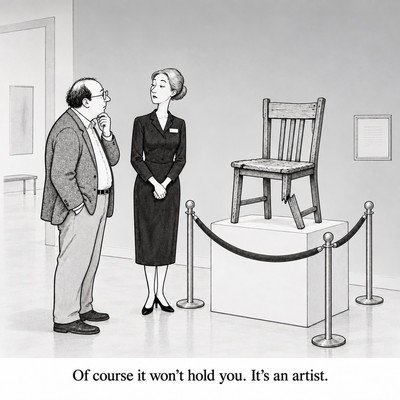
Art’s evolution from craftsmanship to the realm of theory raises questions about value and authenticity, blurring the line between creator and critic.