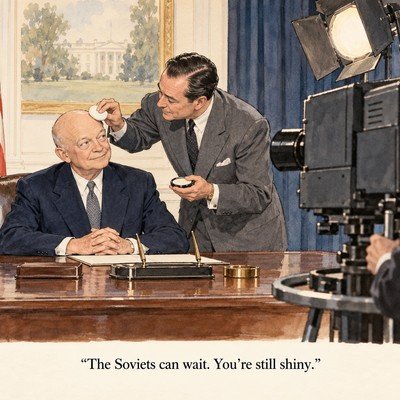
The President Will See You After Makeup
Presidents Eisenhower, Nixon, and Reagan mastered the art of television, learning to connect with viewers and communicate effectively in a new era.

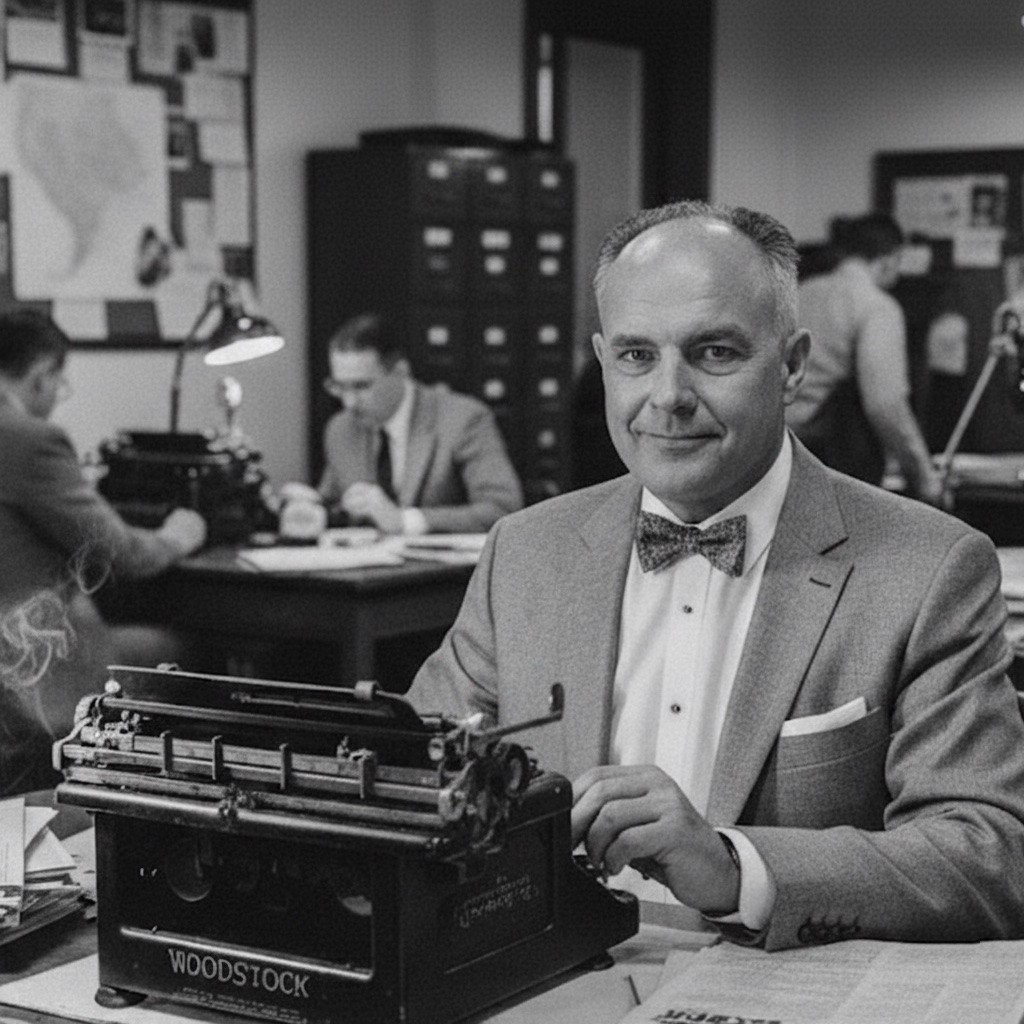

Rodger Morrow
Editor & Publisher, Beaver County Almanac
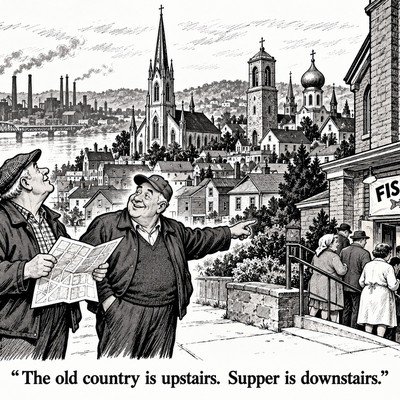
If you want to know who built a Beaver County mill town, start before you reach the courthouse records. Look up. The steeples will tell you something.
An onion dome suggests a congregation with roots in Eastern Europe. A cornerstone in Cyrillic offers another clue; one in Greek narrows the possibilities considerably. A plain brick tower with a Latin cross requires more investigation. Italians, Irish, Germans, Poles, Slovaks, and Croatians all had claims on that arrangement. Each group would like you to know it is not the others.
For much of the twentieth century, you could sketch an ethnic map of our river towns without a census form. You needed a car, a free Sunday morning, and a willingness to be invited to lunch.
The mills did much of the recruiting. Between about 1890 and 1920, the steel mills, bridge works, and other factories along the Ohio and Beaver rivers drew workers from Southern and Eastern Europe. The men often came first, sent money home, and eventually sent for wives, sweethearts, and the occasional cousin nobody had asked for.
Before many of them owned a house, they were helping to build a church.
This was not mere piety, though there was plenty of that. A parish, together with the clubs and mutual-aid societies around it, helped families find work, survive emergencies, arrange funerals, and make themselves understood. If you spoke only Slovak in a town run by men who spoke English and bookkeeping, a priest who could manage both languages was a useful man to know. The church hall was where your daughter met the boy from the next valley whose mother approved of your mother. The cemetery concluded the arrangement, in the proper language.
The divisions were real. Language, the church calendar, and the authority of bishops could separate people whom an outsider would have taken for members of the same congregation. These were serious questions, though parish life also offered opportunities for somebody to be rude to somebody’s aunt. The result could be two churches a short walk apart, each regarding the other as a regrettable misunderstanding.
I cannot get a committee to agree on a coffee maker.
Then the lines began to blur.
The children married across them. The grandchildren moved to Center Township, Hopewell, or Cranberry, where churches have parking lots instead of front steps. Mills closed or shed workers, weakening the economic ties that had drawn families into the river towns. The old languages increasingly retreated from public life to the kitchen and the family gathering. A grandmother’s maiden name could still supply a small geography lesson on the obituary page.
Today, much of the story is consolidation. Across the Catholic Diocese of Pittsburgh, mergers reduced the number of parishes from 152 before the July 2020 mergers to 59 by July 2026. A parish merger does not necessarily close a church, but it changes the arrangements by which
familiar buildings remain in use. Other congregations face their own versions of the arithmetic: aging members, fewer people in the pews, and buildings meant for crowds their heating systems still expect.
A boiler does not care how beautiful the windows are.
A closed church is where people’s parents married, where they were baptized, and where they assumed their funerals would be held. Its furnishings may find homes in other churches. The building may find another congregation or another purpose. In Bridgewater, the old Methodist church went to buyers with plans for lofts until they discovered the renovation would cost more than anyone would pay to live in it. I notice nobody asks to be married in a loft anyway.
Yet the map has not disappeared. Much of it survives indoors and on the calendar.
You find it at the Lenten fish fry. You find it at the summer festival, where third-generation suburbanites who could not order lunch in Croatian will defend their grandmother’s sarma against all comers. You find it at pierogi sales and at the wedding cookie table, which visitors from other states regard as a benevolent madness.
Those immigrant congregations raised money for their churches out of wages that had other urgent claims on them. They built them out of dimes, Saturdays, and stubbornness, then argued about them for a hundred years, which is also a form of devotion.
The national conversation turns often now to loneliness: people living alone, joining nothing, knowing nobody on their street. Beaver County once had an answer to that, and it had a steeple on top. In many places, it still does. The softball league, the volunteer fire company, and the library book club are doing their part. None of them, so far as I know, has produced a decent nut roll.
Next time you drive through Ambridge, Aliquippa, Monaca, or Beaver Falls, look up. Some of those buildings still house the congregations that built them. Others serve merged congregations or have passed into different hands. Their cornerstones remain small announcements that somebody arrived here, found work, and intended to stay.
Each was a promise somebody made to people they would never meet: us. The least we can do is notice.
Better yet, go to the fish fry.
Presidents Eisenhower, Nixon, and Reagan mastered the art of television, learning to connect with viewers and communicate effectively in a new era.
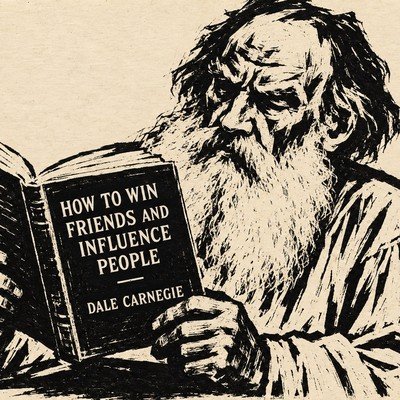
Improving oneself can unsettle those around you. Embrace your growth while staying true to your conscience, even if others resist the change.