Whatever Happened To Wholesome Family Entertainment—and How Do I Get It On My TV?
Navigate the streaming maze to rediscover wholesome family entertainment. Affordable options like Frndly TV revive classic shows and movies you love.
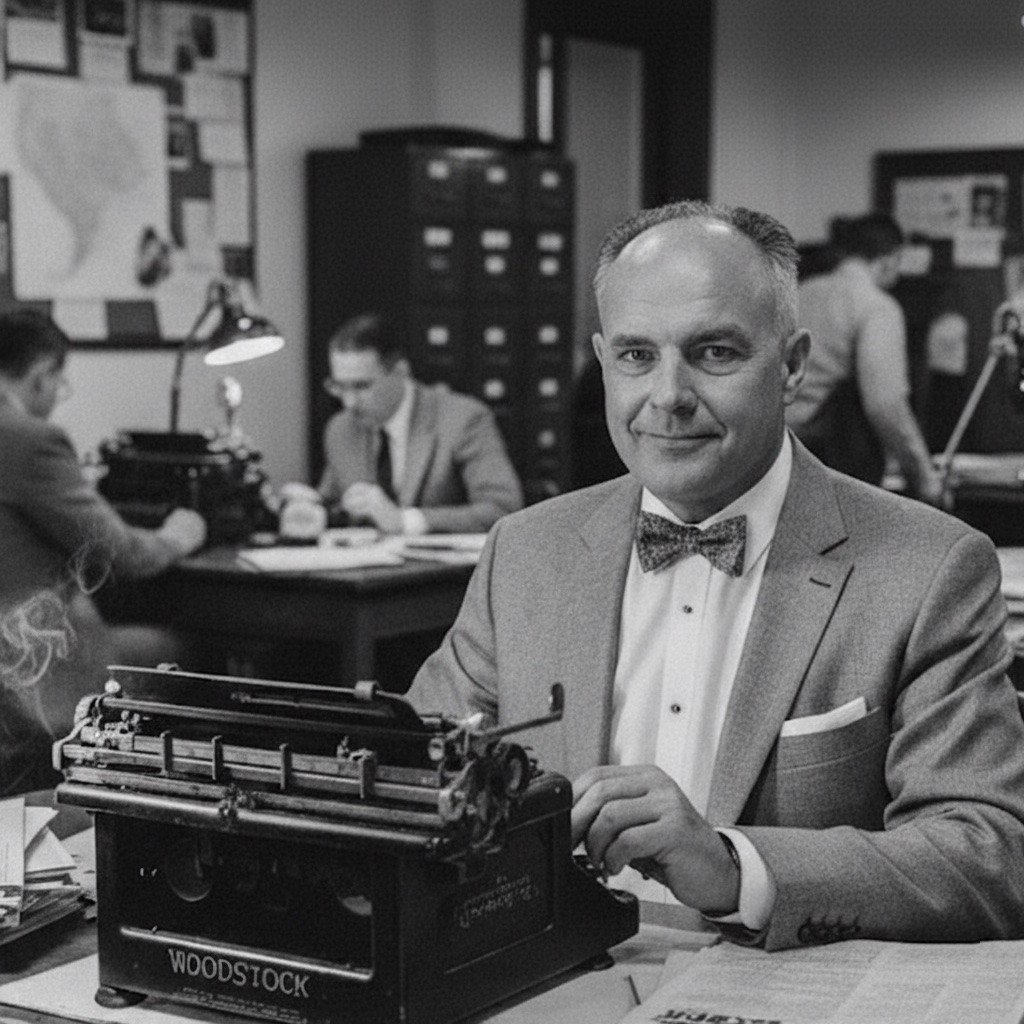
FROM RODGER’S DESK
From Rodger’s Desk is the regular column and open door of the Beaver County Almanac, written by Editor & Publisher Rodger Morrow.
In 1902, Beaver County had 22 registered automobiles, which was probably 21 more than the horses thought necessary.
Owning one required money, mechanical courage and the administrative patience of Job. You registered the machine at the courthouse, bought metal numerals at a hardware store, took them to a saddler who attached them to a leather plate, and then went to a drugstore for gasoline, often sold by the quart. This was before filling stations, when nobody had yet imagined that one day the county would consist chiefly of gas pumps separated by pizza shops.
The automobile was less a means of transportation than an expensive public experiment. Roads were dirt, gravel or macadam, which meant dust in summer, mud in spring and theology in winter. A motorist needed tools, spare parts and a philosophical attitude toward arriving.

Pennsylvania’s Automobile Act of 1905 required operator licenses, although “licensed” should not be confused with “competent.” Speed limits could be as low as eight miles per hour, a pace that permitted pedestrians to step aside, reconsider and step back again.
The first important automobile men in Beaver County were mechanics before they were salesmen, because a man selling automobiles in 1906 had better know how to retrieve one from a ditch. B.O. “Barney” Fair arrived in Beaver Falls that year, opened a garage and repair shop, and began selling Maxwells. Howard McCreery handled Buicks.
During Beaver Falls’ 1908 Old Home Week, Fair and McCreery staged a 25-mile race before thousands of spectators. McCreery’s Buick won after Fair’s Maxwell developed trouble near the finish. The cars averaged less than 25 miles per hour, though this must have seemed reckless in an age when eight miles per hour constituted a threat to civilization.
Rochester soon became an automotive center. Oliver and Carl Douds opened a Hudson agency and garage on Railroad Street in 1909. The Conrad brothers began selling Case automobiles in 1911. That same year, J.H. Grandey obtained a Ford franchise on Water Street and sold 27 cars, reportedly the best performance in the Pittsburgh region. He later built a showroom large enough to display 100 vehicles. By 1924, Rochester had a dozen automobile dealers, proving that Americans embraced the motorcar almost as quickly as they discovered they could trade it for another one.
Beaver County even contributed something fundamental to motoring bureaucracy. Around 1906, Ingram-Richardson of Beaver Falls produced what are believed to have been the nation’s first enameled automobile license plates. We may not have invented the automobile, but we helped make certain the government could identify it.
The car’s first victim was the horse, though the horse did not leave immediately. For two decades, horses and automobiles shared roads designed for neither. The horse remained dependable, understood spoken commands and could generally find its way home without consulting a map. Its disadvantages were that it required food, water and care every day, and occasionally expressed an opinion.
The automobile required gasoline and repairs, but it did not have to be brushed afterward.
The other great rival was the trolley, which had itself begun with horses. Beaver County’s first streetcars started running in 1885 from the railroad station in New Brighton, across the bridge into Beaver Falls and up Seventh Avenue toward College Hill. The climb was steep enough that a second horse was sometimes attached, an early version of four-wheel drive.
Electric cars arrived in 1891. The Beaver Valley Traction Company expanded through Beaver Falls, Beaver, Rochester, New Brighton, Bridgewater, Freedom, Ambridge and neighboring communities. Millions rode the cars, and trolley companies built places such as Junction Park to give passengers somewhere to go after persuading them to buy a ticket.
Then came Henry Ford.
The Model T, introduced in 1908 and made dramatically cheaper by the moving assembly line after 1913, transformed the automobile from a rich man’s toy into a working family’s ambition. Ford’s connection to western Pennsylvania was more direct than many people realize. In 1915, the company opened an eight-story assembly plant on Baum Boulevard in Pittsburgh, where parts arriving by rail were hoisted through the building and assembled into Model Ts. About 300 people worked there, producing cars for the regional market until manufacturing ended in 1932.
Pittsburgh did not merely sell Fords; for a time, it made them.
The automobile went where its owner wished, when its owner wished. It reached farms, hillside homes and neighborhoods beyond the trolley tracks. Trucks replaced delivery wagons. Garages, tire stores and filling stations appeared. Roads were paved, bridges strengthened and directions reduced to highway numbers.
The trolley could not follow people away from the trolley line.
Ridership fell during the 1920s. The traction company cut service and substituted buses. The Depression supplied the final shove. On August 10, 1937, the last streetcar traveled from Junction Park to the Morado barn in Beaver Falls. Riders reportedly removed souvenirs along the way, stripping the car as though it were already part of a museum exhibit.
The automobile’s progress paused during World War II, when civilian production stopped and gasoline and tires were rationed. When production resumed, pent-up demand produced a buying boom. Automobile ownership in Beaver County increased roughly 300 percent between 1940 and 1950.
The dealers became civic figures: Beglin Ford in Bridgewater; Vollmer Nash-Rambler and Grandey Ford in Rochester; Miller & Sons Chevrolet in Aliquippa; Bob Stout’s Dodge agency in Beaver; and Thomas Daquila’s imposing Studebaker dealership on Seventh Avenue in Beaver Falls.
But the two great postwar automobile names in Beaver Falls were Ed Sahli Sr. and my father, Frank Morrow.
Sahli bought a Chevrolet franchise in 1932 for $2,500, only $500 less than Art Rooney paid around the same time for the football team that became the Pittsburgh Steelers. This demonstrates either that Chevrolet dealerships were expensive or professional football franchises were then considered slightly less promising than dry-cleaning establishments.
My father’s route into the automobile business was considerably less direct. As the country mobilized for World War II, he was wounded during Army artillery training and honorably discharged. He returned to western Pennsylvania and became a loan officer at Colonial Trust Company in Pittsburgh. He also enrolled in law school at the University of Pittsburgh.
The war produced an unusual academic arrangement. The Pitt and Duquesne law schools did not permanently merge, but Pitt students attending during the war years were incorporated into Duquesne’s law classes on its downtown campus. My father completed his studies there and graduated with a Duquesne diploma.
Banking offered security. The law offered respectability. Neither apparently offered enough automobiles.
Seeking greener pastures, he entered the used-car business in Beaver Falls in 1946. Two years later, he bought O.P. McBest Ford on Seventh Avenue and renamed the dealership Morrow Motors. The company later added Lincoln and Mercury and, like Sahli Chevrolet, moved to the southern gateway of Beaver Falls, where a modern dealership had room for acres of inventory and customers no longer had to imagine how a car would look outdoors.
There was a certain symmetry to it. My father had worked at a Pittsburgh bank and attended law school while Ford’s former Baum Boulevard factory still served as a company sales and parts center. He eventually returned home to sell the automobiles that Ford’s regional operation had once assembled.
Morrow Motors was sold to Ron Lewis in 1986; Sahli Chevrolet followed in 1992. The family dealership was giving way to the regional automotive group, just as the downtown showroom had given way to automobile row.
By then, the car had remade Beaver County. The turnpike interchange near Koppel opened in 1951. Expressways followed. Retail migrated from trolley towns to highways and then to the Beaver Valley Mall, surrounded by enough parking to accommodate those 22 automobiles of 1902 several thousand times over.
The horse retreated to the farm. The trolley entered the history books. The automobile dealer became one of the best-known men in town.
And Beaver County, after several decades of mechanical persuasion, got behind the wheel and never seriously considered getting out.
share this story:

Navigate the streaming maze to rediscover wholesome family entertainment. Affordable options like Frndly TV revive classic shows and movies you love.

Dolly Parton transforms pain into purpose, reminding us that love and creativity can illuminate even the darkest corners of life.
1 thought on “When Beaver County Got Behind the Wheel”
Roger, Best wishes with your new branding. I do enjoy the range of topics you cover. Sort of amazed at your total output.
Re today article, I am heading up a project for BAHF we call Third Street Through the Years. Researching what used to be in the downtown business district. Also gathering old ads etc. We hope this will eventually lead to plaques on the buildings.
I could show you at least 12 locations in Beaver that used to be car dealers. Some were pretty small. Did you know the current fishing store used to be a Ford dealer?
One is a building I own. The large building across from Beaver Station was built as a Willy’s Overland dealer circa 1920. The owner by the name of Snyder built for himself a very elegant apartment on the second floor – fireplace, balcony and all. It is still very nice today. Best Regards, Dave