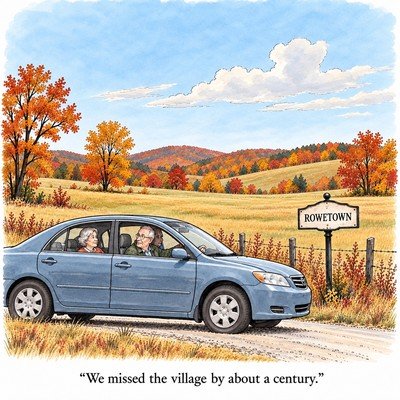
The Village You Just Drove Through
Rowetown’s history is a tapestry of community life, where ordinary intersections held significance, now faded yet vital to understanding our past.

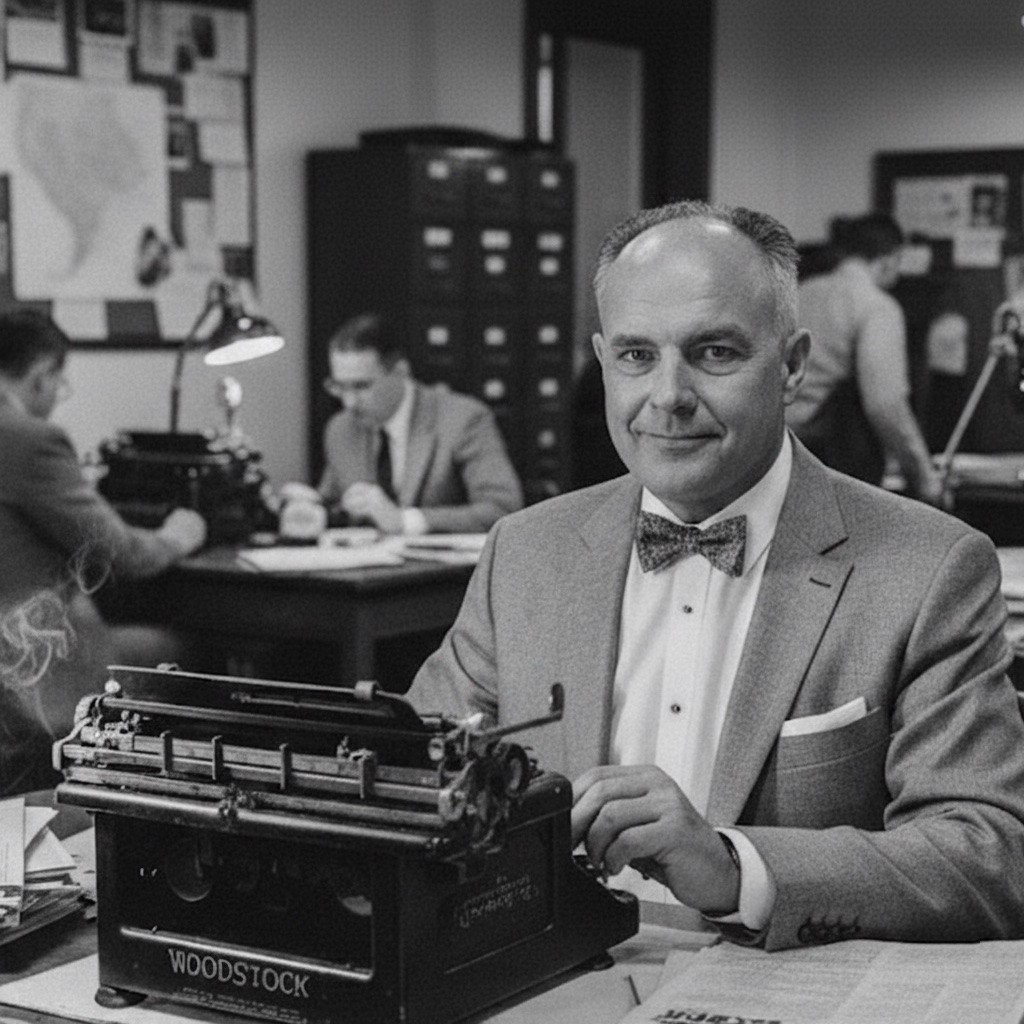

Rodger Morrow
Editor & Publisher, Beaver County Business
Jack Fullen has been a coach, educator, administrator, musician, mentor, and occasional enemy of unnecessary authority. He is still working on retirement.
By Rodger Morrow, Editor & Publisher Beaver County Almanac
Jack Fullen, like Jack Benny, is perpetually 39. The public record suggests he has celebrated that birthday more than once, but Fullen guards the total like a state secret.
My own research puts him somewhere in his 80s—old enough to have earned a comfortable chair.
He has no objection to sitting in one long enough to explain what is wrong with things—he has done that professionally most of his life. Sitting quietly is what gives him trouble.
Over a career spanning more than half a century, he has been a physical education teacher, basketball coach, cross-country coach, athletic director, assistant principal, transportation director, assistant superintendent, acting superintendent, WPIAL official, fitness evangelist, fundraiser, gardener, pianist, practicing Catholic of somewhat irregular attendance, student of Pentecostal teaching, and unofficial guardian of young people the rest of the world had begun to write off.
This makes it hard to say precisely what Jack Fullen did for a living.
He worked with people.
The rest was paperwork.
I first met Fullen at seventh-grade orientation at Highland Suburban Junior High School. He was the fiercest-looking and fiercest-sounding man I had encountered in my young life, and up to then my experience of authority ran to parents, teachers, and television cowboys. Fullen looked capable of disciplining all three at once.
He described the gym uniform: white T-shirt, white shorts, white socks, sneakers—and a jockstrap.
“Anybody not know what a jockstrap is?”
I was a year younger than everyone else. I raised my hand.
Everybody laughed.
“I’ll explain it later,” Fullen said.
He did not. That fell to my father, who handled it that evening like a diplomat negotiating a treaty he had not read.
Gym class did not improve matters. I was younger, smaller, myopic, and overweight—not a combination the Marines put on recruiting posters. Pull-ups were a public inquiry into my
relationship with gravity. The parallel bars offered two ways to fall instead of one. The rings I did not attempt.
I could climb the rope, in theory. In practice, I reached the halfway point, looked down, and stopped. My mind issued orders. My body had seceded.
Vindication came in ninth grade.
Fullen coached me through the 600-yard run, all the way to the finish, where I threw up. He took me to his office, gave me Pepto-Bismol, and told me I had done well. Later that year, I advanced, somehow, to the quarterfinals of his wrestling tournament. Again, he praised me.
Praise from Jack Fullen did not come easily. You wore it like a medal nobody else could see.
Two years later, at the Lawrenceville School in New Jersey, I won a state wrestling championship and helped defeat St. Benedict’s Prep, which had never lost in the history of the tournament. My teammates carried me out on their shoulders, two decades before Rudy made that sort of thing a cliché.
But in the middle of it, I thought of Jack Fullen.
The road to that mat had started in his gymnasium.
Fullen’s own story began in the Fifth Ward of Swissvale, where children disappeared each morning and were not expected home until the streetlights came on. There were no cellphones, tracking devices, or anxious texts asking whether they had remembered their water bottles. There were footballs, baseballs, basketballs, railroad tracks, vacant lots, and a street game called Buckety Buck, which appears to have consisted of boys hurling themselves onto one another until somebody collapsed.
Childhood was simpler then, particularly for orthopedic surgeons.
His father was a Swissvale police officer for 37 years. Jack was born John, and his twin sister was named Adelaide. But his father already had a brother named John, and the family had reached its limit.
“If you’re calling him Jack,” his mother said, “I’m calling Adelaide Jill.”
Thus Jack and Jill, no hill required.
Tragedy was also part of the inheritance. His mother had already lost twin boys at birth. Jack’s brother Jim drowned in Edinboro in 1962. His brother Tom died in March 2026 in Rhode Island. Death visited the Fullen family often enough that grief became less an interruption than a relative who showed up without calling.
Fullen says he cannot cry. He remembers standing at his brother’s casket, pulling petals from the funeral flowers because his hands needed something to do that his eyes would not.
People mourn differently. Some weep. Some go silent. Some spend the rest of their lives making themselves useful.
Fullen chose the third.
He was an athlete by neighborhood necessity—boys in Swissvale did not “schedule physical activity”; they went outside. He played football, basketball, and baseball until football objected.
In eighth grade, he dove on a fumble and broke both wrists. In high school, a ruptured appendix ended one season. Then came a concussion. Football took the hint and released him to basketball.
He and his friends spent summers moving from one court to the next—St. Anselm’s playground, Penn Hills, Churchill, Edgewood, Mellon Park. At Mellon Park, a loss could mean sitting three hours before getting another game. It was an early lesson in competitive athletics and municipal government: You waited your turn, and nobody particularly cared how you felt about it.
Jack and Jill also took piano lessons for eight years and once played in a concert on Euclid Avenue in Cleveland. At Catholic school, Jack sampled everything from drums to saxophone to violin. Piano stayed with him, though not as faithfully as he wishes.
“I could kick myself in the butt,” he says. “I just let it go.”
He can still play “some stuff.” The hands that once played scales would later hold stopwatches, draw tournament brackets, point athletes toward finish lines, and occasionally pound a table when diplomacy had run out. A good coach, like a good pianist, hears when somebody is half a beat behind.
Before education claimed him, Fullen worked at U.S. Steel’s Homestead Works and then at Westinghouse Electric in East Pittsburgh, running peripherals for Univac mainframes— enormous, water-cooled machines that filled a room to do what a telephone does now.
He worked steady afternoon and midnight shifts. When a co-worker refused to trade him even one week of daylight a month, Fullen reconsidered his future and called St. Vincent College and Slippery Rock.
Many careers begin with inspiration. Others begin because a guy won’t trade shifts.
Fullen graduated from Pittsburgh Central Catholic in 1957 and from Slippery Rock State College in 1963, earning a degree in health and physical education at the latter. He played basketball at Slippery Rock, earned a letter on the school’s state championship team during his senior year, and spent the following academic year as a graduate assistant in recreation education at Penn State.
At Slippery Rock, he encountered the fitness program that would shape his career: sit-ups, push-ups, a shuttle run, and the rope climb. He remembers a classmate failing the rope twice before finally reaching the top on his third attempt as 60 classmates cheered.
The classmate came down with bleeding hands.
Fullen never forgot it.
His first teaching job came almost by accident. Looking for Highland Suburban Junior High School, Fullen stopped in Rochester for directions and was sent to Highland School in Ambridge. The Highland he wanted was in Chippewa.
Eventually, the superintendent called while Fullen was tending bar at the Rathskeller during a Penn State conference. Fullen could not leave, so the superintendent came to him. They conducted the interview in a back room over two hamburgers and French fries.
Fullen got the job.
It was an efficient hiring process and, by modern standards, refreshingly free of consultants.
From 1964 to 1969, he taught physical education at Highland and coached basketball while assisting with football. Five years at New Brighton followed, teaching physical education and coaching basketball and cross-country.
Then came Blackhawk.
Fullen arrived in 1974 and stayed 42 years, serving at various times as athletic director, assistant principal, administrative assistant to the superintendent, assistant superintendent, acting superintendent, and transportation director.
Transportation taught him one of administration’s more useful lessons. Fullen and the bus company owner initially rose before dawn to inspect snowy roads themselves. Eventually, they realized every township already had a road foreman awake who knew which roads were passable.
“We’re dumbasses,” Fullen concluded.
It is the rare administrator who reaches this diagnosis without first appointing a committee.
Coaching remained closest to his heart. Fullen remembers former students not as names in a yearbook but as people—their families, strengths, troubles, good games, bad games, and, increasingly, which ones are gone.
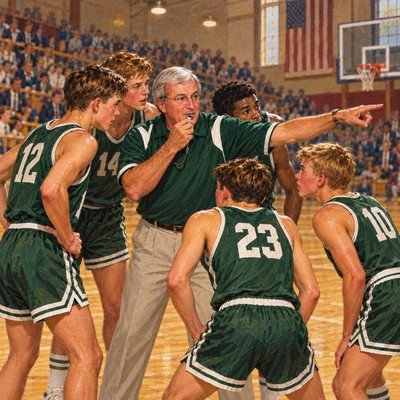
He once chastised a basketball player at halftime for playing hesitantly. The boy responded with a fine second half. Afterward, his mother was waiting.
“Mr. Fullen, don’t holler at my son,” she said. “He’s a good kid.”
Fullen said he knew that.
That was why he had pushed him.
In 1978, Fullen started the Blackhawk Christmas Basketball Tournament, eventually drawing teams from Pennsylvania, Ohio, and Virginia and putting the games on television.
One year, visiting coaches noted that Ohio allowed dunking and permitted coaches to stand, while Pennsylvania allowed neither. Since the tournament was not a WPIAL or PIAA event, they voted for the more liberal rules.
The next morning, WPIAL executive director Chuck Heberling called.
“What the hell are you doing, Fullen?”
As Fullen remembers it, Heberling invoked Rome: The tournament was in Pennsylvania, so Pennsylvania rules applied.
Fullen complied, though one suspects he preferred Rome when he was running it.
His greatest pride was Blackhawk’s Marine Corps Youth Physical Fitness program. Students rose around 4:30 in the morning to be in the gym by five for sit-ups, push-ups, pull-ups, shuttle runs, and other exercises devised before adults decided a child’s self-esteem should never be endangered by a stopwatch.
Blackhawk qualified for the national championship every year from 1980 through 2000. Through retired Marine Major General Walter A. Churchill, Fullen’s students traveled to competitions at Quantico, Camp Pendleton, and the Marine Corps Recruit Depot in San Diego.
The district did not pay for those trips. Fullen and his students did, raising money through dances, food sales, vending machines, sit-up-a-thons, a marathon, and even charging a dollar for three swings with a sledgehammer at an old car.
It may be the only school fundraiser that improved cardiovascular health and the scrap-metal market at once.
“They keep you young,” Fullen says of students.
The same cannot be said, unfortunately, of many of the adults—school administrators, board members, and overzealous parents—with whom Fullen inevitably had to deal.
One memorable kerfuffle came in 2009, when the Blackhawk board formally notified Fullen that his athletic director duties would end while his contract pay continued. He challenged the action through legal counsel. The board rescinded the letter, reviewed two matters involving the athletic department, and district counsel ultimately found no grounds for dismissal under the School Code.
The following year, the board gave Fullen a new four-year contract, and he remained at Blackhawk until 2016. His final day ended with a celebration, a parade, and a police escort.
By then, his influence extended well beyond the district.
Starting in the early 1980s, Fullen held leadership positions in almost every body that regulates scholastic athletics in the region: the Mid-Western Athletic Conference, the Western Pennsylvania Interscholastic Athletic League (WPIAL), the Pennsylvania Interscholastic Athletic Association (PIAA), and the Pennsylvania State Athletic Directors Association (PSADA). He eventually served as president of both the WPIAL and PSADA and helped establish numerous professional-development and student-athlete scholarship programs.
He also worked with the Legislature on a law allowing retired educators to continue as coaches and athletic administrators and helped lay the groundwork for PSADA’s first full-time executive director. Governor Tom Ridge appointed him to Pennsylvania’s Athletic Oversight Council.
In 2016, after 42 years at Blackhawk, Fullen became the WPIAL’s assistant executive director. Retirement has proved largely theoretical. He still commutes to Hershey for his PSADA work, a job currently scheduled to end in 2027.
By then, Fullen may finally have to confront retirement as something more than a rumor.
In the meantime, he continues his work with PSADA and helps run its golf scholarship tournament, which has raised nearly $100,000.
The honors have accumulated alongside the responsibilities. Fullen was named Pennsylvania Athletic Director of the Year in 1998, received state and national awards for distinguished service, and was inducted into six athletic halls of fame.
This is what happens when a man stays in scholastic athletics long enough to become part of the equipment.
Fullen believes school sports teach what no blackboard can: how to compete, how to cooperate, how to lose without collapsing, and how to win without becoming intolerable.
He’s also learned that adults can complicate children’s sports far more efficiently than children ever could. Parents want to coach. Parents want their children to play. Committees split into factions. School boards make decisions that don’t always satisfy everyone involved.
Fullen accumulated critics—the occupational hazard of anyone who makes decisions for longer than six weeks. His temper could flare, and he never learned the administrative art of pretending disagreement was agreement.
Nobody who disagreed with him had much trouble figuring out where he stood.
Early in his Blackhawk career, while running the Chippewa pool, Fullen noticed pea gravel appearing every morning in the baby pool. A boy of 10 or 11, with long hair, kept standing outside the fence, watching.
A suspicious adult might have accused him.
Fullen recruited him.
“If you see somebody throwing stones in here,” he told the boy, “would you tell me?”
The gravel stopped.
After a week, Fullen invited him inside. He gave him free admission and arranged for the women at the refreshment stand to feed him a hot dog or hamburger whenever he came, on Fullen’s tab.
Years later, Fullen encountered the boy again, now a student at Blackhawk who had experienced some difficulties. Fullen recalls that the boy had been involved in a fight on a school bus near the end of the previous school year.
Fullen called the boy into his office, reminded him of their days at the pool, listened, and told him to behave.
He did.
Later, when a visiting team’s uniforms and basketballs went missing, Fullen again asked the boy for help. As Fullen remembers it, the boy learned who had taken them and helped recover the equipment through an improvised hallway performance: Fullen pretended to catch him with some of the missing property, the police played along, and the remaining items were returned.
Eventually, the boy left Beaver County, built a career, and, in Fullen’s telling, changed the direction of his life. Today, Fullen says, he is “a man of God.” He returns each year for a picnic and has asked after Fullen.
Fullen intends to be at the next one.
“You never judge a book by its cover,” he says.
The years have taken their toll. The athlete who once trained with 25-pound dumbbells now uses five-pounders. His knees, shoulders, and back have logged their objections. He tore a biceps muscle and asked a doctor associated with the Steelers to reattach it.
“We don’t do that unless you’re a professional athlete,” the doctor told him.
The doctor suggested that Fullen could flex his arm a certain way at the beach and the detached muscle would still show.
Modern medicine cannot repair everything, but it tries to leave a man something for vacation.
Fullen has endured medical setbacks, family deaths, professional battles, and broken friendships.
Faith has helped him bring some order to it.
He remains Catholic, though his attendance has been sporadic. He also attends his wife Jackie’s Pentecostal church and reads the books and daily reflections she gives him. He has not abandoned Catholicism so much as built an addition onto it.
Some of what he hears there has changed his thinking, though not, as he puts it, “very radically.” He still values his 12 years of Catholic education while taking in what he hears and reads now.
Every morning when he rises and every night before bed, Fullen prays. He carries a rosary and a list: Mary, Jesus, Joseph, the Holy Spirit, God, his guardian angel, and several saints, with St. Jude and St. Anthony holding special rank.
He calls them “my buddies.”
It is characteristic of Fullen that even heaven has become a team.
Today, he tends a garden of tomatoes, peppers, and onions. He keeps up with old players and colleagues. If a former assistant is in poor health, he recommends a physical therapist and offers a ride. He spends time with his grandson and with Jackie’s young grandson, Finn, whom he calls Buddy. He scrolls through old photographs, naming the people, telling the stories, and pausing when a face belongs to someone who is gone.
His life does not arrange itself neatly. There is too much of it. The music overlaps the sports, the faith overlaps the fights, the jokes interrupt the grief, and the students keep reappearing as lawyers, FBI agents, businesspeople, coaches, parents, and men and women of faith.
That is the trouble with summarizing Jack Fullen by listing his jobs. The titles tell you where he worked, not what he did.
He noticed people.
He saw the struggling athlete, the hesitant basketball player, the boy outside the pool fence, the fitness students arriving before dawn, and the old friend who might need a ride. He
challenged them, hollered at some, fed others, raised money for them, opened doors, stood up for them, and remembered them long after the uniforms were put away.
Sometimes what he gave them was no more than a few words of approval. But praise from Jack Fullen was never merely praise. It was evidence that somebody formidable had watched you struggle and decided the struggle counted.
I wore mine all the way from the Highland gymnasium to a championship wrestling mat in New Jersey.
Fullen says that every morning he wakes up and decides life is good.
This is not the optimism of a man to whom life has been especially gentle. It is the verdict of a man who has been knocked down often enough to know that getting up is not a mood.
It is a discipline.
And Jack Fullen is still coaching it.
Rowetown’s history is a tapestry of community life, where ordinary intersections held significance, now faded yet vital to understanding our past.

This October, embrace the journey. Discover the hidden stories in the landscape as you make your way to the pumpkin patch. There’s more than meets the eye.