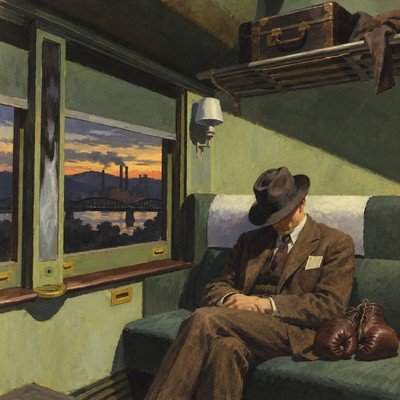
Sig Keppen: A Fighter by His Trade
Sig Keppen was a fighter in the 1920s, embodying the spirit of resilience and courage as he faced opponents in the ring, one bout at a time.

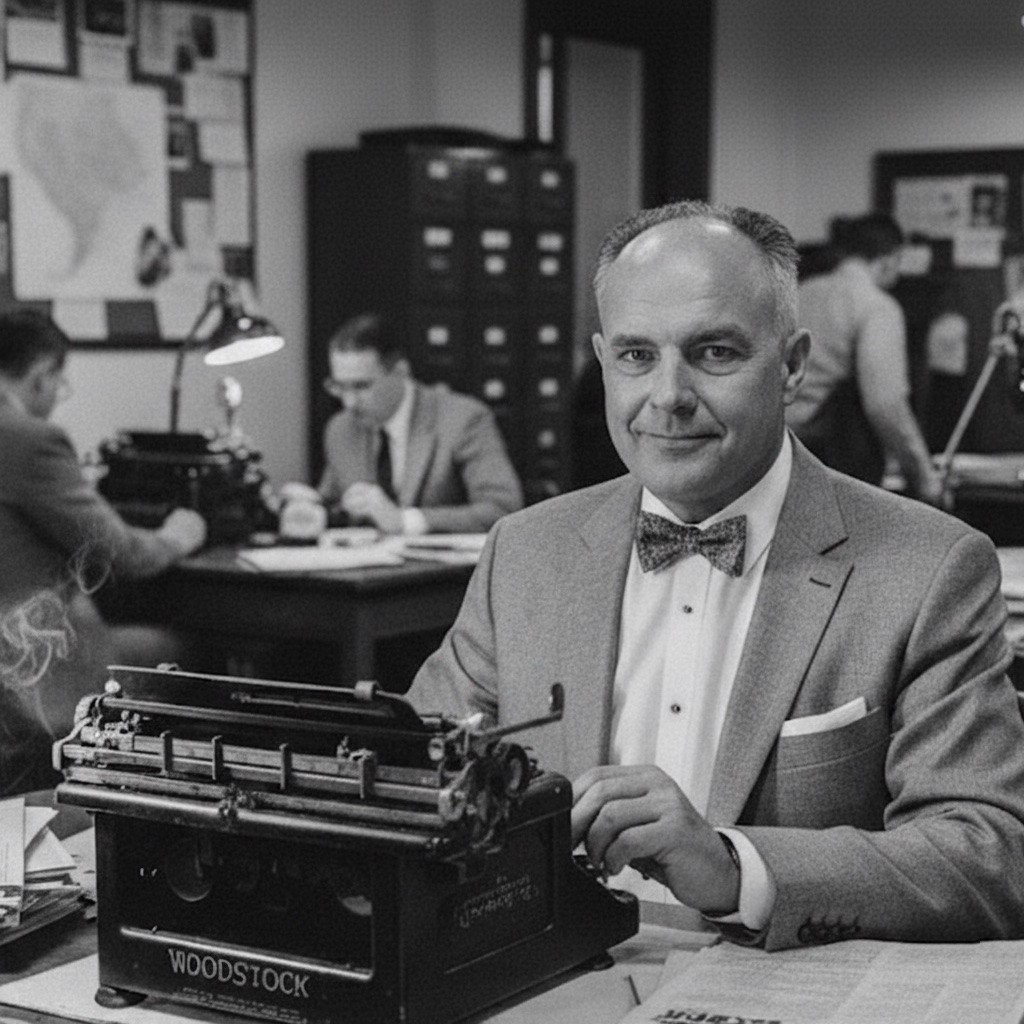

Rodger Morrow
Editor & Publisher, Beaver County Business
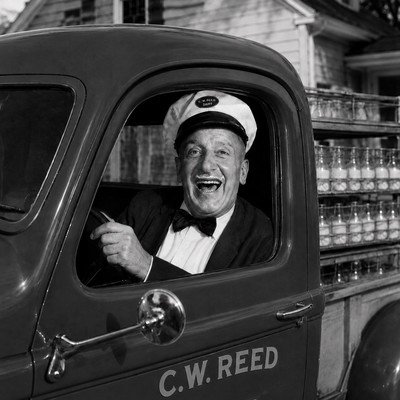
When I was a small boy on Morrow Road, the milkman from C. W. Reed Dairy came once a week and filled the wooden box on our porch with delicious white goodness.
The box had a hinged lid and a long handle. Whether the dairy issued it, my father built it, or some earlier civilization left it behind, I cannot say. It was simply there, like the barn and the kitchen stove—part of the permanent machinery of life.
You left the milkman a note. He left milk, cream, butter, and other necessities, and required no password, no delivery fee, no photograph proving he had set them on the porch.
At the age of three, having concluded that my only-child existence had become intolerable, I cut the picture of a baby off a Q-Tips box and stapled it to the milk box. I wanted a brother or sister and apparently believed C. W. Reed Dairy ran a small but dependable maternity department.
The milk arrived.
The baby did not.
This was my first experience with a supply chain that failed to deliver.
C. W. Reed was a small Chippewa Township family dairy run by Curtis W. Reed, who lived there with his wife, Margaret, and their daughters. Embossed bottles survive marked “C. W. Reed Dairy, Beaver Falls, Pa.,” and an old photograph kept by the Little Beaver Historical Society shows one of its delivery trucks. The farm took in milk cans from neighboring farms, bottled the contents, and sent a driver out to supply families like ours.
The arrangement seemed perfectly ordinary, because Beaver County was still dairy country. Chippewa’s ridges were thick enough with farms that a man could milk his cows at dawn and have the milk in Beaver Falls before anyone had finished complaining about breakfast.
One of the earliest known Chippewa milkmen was Jacob Young, a German immigrant who went into the dairy business in 1884 with 21 cows and a route into town. By the middle of the 20th century, Reed’s, Clark’s Dairy of Enon Valley, Brunton Dairy in Independence Township, and others were leaving glass bottles in porch boxes across the county.
The milkman was more than a delivery service. He was proof the world had not come apart in the night. Before dawn, while sensible people slept, he drove a truck that rattled with glass and stopped at nearly every house on the road. In winter, the cream sometimes froze and pushed the cardboard cap up on a little white column, which delighted children and annoyed their mothers.
Then came supermarkets, family cars, cheaper store prices, and refrigerators roomy enough to hold a week’s milk at once. Home delivery, which had accounted for more than half of American milk sales in 1954, collapsed fast.
Brunton Dairy dropped its original delivery route around 1972—though the family, apparently unable to leave well enough alone, brought it back in 1984. It has since survived a good deal more than changing shopping habits: a fire in October 2023 destroyed the barn and bottling plant and knocked deliveries out for the better part of two years before the Bruntons rebuilt and reopened in the summer of 2025.
The chocolate milk, I am told, tastes exactly the same.
The milkman vanished at roughly the moment milk itself fell under suspicion.
For generations, milk had been treated as nearly the perfect food: protein, calcium, phosphorus, potassium, vitamin B12, and vitamin D when fortified. Then came what I’ll call the Great Dairy Scare. Dietary authorities grew alarmed about saturated fat, Americans were steered toward skim milk and low-fat cheese, and cream came to be regarded the way a nervous houseguest regards a loaded gun on the coffee table.
We dutifully removed the fat and frequently replaced it with sugar, starch, artificial flavoring, and enough industrial cleverness to produce a yogurt that tastes like birthday cake.
This was called progress.
The old case against dairy fat has gotten more complicated since. Saturated fat can raise LDL cholesterol, and nobody with cardiovascular risk should treat a carton of heavy cream as medicine. But a food is not one nutrient standing alone in a spotlight.
Cheese, yogurt, butter, cream, and whole milk arrive in different packages—what researchers now call the “food matrix,” a term invented, I suspect, because scientists are no longer allowed to just say a food is complicated and leave it at that.
Fermented dairy—cheese especially, unsweetened yogurt—has held up better than the old warnings implied. Cheese brings protein, calcium, and sometimes vitamin K2. Whole- fat dairy is also, simply, satisfying, in a way skim milk has never once managed to be.
None of which means heavy cream should be taken from a beer stein.
It means real dairy fat may have earned its way back to the table, particularly when it replaces the sweetened, over-engineered stuff that took its place.
Then there is C15:0, pentadecanoic acid, an odd-chain fat found mainly in dairy and, faintly, in certain fish. It has become one of nutrition’s newest celebrities—impressive for something that sounds like a parking space at Pittsburgh International.
Higher blood levels track with lower rates of type 2 diabetes; laboratory work hints it may help with inflammation and cell function. Good sources include butter and full-fat dairy from grass-fed animals, and aged sheep’s-milk cheeses such as Pecorino Romano.
The evidence is interesting. It is not a license to declare C15:0 essential or write prescriptions for Pecorino by the wheel. Mostly it is observational, and the trials have shown that supplementing raises blood levels more clearly than they’ve shown that raising blood levels prevents anything.
Nutrition science has made enough sweeping pronouncements for one century.
A little humility would go nicely with the cheese.
Raw milk asks for the same caution, minus the cheese pun. Its admirers praise the flavor, the tradition, and the unaltered enzymes. Pennsylvania permits regulated raw-milk farms, and the careful ones test seriously.
But raw milk can carry Salmonella, E. coli, Campylobacter, and Listeria. Pasteurization was not invented because officials in Harrisburg envied contented cows. It was invented because contaminated milk killed people, children especially, and a clean-looking farm reduces that risk without erasing it. Pregnant women, small children, and anyone immune-compromised should stick to the pasteurized kind.
One more thing, for anyone convinced raw milk is the only route to C15:0: pasteurization doesn’t touch it. The fatty acid is stable. You can get it from an ordinary carton without turning breakfast into a bacteriology seminar.
The sensible rediscovery of dairy isn’t that every old warning was a fraud, or that a glass bottle straight from the cow carries mystical powers. It’s that milk is real food, dairy fat is more interesting than we gave it credit for, and cheese no longer needs to be eaten with the furtive shame once reserved for minor burglary.
The milkman never brought me the brother or sister I ordered. Looking back, that was probably outside his route, and possibly outside Pennsylvania dairy regulations as well.
But he brought milk from farms a few miles off, made by people we knew, left in a box built to receive it.
That was nourishment too.
It still does a body good.
Possibly a community as well, though I wouldn’t want to overstate it.
Sig Keppen was a fighter in the 1920s, embodying the spirit of resilience and courage as he faced opponents in the ring, one bout at a time.
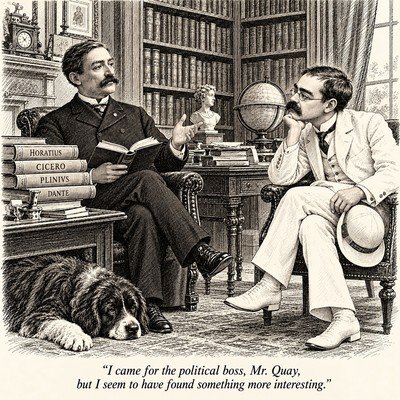
Matthew Stanley Quay was a powerful political boss, but his true passion lay in literature and knowledge, revealing a complex legacy beyond politics.