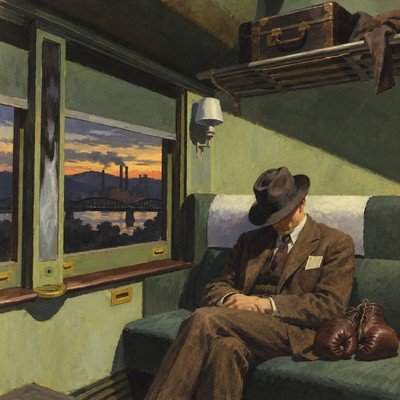
Sig Keppen: A Fighter by His Trade
Sig Keppen was a fighter in the 1920s, embodying the spirit of resilience and courage as he faced opponents in the ring, one bout at a time.

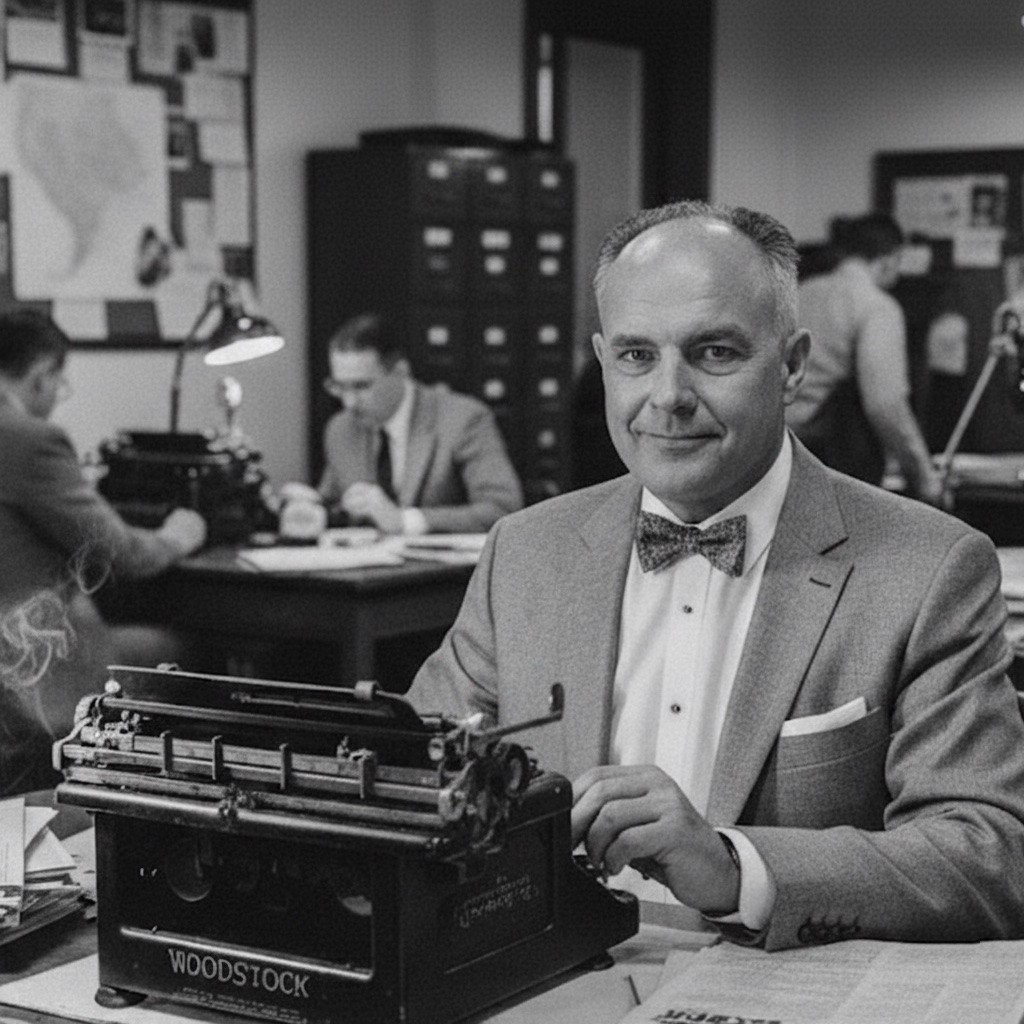

Rodger Morrow
Editor & Publisher, Beaver County Business
A Palm Pre, a Handspring Visor, a missing limousine, and my 20 minutes in the back seat of tech history
By Rodger Morrow, Editor & Publisher Beaver County Almanac
In January 2009, Palm did something the technology business had nearly forgotten how to do. It surprised people.
At the Consumer Electronics Show in Las Vegas, it unveiled the Palm Pre, a smartphone shaped like a river pebble. It had a touchscreen, a keyboard that slid out from underneath, and wireless charging. It also had webOS, which let you keep several programs running at once and shuffle among them by flicking little cards around the screen. Today this sounds about as revolutionary as the cup holder. In 2009, the iPhone couldn’t do all of it.
Nobody expected the Pre to topple Apple. Apple had money, momentum, an App Store spreading like kudzu, and Steve Jobs, who had a gift for telling the public what it wanted before the public had been consulted. Palm was a smaller company trying to reinvent itself while the floor moved.
I watched with more interest than most because, a decade earlier, I had spent about 20 minutes on the fringes of Silicon Valley.
In the back seat of a taxi.
The story begins with Jeff Hawkins, who, before inventing the Palm handheld, carried around a block of wood the size of the gadget he had in mind and pretended to tap on it during meetings. This was either visionary product design or a brilliant way to avoid conversation.
The result, introduced in 1996 as the Pilot and renamed the PalmPilot a year later, kept your calendar, your addresses, your notes, and your to-do list, and that was about all. In an industry already learning it could sell customers 47 features when they wanted four, this restraint was the revolution.
Running the company was Donna Dubinsky, a veteran of Apple and Claris with the rare talent for turning somebody else’s brilliant idea into a business. Palm was swallowed by U.S. Robotics, which was swallowed by 3Com, and Hawkins and Dubinsky learned what entrepreneurs always learn: they love working for big corporations right up until they do.
In 1998, they left and, with Ed Colligan, started Handspring. Its first product was the Visor.
This is where I enter the history of personal computing.
Briefly.
I was at a Harvard Business School alumni conference in Cambridge, though not as an alumnus. I was there with Mike Fradette of Deloitte Consulting, for whom I had written a speech about The Power of Corporate Kinetics, the book he wrote with fellow partner Steve
Michaud. Corporate kinetics held that companies must become faster, flatter, and ready to change on a dime.
The dot-com crash would soon teach a more durable principle: have the dime.
Dubinsky was also on the program. We had Yale in common—she Class of 1977, I Class of 1976—which did not make us friends. At Yale, one class apart can mean different universes, especially when one of you goes on to reinvent the handheld computer and the other goes on to write speeches about corporate kinetics.
Afterward, I found her at the curb, waiting for a limousine that had not come.
I had a taxi.
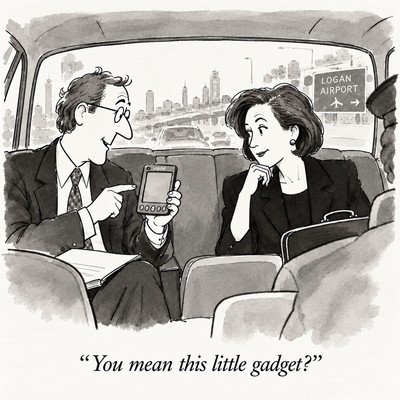
I offered her a ride to Logan Airport. She accepted, launching what remains the most successful technology partnership of my career.
Along the way, I told her how much I had admired her talk and how impressed I was with the Visor. She asked whether I actually knew the product.
I reached into my pocket and produced one.
There are moments when preparation, opportunity, and dumb luck line up so neatly that a man briefly believes he knows what he’s doing.
This was mine.
The Visor was a clever machine. It ran Palm software, synchronized by USB, came in cheerful translucent colors, and had a slot in back called Springboard, into which you could plug a camera, an MP3 player, extra memory, eventually even a telephone. It was less a finished product than an argument about where pocket computing was headed.
We swapped business cards at Logan. Within a week, a package arrived at my office in Sewickley. Inside was a handsome green leather Visor case.
This was tremendously encouraging.
My firm then was called The Writing Company, a name that eliminated all confusion about what we did. I wrote Dubinsky. She wrote back. Over several emails, I gently suggested Handspring could use some help with executive communications.
Nothing came of it.
Just as well. Had Donna Dubinsky hired me, I would now be insufferable.
Handspring, meanwhile, had noticed something. If you could bolt a phone onto a Visor, why not build the phone in? The result was the Treo, which put a phone, email, the web, and a tiny keyboard in one hand years before most of us carried such a thing.
In 2003, Palm bought Handspring.
The children had left home, built a better house, and sold it back to their parents.
Then came the iPhone, and styluses and tiny keyboards suddenly looked like exhibits in a museum of the recent past. Palm took a large investment from the private-equity firm Elevation Partners, which brought in Jon Rubinstein, a former Apple executive who had helped create the iPod. Palm built webOS from scratch. The Pre’s great virtue was that it did not look like an imitation iPhone.
Good ideas, alas, are not a winning business.
The Pre went on sale in June 2009, only on Sprint. The software was elegant; the hardware less so. Developers gravitated toward Apple. The advertising seemed more interested in setting a mood than in explaining why anybody should buy the thing.
In 2010, Hewlett-Packard bought Palm for about $1.2 billion. A little over a year later, HP gave up on webOS phones and tablets. The cards, the gestures, the multitasking, and the wireless charging became ordinary furniture of modern life anyway. Everyone didn’t copy Palm. Palm had simply been working on problems everyone would eventually have to solve.
That is the trick of technology history. We remember the winners and forget the road was crowded with people taking other routes to the same place.
It is a crooked road, from a block of wood to a world where nearly everybody carries a computer disguised as a telephone. Along it lie brilliant ideas, disastrous decisions, hundreds of millions of dollars, one missing limousine, and a taxi to Logan.
And me.
For 20 minutes.
I sometimes wonder what became of that green leather case. The Visor is long gone. Silicon Valley has moved on, as it always does, leaving yesterday’s revolution in a drawer beside chargers whose purpose nobody remembers.
Donna Dubinsky went on inventing the future. I went back to Sewickley and waited for the phone to ring.
It never did.
Which may be the most authentic Silicon Valley experience I ever had.
Sig Keppen was a fighter in the 1920s, embodying the spirit of resilience and courage as he faced opponents in the ring, one bout at a time.
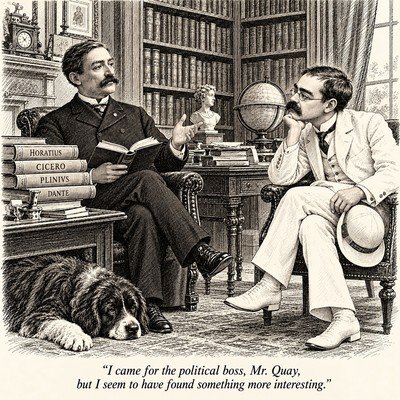
Matthew Stanley Quay was a powerful political boss, but his true passion lay in literature and knowledge, revealing a complex legacy beyond politics.