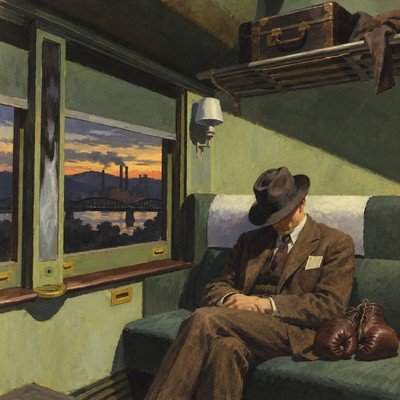
Sig Keppen: A Fighter by His Trade
Sig Keppen was a fighter in the 1920s, embodying the spirit of resilience and courage as he faced opponents in the ring, one bout at a time.

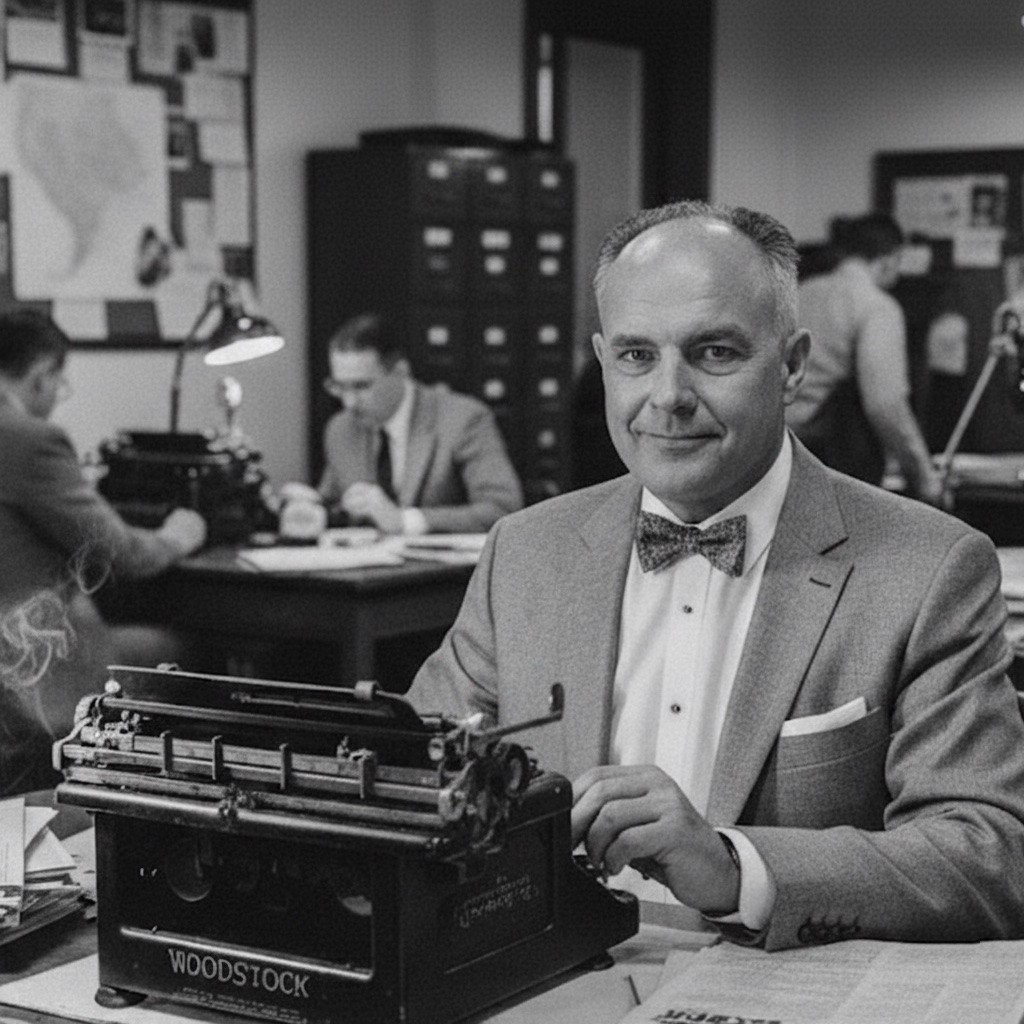

Rodger Morrow
Editor & Publisher, Beaver County Business
The GE 7-4612A did nothing particularly well except show up for work every morning. In Beaver County, that was recommendation enough.
By Rodger Morrow, Editor & Publisher Beaver County Business
If you grew up in an American bedroom between the early 1980s and late 1990s, you knew this clock radio. You may not have known it was the General Electric Model 7-4612A. Nobody did. We were still living in an age when people could own an appliance for 20 years without memorizing its model number or joining an online support group.
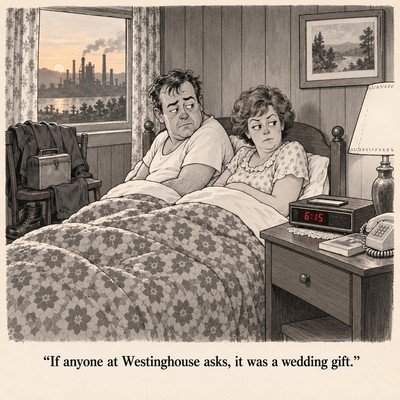
It was a low, rectangular slab of faux walnut with red numerals glowing in the darkness. It had a slide switch marked ON / OFF / MUSIC / ALARM and a wide plastic bar labeled SNOOZ-ALARM. You could slap that bar without opening your eyes, one of the few technological feats available to a semiconscious eighth-grader.
Nine minutes later, it slapped back.
The alarm was a thin, merciless electronic buzz that sounded like an insect trapped inside a smoke detector. It awakened steelworkers, teachers, mill foremen, paperboys, and teenagers who had gone to bed fully intending to get up for school but had since reconsidered.
Everybody had one.
Even if you worked at Westinghouse, you owned one.
The GE 7-4612A became the most familiar member of the company’s “Space Saver” family. Collectors still find them everywhere. One vintage-radio enthusiast called it “probably the single most common model” on the used market. This was not because it represented a dazzling feat of engineering. It was something both humbler and harder to achieve: the right cheap object, bearing the right American name, at precisely the moment America needed to get out of bed.
The radio measured about eight inches wide, two inches high, and five inches deep. It offered AM, FM, wake-to-music, wake-to-buzzer, snooze, and a 9-volt backup battery. That battery mattered during Beaver County thunderstorms, when the power would blink long enough to reset every digital clock in the house to 12:00.
Its faux-walnut finish suited the period. Americans of the 1980s apparently feared that exposed plastic might frighten the children, so we disguised televisions, stereos, telephones, station wagons, and clock radios as trees. The GE looked perfectly at home beside a laminated headboard and a telephone heavy enough to subdue a burglar.
General Electric had been trying to own the American morning since the 1940s. Through Telechron, GE helped popularize clock radios that awakened people with music rather than a hammering bell. In 1956 came the Snooz-Alarm, advertised as “the world’s most humane alarm clock.”
“Humane” may have overstated the case. A humane clock would have telephoned your employer and pulled the blankets back over you.
By the 1980s, GE had everything needed to dominate the bedside: national distribution, a dependable reputation, and several generations of Americans trained to believe that anything bearing the GE monogram would continue working until the children sold the house. The 7-4612A was available at Kmart and other discount stores at a price ordinary families would pay.
Then the story took a French turn.
In 1987, GE sold its consumer-electronics business to Thomson S.A., a French company then owned by the French government. Jack Welch’s GE had decided that televisions, radios, and VCRs were no longer sufficiently profitable. Medical equipment paid better.
The French got the clock radios. GE got the scanners.
Thomson also received the right to keep selling products under the GE name. It could manufacture a clock radio inexpensively in Malaysia, place one of America’s most trusted badges on the front, and send it into discount stores by the truckload. Shoppers naturally assumed they were buying from the same General Electric that built refrigerators, turbines, and equipment requiring its own loading dock.
They were buying a Malaysian-made clock marketed by a French company under an American name.
None of this disturbed their sleep.
The arrangement worked because the radio was inexpensive, compact, familiar, and nearly indestructible. Many examples from 1983 still keep time. Their ailments are those expected of middle age: dim numerals, scratchy tuners, and battery doors that no longer stay closed. At 40, the clock is entitled to a few complaints. Most people have accumulated more.
Today, old 7-4612As turn up in thrift stores and online listings for $15 to $30. Beneath repair videos, the same comment appears repeatedly: I had this exact one.
Of course they did. Everybody did.
The clock radio never became a design icon. It became background, and then enough years passed that background became nostalgia. It recalls mornings of local disc jockeys, school closings, weather reports, corded telephones, and a time when nobody’s first act upon waking was to consult a glowing rectangle containing every argument on earth.
The smartphone eventually swallowed the alarm clock, radio, camera, calendar, and much of adult conversation. The GE 7-4612A belonged to an earlier order. It had one place in the house and one duty: it was the last thing you saw at night and the first thing that shouted at you in the morning.
It did not change the world. It changed 6:15 a.m. in millions of rooms, including a good many along the Beaver and Ohio rivers.
It was cheap, familiar, dependable, and always showed up for work.
In Beaver County, we have built entire reputations on less.
Sig Keppen was a fighter in the 1920s, embodying the spirit of resilience and courage as he faced opponents in the ring, one bout at a time.
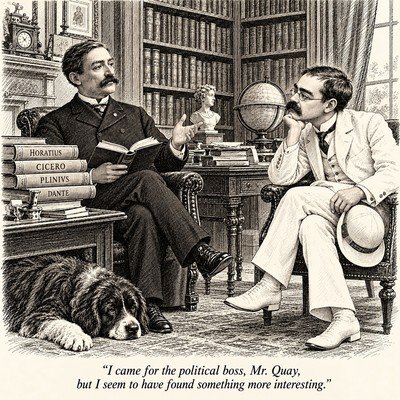
Matthew Stanley Quay was a powerful political boss, but his true passion lay in literature and knowledge, revealing a complex legacy beyond politics.