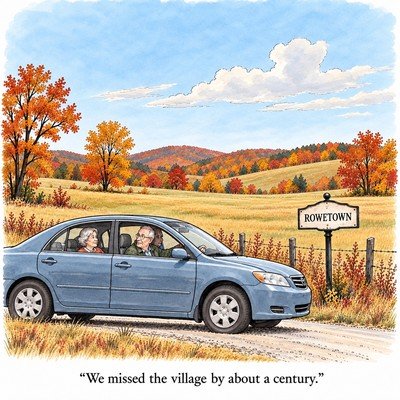
The Village You Just Drove Through
Rowetown’s history is a tapestry of community life, where ordinary intersections held significance, now faded yet vital to understanding our past.

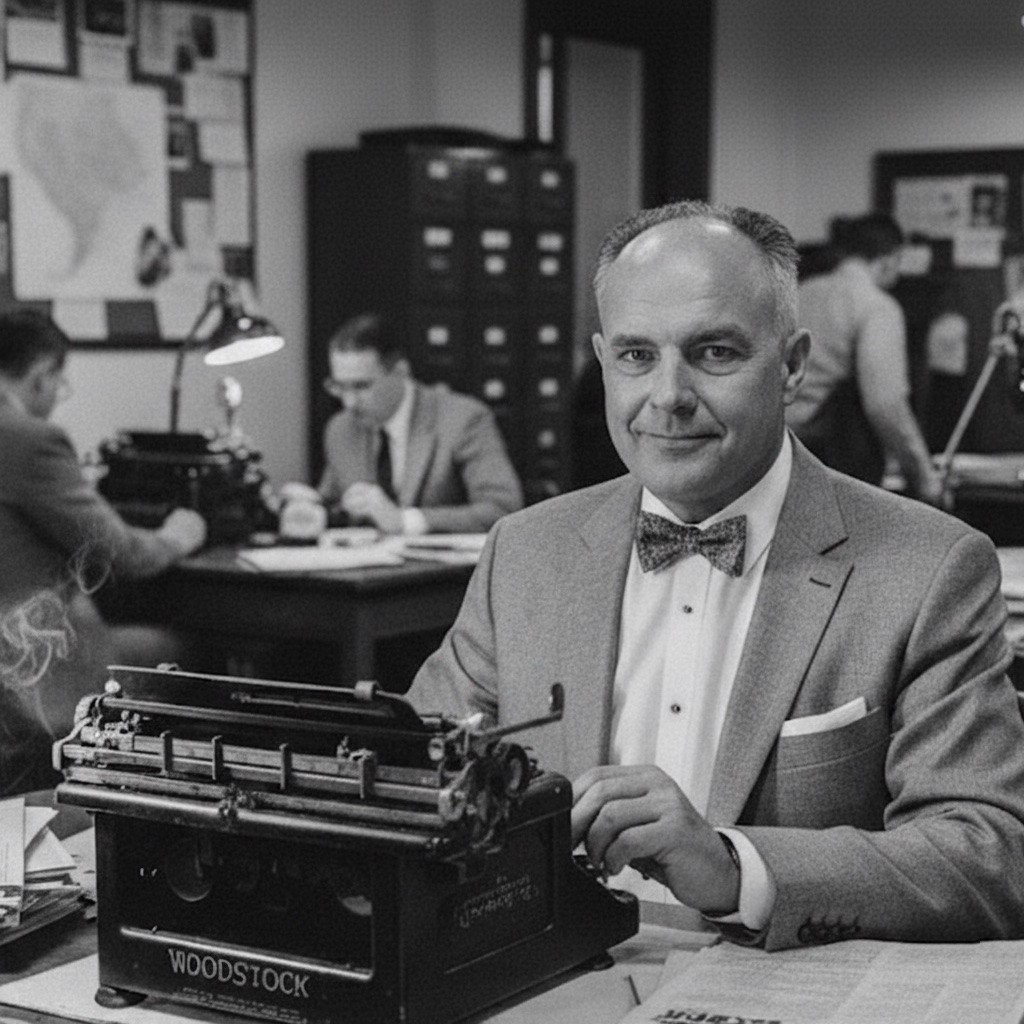

Rodger Morrow
Editor & Publisher, Beaver County Business
My great-uncle Sig Keppen was a professional boxer, though “professional” meant something different in Beaver Falls in the 1920s than it does today.
There were no entourages. Nobody arrived at the arena in a mink coat and six pounds of jewelry. ESPN did not inquire about television rights. A professional boxer was a young man with two gloves, a manager of uncertain solvency, and a willingness to let another young man hit him in the face for money.
Sig had all three.
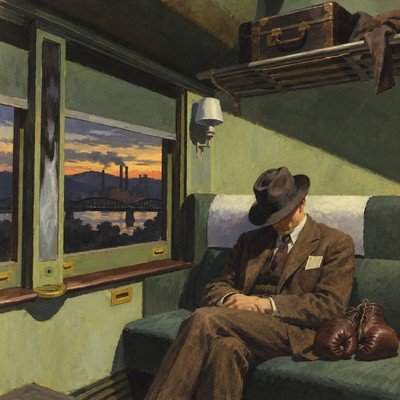
Siegfried Keppen was born March 1, 1903, just in time to become a fighter. Beaver Falls was a mill town, and boxing was a mill-town sport. Men spent their days among furnaces, machinery, and objects capable of removing fingers. Watching two fellows punch each other for ten rounds must have seemed a restful evening.
Sig made his recorded professional debut May 30, 1922, at the Lyceum Theatre in Beaver Falls. He knocked out Harry Haggerty.
It was an encouraging start.
The Lyceum stood at Fifth Street and Seventh Avenue. It opened in 1902, held something like a thousand people, depending on who was counting, and presented plays, vaudeville, movies, and boxing. This gave Beaver Falls a cultural range extending from Shakespeare to the left hook.
Boxing was nothing new in town. The earlier Sixth Avenue Theatre had hosted some of the great names of the prize ring: John L. Sullivan, James J. Corbett, Bob Fitzsimmons, and Nonpareil Jack Dempsey, who was not the later heavyweight but the great middleweight of the 1880s. By Sig’s time, though, the Lyceum was the place to fight.
And Sig fought. He beat Young Mulligan on Christmas 1923, knocked out Tony Pascoe in 1924, and fought Johnny Fundy, Babe Picato, Frankie Stellmack, Harry Ferry, and assorted other lightweights whose names sound as if Damon Runyon invented them over lunch.
On Christmas Day 1925, while more sensible families carved turkeys, Sig was beating Frankie Stellmack at the Nonpareil Athletic Club.
Christmas was different then.
His most persistent rival was Cuddy DeMarco of the McKeesport-Charleroi area. They fought in Beaver Falls, Duquesne, Bellaire, and McKeesport. DeMarco usually got the
better of it, but Sig kept coming back, and in April 1926, at the Lyceum, he finally took a decision on points.
That tells you something about the profession. Sig wasn’t a champion. He was a fighter, and there’s a difference.
Champions get belts. Fighters get train tickets.
By mid-decade Sig was using them. He fought in Pittsburgh, Philadelphia, Erie, Toledo, East Liverpool, Newark, Albany, Troy, Holyoke, Montreal, and New York, where he appeared at Madison Square Garden, the Broadway Arena, and Ridgewood Grove. He fought Eddie Elkins and Andy DiVodi at the Garden and drew with Red Cap Wilson. In Brooklyn in 1927 he met Ruby Goldstein, one of the most feared punchers of the day.
Goldstein knocked him out.
This, too, was part of the trade.
The surviving record credits Keppen with 76 fights: 27 wins, 36 losses, and 12 draws, which leaves one bout wandering around somewhere unaccounted for.
It isn’t the record of a legend. It’s the record of a working man, and that’s what interests me.
We remember sports backward. History has limited shelf space, so it keeps the champions. The fellow holding the belt survives; the man across the ring becomes a line in somebody else’s record.
But boxing couldn’t run on champions alone. It needed hundreds of men like Sig Keppen, who climbed through the ropes on Tuesday night in Beaver Falls, Thursday night in McKeesport, and perhaps the following week in New York against somebody the promoter hoped would become famous. They fought because they could, because there was money in it, and because in the industrial towns of the 1920s physical courage was still a reasonably marketable skill.
Sig’s last recorded bout was March 11, 1929, in Wellsville, Ohio, where Young Rudy beat him on points. He was 26.
Then the record goes quiet.
So did the Lyceum, at least as a boxing house. It was remodeled and became the Rialto, devoted to movies. Beaver Falls gradually ceased to be the sort of town where a man could finish supper, put on a hat, walk downtown, and watch two local lightweights hit each other until somebody decided who had done it better.
Other Beaver County fighters became famous. Teddy Yarosz of Monaca became middleweight champion of the world. Later generations produced national amateur champions and professional contenders. Their names went into halls of fame.
Sig’s didn’t.
I’m rather glad of that.
A Hall of Fame plaque would make this too easy. It would tell us what to think of him. Champion. Greatness. Achievement. Instead, we’re left with something much more ordinary and, to me, more interesting: the record of a man who made his living for seven years by showing up.
Seventy-six times, in towns from Beaver Falls to Montreal, somebody rang a bell and my great-uncle walked toward another man who had been hired to hit him.
Twenty-seven times he won. Thirty-six times he lost. Twelve times nobody could decide. And once, apparently, the record keeper went out for a sandwich.
But Sig kept answering the bell.
There are worse things for a family to remember about a man.
In Beaver Falls in the 1920s, fighting was a trade.
My great-uncle Sig was a fighter by his.
Rowetown’s history is a tapestry of community life, where ordinary intersections held significance, now faded yet vital to understanding our past.
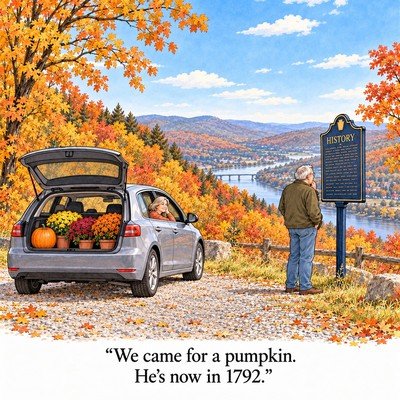
This October, embrace the journey. Discover the hidden stories in the landscape as you make your way to the pumpkin patch. There’s more than meets the eye.