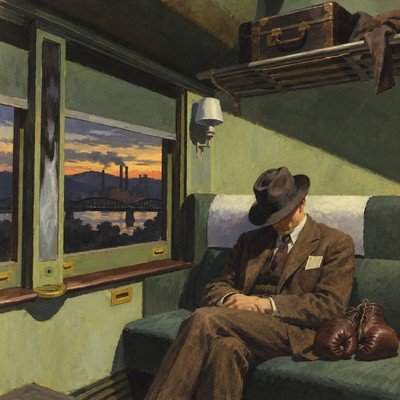
Sig Keppen: A Fighter by His Trade
Sig Keppen was a fighter in the 1920s, embodying the spirit of resilience and courage as he faced opponents in the ring, one bout at a time.



Rodger Morrow
Editor & Publisher, Beaver County Business
Editor & Publisher, Beaver County Almanac Annie Dillard died Tuesday at her home on Cape Cod. She was 81, though writers like Dillard are never quite as old as the rest of us. They spend their lives looking so hard at the world that time gets tired of waiting and slows down.
The obituaries will call her a Pulitzer Prize-winning naturalist, essayist, novelist, and poet — one of the finest sentence-writers of her time. All true. It is also the language of people filing a writer into a drawer so they can get home to dinner. Annie Dillard did not fit comfortably into a drawer. She barely fit into a paragraph.
She was born Annie Doak in Pittsburgh in 1945 and grew up in Point Breeze, in a house full of comedians and books. Before Tinker Creek, before the Pacific Northwest, before Cape Cod, there were Pittsburgh hills and winters, Presbyterian pews, the Homewood library, rock collections, insects, creeks — and the local understanding that nature consists equally of beauty, mud, industry, and things that bite.

Pittsburgh does not present nature politely. The hills shove into the streets. Rivers meet downtown without asking permission. A person raised there learns early that creation is not scenery. It is a force, often inconvenient, occasionally requiring a retaining wall.
Dillard paid attention to it. That was her subject: attention. She watched the world with the concentration most of us save for a tax notice or a suspicious spot on an X-ray — insects, muskrats, birds, light, decay, birth, death — and reported back that the universe was more beautiful, more terrible, and stranger than we had assumed.
She resisted the label "nature writer," probably because it made her sound like a woman who went outside to admire the azaleas. Dillard went outside looking for God, and what she found was not the tidy deity of the church bulletin, beaming over a sunset. Her God inhabited the whole blazing, devouring business — the creek and the creature dying beside it, the newborn and the indifferent stars. She saw holiness everywhere, which is a much harder thing to do than seeing it only in church.
Scripture ran through her work as current, not decoration. She wrestled with Job, with creation, with the silence of God, and her faith was never tidy — she moved toward Christianity, away from it, around it, and occasionally straight through the sanctuary carrying questions large enough to alarm the ushers. Scripture, she understood, is not merely a book of comforting answers. It is also a record of people standing under the sky demanding to know what is going on. God, as usual, issued no press release.
In some ways she was the female counterpart to Wendell Berry, who died in Kentucky just five weeks earlier, at 92. Berry stayed on the farm and taught us to treat soil as a moral responsibility. Dillard crouched by the creek and taught us to treat a moth or a drop of water as a theological event. Berry asked how we ought to live on the earth. Dillard asked whether we
had ever actually looked at it. Neither cared much for the modern habit of treating creation as raw material and people as its management consultants. A Kentucky hillside was enough for Berry. A Virginia creek was enough for Dillard. Now, within a season of each other, both have left the fields they spent their lives watching.
She was also a late transcendentalist, descended from Emerson and Thoreau but no mere copy. Thoreau went to Walden to live deliberately. Dillard went to Tinker Creek to look deliberately, and discovered that creation was not especially interested in being agreeable to the observer. Emerson found the Oversoul shimmering through nature. Dillard found it too — sometimes with blood on its teeth.
She belonged to that old American habit of walking into the woods with a notebook and coming back with an argument about God.
Her deepest roots, though, stayed in western Pennsylvania. An American Childhood is less a memoir than an account of waking up — the moment a child understands the world existed before she arrived, will continue after she leaves, and is meanwhile offering an astonishing amount to notice. Pittsburgh gave her the materials: family, comedy, libraries, weather, and the discovery that adults, while useful for transportation, did not understand the universe any better than children did.
Dillard didn't understand it better either. That was her authority. She never claimed to solve the mystery. She just bore witness to it — and insisted the world was not dead matter waiting for us to assign it value, but alive, charged, and holy, God not hovering above at a safe administrative distance but living inside the hawk, the creek, the child, and the bewildered person standing among them, trying to pay attention.
Now she has gone past the creek and into the mystery she spent a lifetime studying.
The rest of us should look up.
Sig Keppen was a fighter in the 1920s, embodying the spirit of resilience and courage as he faced opponents in the ring, one bout at a time.
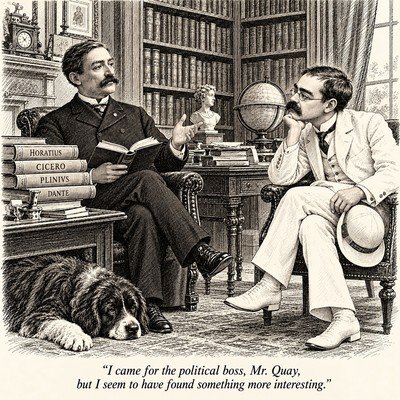
Matthew Stanley Quay was a powerful political boss, but his true passion lay in literature and knowledge, revealing a complex legacy beyond politics.