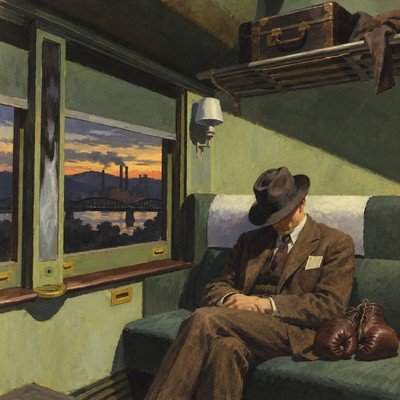
Sig Keppen: A Fighter by His Trade
Sig Keppen was a fighter in the 1920s, embodying the spirit of resilience and courage as he faced opponents in the ring, one bout at a time.

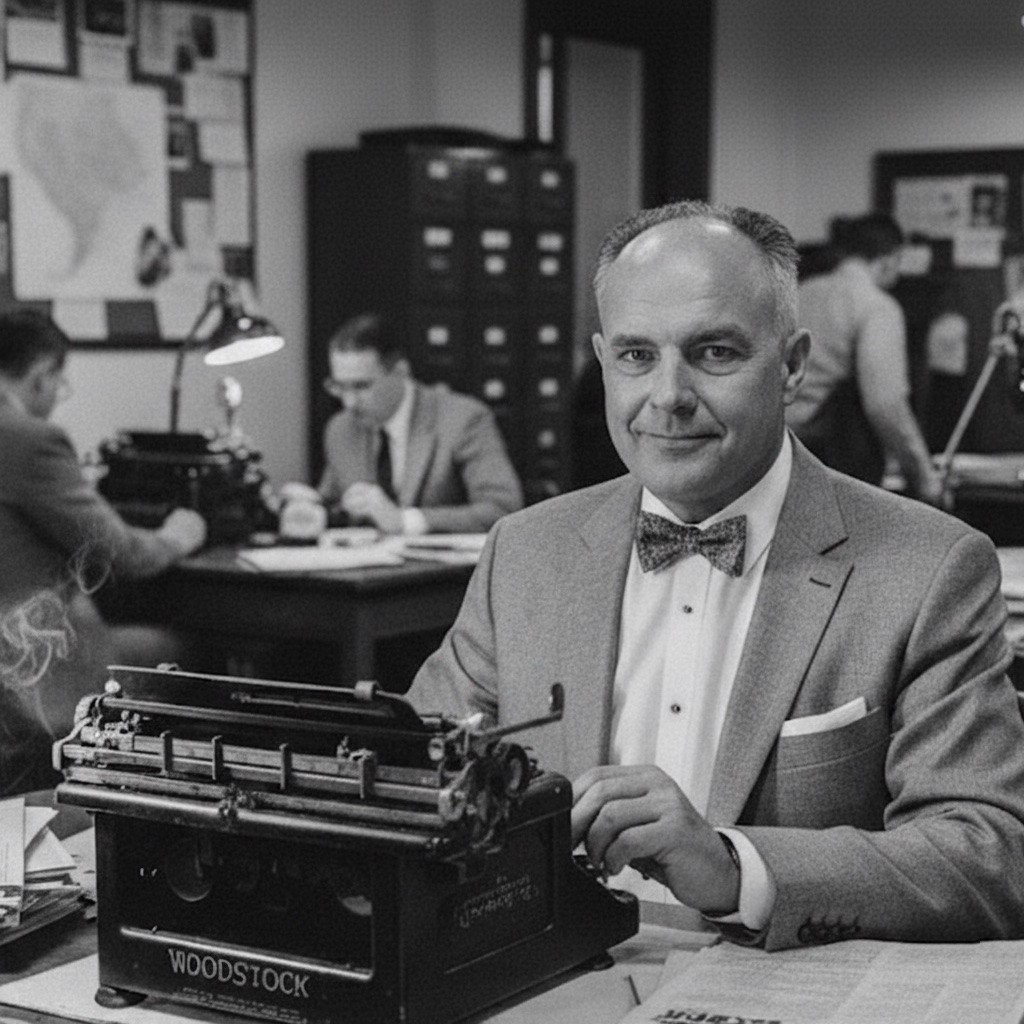

Rodger Morrow
Editor & Publisher, Beaver County Business
Steel mills, a folding roof, and a nuclear reactor: the year Beaver County peaked without knowing it.
By Rodger Morrow, Editor & Publisher Beaver County Almanac
There is no scientifically defensible way to determine Beaver County's best year, which is fortunate, because science has already ruined enough things. Give it time and it will ruin this too.
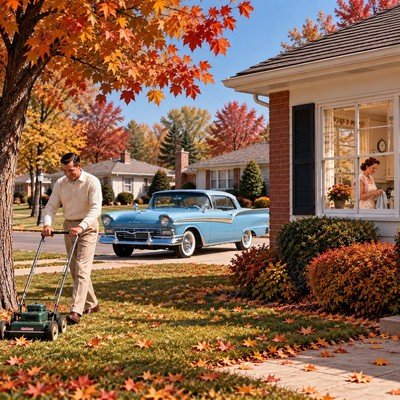
Still, I nominate 1957.
This will irritate anyone born after 1957, along with several people who were alive then and remember enough about it to file a formal objection. They will note, correctly, that Beaver County has had other fine years since. We have better medicine now, better televisions, better roads in the neighborhoods where roads get fixed, and telephones capable of informing us within seconds what a high-school classmate had for dinner in Myrtle Beach. Nobody in 1957 could have imagined needing that information. Nobody today can explain why we need it either, but there it is.
What 1957 had, that we seem to have misplaced, was confidence — the sort that doesn't know it's about to become a coffee-table book.
Beaver County in 1957 made things. Big things. Heavy things. Things requiring furnaces, cranes, railroads, barges, and men carrying lunch buckets they did not yet suspect would one day be sold, refinished, at flea markets, as "authentic Americana." The great J&L works at Aliquippa wasn't merely an employer; it was practically a geographical feature, the way a mountain is a geographical feature, except this one issued paychecks. Thousands of people went through those gates each morning knowing that whatever they did on shift would come out the other end as steel, and that America, always ravenous, intended to build something out of it.
America intended to build quite a lot. This was, after all, the era when an automobile wasn't transportation so much as a declaration of principles, most of the principles involving chrome. Ford introduced the Fairlane 500 Skyliner, whose steel roof folded itself into the trunk at the push of a button, a maneuver nobody strictly needed a car to perform, which was rather the point. The Skyliner did not whisper. It announced: Look what we can do. It was, if you like, showing off for a future that hadn't been invented yet and would one day put its exact likeness in a museum with a velvet rope in front of it.
Then, that September, Ford introduced the Edsel, which announced something else entirely: Perhaps we should have thought about this a little longer. The company had spent a fortune persuading America that history was imminent. History obliged, although not in the direction Ford's advertising department had been pointing. The Edsel became one of the great
commercial pratfalls of the century and a byword for corporate wishful thinking — proof that even a golden age keeps a drawer full of lemons, and occasionally leaves one running in the driveway.
There is something almost tender about that. It suggests the people of 1957 were not, in fact, extras in a prestige film about postwar optimism, dutifully hitting their marks. They were just people, guessing, same as us, except their guesses came with tail fins.
Meanwhile, downriver from Beaver, something was happening that nobody had rehearsed lines for. Engineers at Shippingport were finishing the world's first full-scale atomic power station built expressly for peacetime electricity — Eisenhower's Atoms for Peace, translated out of a speech and into turbines, pipes, concrete, and current. The plant reached criticality that December.
Sit with that a moment. Within a short drive of Beaver, people were demonstrating that the same force which had leveled Hiroshima could also, with sufficient plumbing, run a toaster. We had split the atom and more or less immediately asked whether it could handle the breakfast dishes. This is either the most admirable thing about the human species or the most embarrassing, and I have never been able to decide which, which is possibly the most admirable and embarrassing thing about me.
J&L, meanwhile, was roaring. Coal, steel, glass, rail, manufacturing — these weren't line items debated by economists on cable television, mostly because cable television did not yet exist to debate them on. They were what your father did for a living. They were why the whistle blew. They were why the bar opened early after the night shift, a Beaver County tradition that required no federal funding and, as far as I can tell, none ever asked for.
Beaver County wasn't waiting for anyone to invent an economic-development strategy. It was the economic-development strategy, and it had no idea it would someday be described that way in a grant application.
The country around it was young. The baby boom was filling schoolrooms faster than anyone could build them. Antennas went up on roofs like a new crop. Families bought cars and refrigerators and washing machines on the cheerful, entirely unearned assumption that next year would be better than this one — which may have been 1957's most valuable product, and the one nobody thought to patent.
None of this is an argument that life was better across the board. It wasn't. The country was carrying injustices it would spend decades, unevenly, trying to correct. Medicine was primitive by today's standards. Air pollution was something Beaver County produced with real enthusiasm, and the rivers were not, strictly speaking, a beverage. Nostalgia has a gift for putting chrome on everything, including the things that were rusting the whole time.
But nostalgia and memory are not the same appliance. Memory can hold the smoke and the furnace both — can remember that the smoke meant the furnace was running, the paychecks were being earned, the products were being made, and that a community believed, without needing to be convinced of it by a marketing firm, that it occupied an important place in the American enterprise. That belief is the part worth keeping.
We talk endlessly now about "the future," mostly as a weather system about to arrive from somewhere else. Artificial intelligence will change us. Automation will replace us. China will outbuild us. The grid will buckle under data centers we haven't finished constructing. Our
principal civic strategy, as far as I can determine, is checking the radar and hoping it passes over Ohio.
People in 1957 thought differently. They thought the future was something you built, on purpose, with your own crew, and figured out you'd gotten it wrong only after the ribbon- cutting.
Sometimes you built a nuclear power plant.
Sometimes you built a steel mill.
Sometimes you built a Ford with a roof that folded itself into the trunk through a mechanism so needlessly ingenious that any sensible person would have waited for the second model year.
And sometimes, God help you, you built an Edsel.
Progress has always required a willingness to look slightly ridiculous in the present tense — which is, incidentally, the only tense anybody has ever lived in. Nobody in 1957 got to read ahead and find out which of their choices history would frame nicely and which it would file under Cautionary. They just kept building, and let us sort it into decades later, at our leisure, from the comfort of hindsight, which is the only vantage point from which anything looks like a golden age.
So I'll cast my entirely unofficial vote for 1957 as Beaver County's best year — not because everything was better, and certainly not because we ought to try recreating it. You can't. The mills won't come back in their old shape. Neither will the lunch buckets, the smoke-darkened skies, or an automobile carrying enough chrome to interfere with radar.
What might be worth recovering is the attitude.
In 1957, Beaver County stood beside one of the world's great steelmaking complexes and just upriver from the world's first commercial nuclear power station, while Detroit fitted cars with roofs that disappeared and America built highways, suburbs, schools, and factories as though building things were simply what a country did on weekdays. Some of it worked. Some of it became the Edsel. But nobody mistook the possibility of failure for a reason not to build — and nobody, it's worth remembering, knew yet that they were the before picture in somebody else's nostalgia.
It wasn't that Beaver County knew what the future would be.
It was that we assumed we'd have a hand in making it.
That's a harder thing to manufacture than steel. And unlike the Skyliner's roof, it doesn't fold away on its own.
Sig Keppen was a fighter in the 1920s, embodying the spirit of resilience and courage as he faced opponents in the ring, one bout at a time.
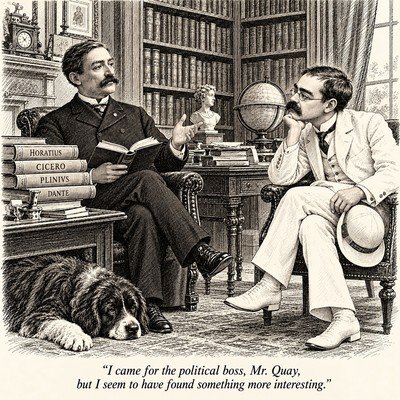
Matthew Stanley Quay was a powerful political boss, but his true passion lay in literature and knowledge, revealing a complex legacy beyond politics.