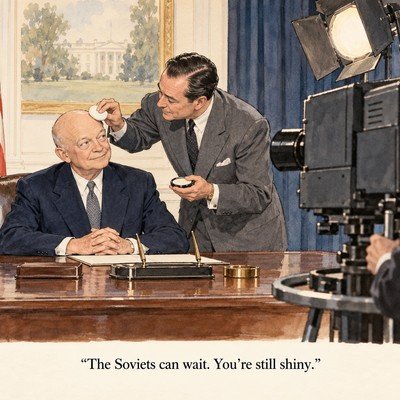
The President Will See You After Makeup
Presidents Eisenhower, Nixon, and Reagan mastered the art of television, learning to connect with viewers and communicate effectively in a new era.


Rodger Morrow
Editor & Publisher, Beaver County Almanac
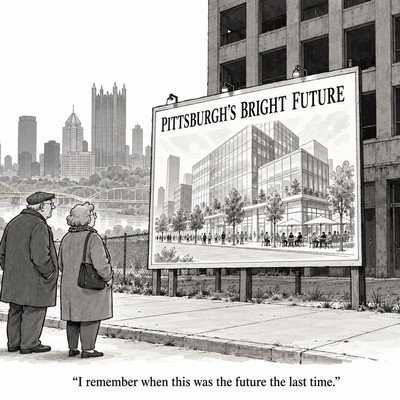
Pittsburgh has a bright future. It has had one for as long as I can remember. Other cities spoil their futures by letting them arrive. Pittsburgh has shown more restraint.
There is always a renaissance underway, another just announced, and a third awaiting a public- private partnership. Elsewhere a renaissance means painters, poets, and a sudden interest in the human condition. In Pittsburgh it means a rendering of people drinking coffee outside a building nobody has financed yet.
Mount Washington was called Coal Hill before it was called anything grander. The coal built an industrial empire. The holes stayed behind. Pennsylvania sells mine-subsidence insurance, a sensible precaution where the basement may have an older basement beneath it.
It was not the holes, however, that brought down the Fern Hollow Bridge in 2022. Federal investigators blamed corrosion and the city’s failure to act on years of maintenance recommendations. Pittsburgh has enough genuine problems without blaming the miners for the leaves nobody cleared from the drains.
Maintenance suffers from a severe publicity handicap. Nobody invites the television stations to watch a man remove wet leaves. A new bridge offers speeches, ceremonial scissors, and a photograph of people gazing toward tomorrow. Keeping the old bridge up requires somebody to look underneath it.
Tomorrow has always been easier on the knees.
The same preference cleared the Lower Hill District. Roughly 8,000 people were moved out for the Civic Arena. A neighborhood of homes, businesses, and a rich cultural life was judged inadequate by people who had something better in mind.
The arena is gone, and a bank tower stands on part of the site. The people who lived there learned that when a city announces its future, it is prudent to ask whether your house is in the way.
Pittsburgh’s population fell from about 677,000 in 1950 to about 303,000 in 2020. The bridges, streets, stairways, and water pipes did not leave with the residents. It is like heating a twelve- bedroom house after the children have moved to North Carolina.
Downtown has room for the children to come back, provided they want office space. The Pittsburgh Downtown Partnership’s August report put second-quarter office vacancy downtown at 19 percent. It found signs of stabilization, along with nearly one square foot in five still waiting for the bright future to move in.
On October 5, the Pittsburgh Business Times reported that the old Chamber of Commerce Building on Seventh Avenue faces a sheriff’s sale in November. It is a melancholy thing when a temple of commercial optimism needs the sheriff to find it a buyer.
The sensible answer is to turn obsolete offices into apartments. But conversion takes money, plumbing, and actual tenants. A drawing of a young couple carrying groceries pays no property taxes, even if the illustrator gives them a very expensive dog.
Then there is public safety, which does not yield to architectural illustration.
On September 28, police reported a downtown stabbing. On October 1, three teenagers were shot after a youth football game at Cupples Stadium. On October 8, WPXI reported an arrest after gunfire downtown.
None of this proves every neighborhood is dangerous or every crime measure is rising. It does give families reasons to worry that a slogan cannot answer. Before inviting people downtown for a renaissance, it helps to assure them they can get home from it.
Mayor Corey O’Connor’s preliminary 2027 budget concedes that the city’s finances are structurally unbalanced, which is the professional term for spending more than you take in. It proposes no tax increases or layoffs and balances next year with the rainy-day reserves. Without changes, five-year projections show the reserves gone and the city broke.
This is an unfortunate development in Pittsburgh, where a rainy-day fund ought to enjoy certain natural advantages.
O’Connor says expenses are growing twice as fast as revenues, and that earlier budgets leaned on temporary federal aid without finding lasting ways to pay for the commitments that aid supported. It is like adopting a Newfoundland because somebody donated the first bag of dog food.
The dog’s interest in dinner outlasts the donor’s.
Pittsburgh has real assets, and anybody in Beaver County knows a healthy Pittsburgh matters downriver. We also know what happens when the employers leave and the obligations stay.
The hospitals and universities helped replace the mills, but their tax exemptions complicate paying for the city around them. The pothole is unimpressed by academic distinction.
Perhaps the next renaissance could start small. Maintain the bridges. Make the streets safe. Fill the buildings. Write a budget in which the money expected to arrive bears some relation to the money scheduled to leave.
This might disappoint the rendering department. It would give the rest of us something to look forward to.
Pittsburgh’s future remains bright. The present would appreciate a little of the light.
Presidents Eisenhower, Nixon, and Reagan mastered the art of television, learning to connect with viewers and communicate effectively in a new era.
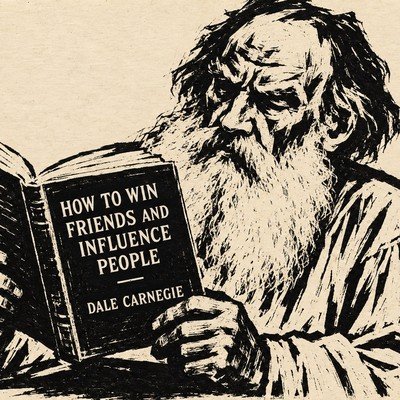
Improving oneself can unsettle those around you. Embrace your growth while staying true to your conscience, even if others resist the change.