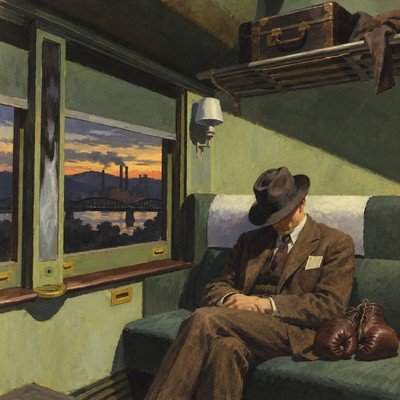
Sig Keppen: A Fighter by His Trade
Sig Keppen was a fighter in the 1920s, embodying the spirit of resilience and courage as he faced opponents in the ring, one bout at a time.

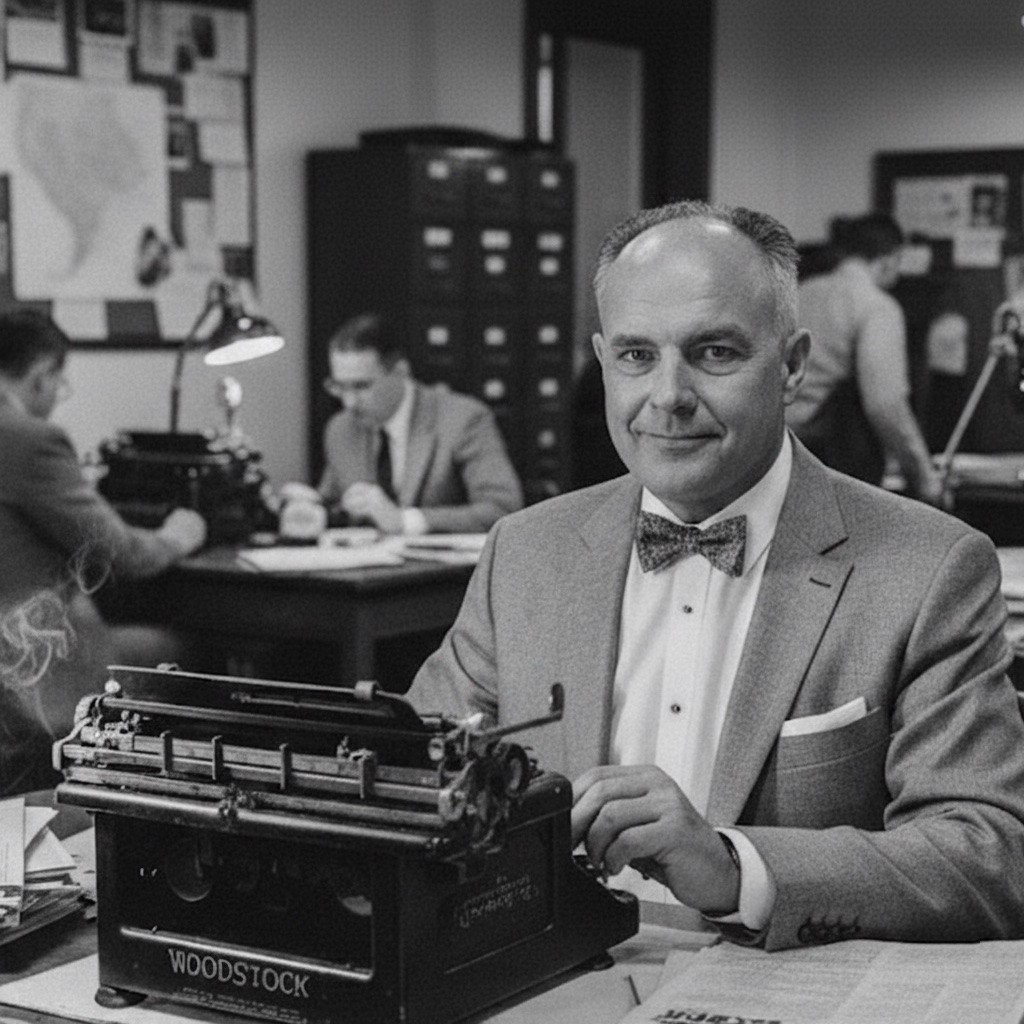

Rodger Morrow
Editor & Publisher, Beaver County Business
The world belongs to specialists. Every so often it needs rescuing from them.
By Rodger Morrow, Editor & Publisher Beaver County Almanac
There was a time when an educated person was expected to know something about nearly everything. Nowadays this is regarded as suspicious behavior, like wearing a hat indoors or paying cash for a car.

We have become a civilization of specialists. The man who knows your left knee will not venture an opinion about your right one until the fellow from Right Knee gets back from lunch. The expert in municipal bonds cannot be expected to know why the Roman Empire collapsed, though he may own a drawerful of bonds issued by governments heading down roughly the same road. Somewhere, I am sure, there is a professor who has devoted thirty years to a single paragraph of The Canterbury Tales and who turns pale if you ask how the rest of the book comes out.
Specialization has its uses. If somebody is going to remove my cataract, I would prefer he had spent more time on ophthalmology than on medieval French poetry. When an airplane engine starts sounding like a washing machine full of silverware, I want a mechanic who has heard that particular noise before. Civilization could not run without specialists.
It may not be able to think without generalists.
There is an old word for people who refuse to stay inside the intellectual fences we build for them. The word is polymath, and it does not mean somebody with a lot of hobbies. Your uncle who collects Civil War buttons, bakes sourdough, watches documentaries about UFOs, and once rebuilt a carburetor is an interesting fellow, but he has not joined Leonardo da Vinci. Not yet, anyhow.
The difference is depth. The true polymath learns several fields seriously and then, which is the important part, starts smuggling ideas from one into another. Anatomy informs painting. History explains economics. Theology wanders into literature. Philosophy asks medicine awkward questions. A man watching birds fly starts wondering whether people might do it, too.
This is how Leonardo got into trouble.
Leonardo and the Woodpecker
Leonardo is the obvious patron saint of people who cannot stick to one thing.
He painted the Mona Lisa and The Last Supper, which would have been plenty for most careers. He also dissected corpses, studied muscles and bones, investigated optics, designed bridges, sketched flying machines and military hardware, watched water move, looked into geology and the human heart, and filled notebooks with remarks about nearly anything that wandered into view.
At one point he made himself a note to describe the tongue of the woodpecker.
Guidance counselors are trained to prevent this sort of thing.
Leonardo’s gift was not intelligence alone; history is crowded with very intelligent people who spent their lives on very narrow things. His gift was curiosity that did not recognize the organization chart. Painting led him to anatomy, because a painter ought to know what lies under the skin. Anatomy led to mechanics, because bones and muscles are levers and pulleys. Water interested him because its curls looked like curls of hair. Birds led to flight, light to optics, and optics back to painting.
To Leonardo these were not separate subjects. They were the world.
Our schools begin teaching the opposite almost as soon as a child can sit still. Mathematics ends at 10:45 and history begins at 10:46. Science is down the hall. Art is in another building and may be gone next year if the levy fails. By college the divisions have acquired departments, deans, budgets, journals, professional associations, and the territorial instincts of a German shepherd guarding a used-car lot.
Leonardo would have been hopeless at faculty meetings.
Benjamin Franklin’s Friday Nights
Benjamin Franklin was the American model of the species: printer, writer, publisher, inventor, scientist, civic organizer, political thinker, diplomat, and incurable improver of things other people had been content to leave alone.
His work on electricity was serious enough to count as real science, and it gave us the lightning rod. He tinkered with stoves and bifocals. He helped start a subscription library and organized a fire company. He became a diplomat important enough to help win French support for the Revolution. And all the while he wrote.
Franklin understood something we tend to forget: curiosity needs company.
In 1727, at twenty-one, he organized the Junto in Philadelphia, sometimes called the Leather Apron Club. Its members were mostly working men—printers, surveyors, craftsmen, a shoemaker—who met on Friday evenings to talk about more or less everything.
They came armed with questions. Had anyone read anything worth mentioning? Had anyone seen a business fail, and why? Was someone prospering, and what could be learned from him? Had anyone noticed a defect in the law, a sickness, a useful remedy, a worthy stranger new in town? Was there something the club could do for Philadelphia?
One surviving question asks why moisture forms on the outside of a tankard of cold water in summer. Try raising that at the next Chamber of Commerce breakfast.
Members were expected to inquire rather than argue. Franklin had learned early that being very good at debate mostly makes you very good at annoying people, so the club frowned on flat contradiction and the itch to win. The point was not to win the conversation. It was to go home knowing more than when you came.
Out of those Friday nights grew civic projects and institutions. Franklin had built something we could use now: a room where people from different trades looked at the same world together.
Modern networking asks, “What can this person do for my career?” Franklin’s asked, “What does this person know that I don’t?”
The difference explains a good deal.
Chesterton, Department of Everything
If Franklin stands for the useful polymath, G. K. Chesterton stands for the exuberant one.
Chesterton turned out novels, detective stories, poetry, criticism, biographies, essays, theology, philosophy, political commentary, and enough journalism to exhaust several smaller civilizations. He wrote about Dickens and about Thomas Aquinas. He invented Father Brown. He argued about economics, Christianity, marriage, education, politics, art, history, and anything else an editor had carelessly left lying around.
He had the polymath’s essential suspicion that things which look unrelated are secretly related. A discussion of cheese could turn into theology. A detective story could turn into philosophy. A political argument could stroll into a pub, run into a medieval saint, and come out carrying a sword.
This makes Chesterton hard to classify, which is the point. The modern résumé demands a noun. What are you? Lawyer. Accountant. Engineer. Journalist. Chesterton would have needed a paragraph, and somebody in Human Resources would still have checked the box marked OTHER.
He and George Bernard Shaw managed to stand on opposite sides of nearly every argument available to an Englishman, and they were famous for it. They were also famously fond of each other. Neither thought intellectual life required pretending the other fellow was an idiot.
That is the polymath temperament at its best. If you know only one field, disagreement tends to look like stupidity. Wander through several and you begin to notice how often intelligent people reach different conclusions because they started from different premises. Breadth can produce humility.
Not always, of course. Chesterton was still a writer.
C. S. Lewis and the Wardrobe Between Subjects
C. S. Lewis is remembered today mostly as the author of the Narnia books or as the Christian apologist behind Mere Christianity. This is like remembering Franklin as the fellow with the kite.
Lewis was a scholar of medieval and Renaissance literature, a critic, novelist, poet, broadcaster, essayist, theologian, and an uncommonly good popular explainer. The interesting thing was not how many categories he occupied but the traffic between them. The scholar informed the theologian, the theologian informed the storyteller, and the storyteller informed the critic. To Lewis, myth was not an escape from reason but another road toward truths that argument alone sometimes could not reach.
He understood that an idea occasionally has to put on a costume before anybody will look at it. You can write a treatise on temptation, or you can write The Screwtape Letters and let a senior devil explain it. You can discuss courage, betrayal, and grace in the abstract, or you can open a wardrobe.
Which points to one of the polymath’s most valuable talents: translation. He does not merely know several things. He can explain one of them in the language of another.
This is getting rare.
Ivan Illich Asks an Unpleasant Question
Ivan Illich carried the polymath’s instinct somewhere more radical.
Born in Vienna in 1926, he became a Catholic priest and eventually one of the century’s oddest and most unsettling social critics, ranging across theology, education, medicine, technology, transportation, economics, and the history of institutions.
He had an irritating habit of asking what institutions actually do rather than what they say they do. Schools say they educate. Do they, always? Hospitals say they produce health. Do they, always? Transportation systems promise mobility. At what point do they eat up so much time, land, money, and attention that transportation starts defeating itself?
Questions like these made Illich controversial, which is what generally happens to anyone who examines the assumptions on which respectable people draw their salaries.
In Deschooling Society he asked whether schooling had come to be mistaken for education. In Medical Nemesis he considered whether medicine could make people sick through too much intervention. In Tools for Conviviality he wondered whether technologies built to serve people eventually become systems people must serve.
You need not buy all of Illich’s conclusions to admire the method. He changed lenses. An education problem might really be an economic problem. A transportation problem might be a problem of time. A medical problem might partly be a problem of institutions.
The specialist asks, “How can we improve this system?” The polymath sometimes asks the more dangerous question: “What if the system is the problem?”
That is not always a good question. It is always an interesting one.
Christopher Booker Looks for the Story Underneath
Christopher Booker did something similar in journalism and literature.
He helped found Private Eye and was its first editor, wrote satire and journalism, and spent decades hunting for the large patterns behind culture, bureaucracy, politics, psychology, and storytelling. His most ambitious project, The Seven Basic Plots, took him more than thirty years and tried to identify the structures underlying stories from ancient myth to Hollywood.
Booker’s seven were Overcoming the Monster, Rags to Riches, The Quest, Voyage and Return, Comedy, Tragedy, and Rebirth. Whether there are exactly seven is the kind of question that can ruin a perfectly pleasant dinner, and critics went at his scheme with some vigor. What matters here is less whether he was right than what he was up to.
He was looking for the pattern beneath the examples. The specialist sees twenty stories. The polymath wonders whether they might be one story wearing twenty hats.
Booker’s career also shows the hazard in that temperament. Seeing connections can produce insight. It can also tempt a man to believe his pattern explains everything, and his journalism drew sharp criticism on exactly that score.
Breadth does not repeal the need for evidence. Connecting the dots is useful only if the dots belong together. That warning ought to come stamped on every polymath, like the tag on a mattress.
Scott Bessent and the Bloomberg Terminal
Which brings us to a more contemporary and less obvious example, Scott Bessent.
Bessent, now the 79th secretary of the Treasury, spent more than four decades in global investment management before going into government, including years at Soros Fund Management and at his own firm, Key Square Capital Management. He became known particularly for currencies and fixed-income markets and built Key Square around global macro investing.
The polymathic habit may have started considerably earlier.
Bessent grew up in small-town South Carolina with a father who collected science fiction—by Bessent’s telling, probably the largest collection in the state, although he characteristically adds that this was “not a high bar.” His father read the books to him, and the two would go outside, look at the stars, and speculate about what might be out there. Bessent likes to say that as a boy he could locate Alpha Centauri before he could locate Chicago.
That turns out to be pretty good training for a macro investor.
Bessent has said the science fiction taught him to imagine a world different from the one immediately in front of him. In investing, that means asking whether the apparently permanent arrangement of currencies, interest rates, governments, markets, and human expectations might suddenly become something else. The boy wondering what might be happening around Alpha Centauri grew into the investor wondering what might happen to the yen.
There is something distinctly polymathic about that. Science fiction did not teach Bessent finance. It taught him that the world as presently arranged is only one possible arrangement of the world.
Most people who spend forty years in front of a Bloomberg terminal come away knowing a great deal about Bloomberg terminals. Global macro is supposed to be different. A macro investor cannot simply read a balance sheet. He has to understand central banks, currencies, interest rates, demographics, political institutions, trade, commodities, crowd psychology, history, and the peculiar tendency of governments to do exactly what they announced they would never do.
Bessent also taught economic history at Yale, which matters more than it sounds. Economic history sits at just the kind of intersection polymaths like. Economics without history can become equations about people who never existed. History without economics can forget the stubborn fact that somebody eventually has to pay for everything.
As Treasury secretary, Bessent often sets current questions against a historical backdrop. In a 2025 address on the international financial system, for example, he began with Bretton Woods and the creation of the IMF and World Bank rather than treating today’s institutions as if they had floated down from a cloud last Tuesday.
None of this makes him another Leonardo, and it would be silly to pretend otherwise. Modern knowledge is too deep for anyone to master dozens of fields the way the Renaissance allowed. But he illustrates a modern kind of polymathy: expertise reinforced by the disciplines next door. The economist reads history. The investor studies politics. The policymaker understands markets. The historian pays attention to numbers.
The walls come down a few feet.
Why We Stopped Producing Leonardos
There is an obvious objection to all this: Leonardo had less to learn.
That sounds like an insult until you think about it. Everything science knew in 1500 would have fit in a reasonably ambitious library. Today nobody can keep up with the published literature in a single major discipline. Specialization was not forced on us by unimaginative deans. Knowledge exploded, and specialization became a necessity. Medicine split into specialties and subspecialties. Physics fragmented. Biology grew whole continents. Economics turned mathematical. History professionalized. Even journalism grew beats.
Nobody can know everything anymore. Probably nobody ever could.
So the useful question is not whether we can produce another Leonardo. It is whether we have overcorrected—whether we have gotten too good at producing people who know more and more about less and less.
The physician knows medicine and little history. The economist knows models and has read little literature. The technologist understands artificial intelligence and has never seriously studied ethics. The humanities professor can explain the social construction of technology but cannot restart the Wi-Fi router.
Everybody is brilliant inside his assigned rectangle.
Then along comes a problem that does not respect rectangles.
Enter Artificial Intelligence
Which may be why polymathy matters again.
Artificial intelligence is getting very good at finding, organizing, summarizing, and recombining information. Ask a machine for twenty studies on monetary policy and it will find them. Ask for a summary and it will write one. Ask for the arguments on both sides and it will have them lined up before lunch.
Information, which used to be much of the advantage of being educated, is getting cheap.
But judgment is not information, and neither is synthesis.
The valuable human question may shift from “What do you know?” to “What can you connect?”
The person who has read both history and economics may notice what the economist missed. The physician who reads philosophy may ask a different question about end-of-life care. The engineer who studies psychology may build different machines. The businessman who reads novels may grasp that human beings are not merely units of consumer demand with checking accounts attached.
And the journalist who knows a little history, economics, theology, science, and human nature may occasionally notice that this morning’s “unprecedented development” has happened six times before.
This is not an argument against expertise.
It is an argument against intellectual house arrest.
Become a Beginner Again
The most attractive thing about polymaths may be their willingness to become beginners over and over. This is harder than it sounds.
Grown-ups arrange their lives so they never have to be incompetent. We stick to what we already know how to do. The lawyer plays golf with lawyers. The physician goes to medical conferences. The accountant reads financial publications. Eventually we all live in an intellectual neighborhood where every lawn looks familiar.
The polymath moves every so often. He takes up astronomy. She learns Italian. He reads Augustine. She studies architecture. He learns enough music theory to understand what Bach was up to. And suddenly the accomplished fifty-year-old is once again the dumbest person in the room.
This is excellent medicine.
There is a peculiar liberation in discovering how much you don’t know. It also restores something childhood had naturally and adulthood spends decades beating out of us: the right to ask why.
Why does that happen? Why do we do it this way? Who decided that? What would happen if we stopped? What does this have to do with that?
Children ask these questions until the exhausted adults send them outside to play.
Leonardo never quite went outside. Neither did Franklin. Chesterton turned the questions into essays, Lewis into stories. Illich aimed them at institutions. Booker went looking for the patterns beneath them. Bessent carried economic history into the markets and the markets into government.
Different men, different centuries, different conclusions. The same refusal to obey the little sign on the door:
AUTHORIZED PERSONNEL ONLY.
We need specialists, and we should be grateful for them. But every civilization also needs a few people wandering the halls, opening doors they were never assigned to open, and asking what the people in one room might learn from the people in the next.
They can be annoying. Franklin understood that. Leonardo probably didn’t.
And every so often they notice something everybody else missed, because everybody else was doing exactly what we told them to do.
They were staying in their lane.
Sig Keppen was a fighter in the 1920s, embodying the spirit of resilience and courage as he faced opponents in the ring, one bout at a time.
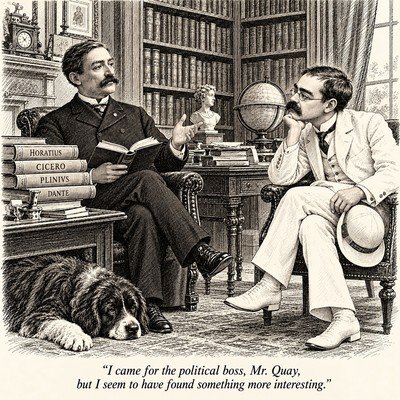
Matthew Stanley Quay was a powerful political boss, but his true passion lay in literature and knowledge, revealing a complex legacy beyond politics.